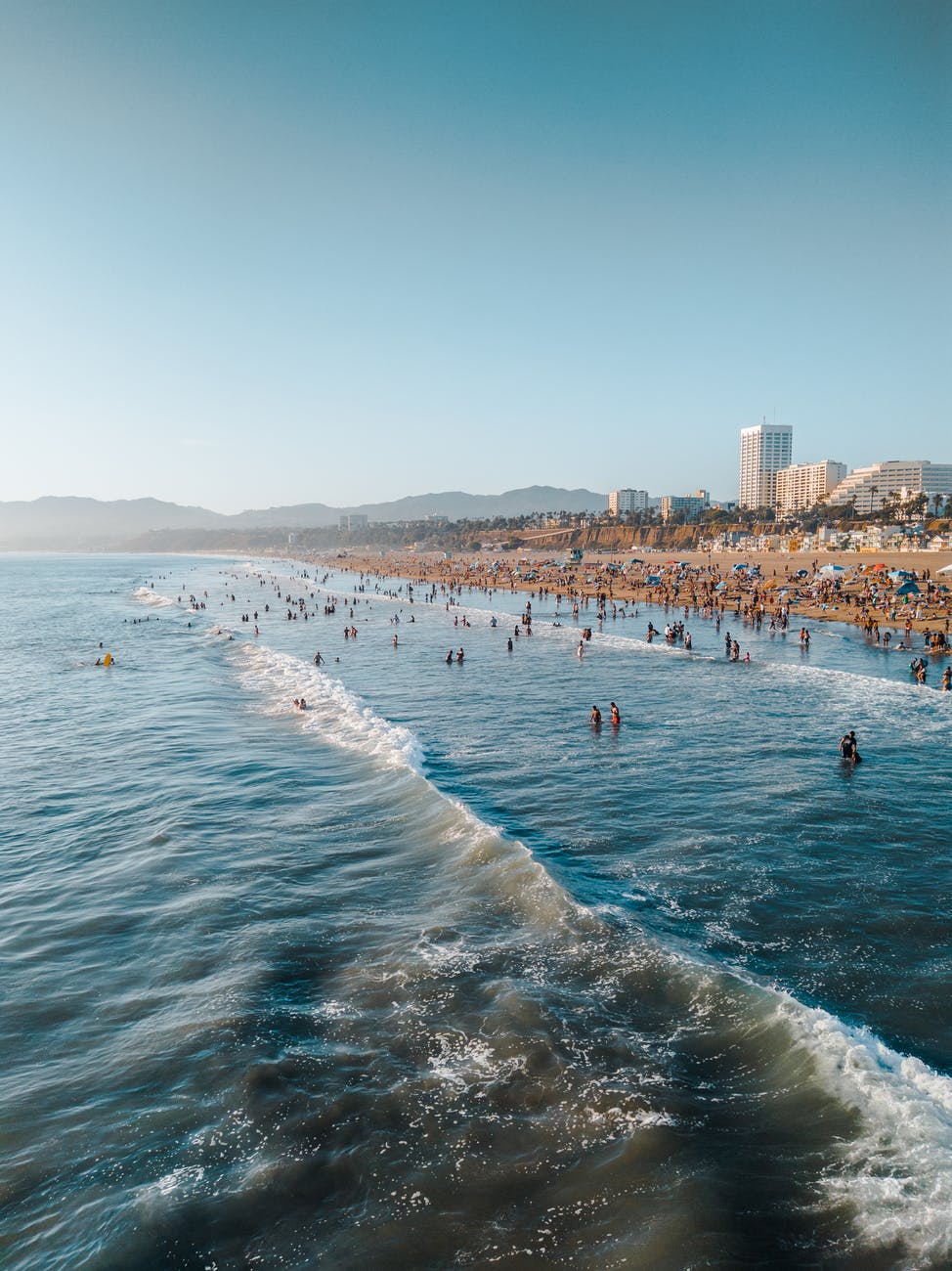
As you head toward southern California (SoCal), the weather is really unbeatable. The average days of sun range from 260-275 days per year. As you get closer to the coast, the temperature remain very moderate, from lows in the upper 30’s to highs near the lower 80’s. It is one of the biggest attractions to living in this area, which is not surprising considering how fickle we humans can be about the weather. 😂 If you don’t mind a slightly broader range in temperatures, head east to the desert and enjoy the dryer heat and comfortable nights.
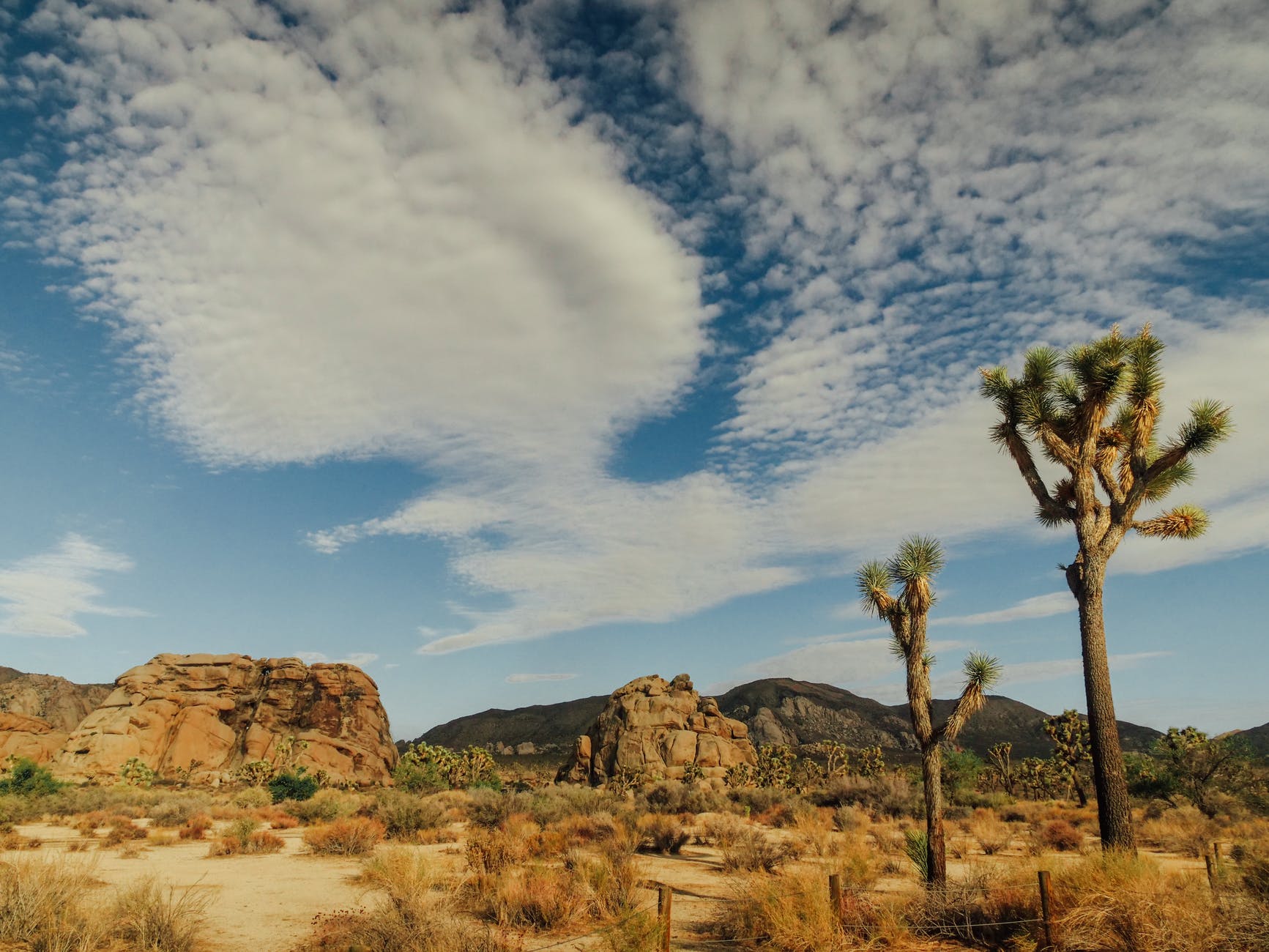
The coastal area offers beach time, surfing, and many other outdoor activities that you can enjoy year-round. The desert towns have more resort and retirement communities, with casinos and spas, but also have Joshua Tree and other natural surrounding areas that offer hiking you can enjoy during the more temperate winter months. By and large, access to parks increases and walkability and bikeability improve the closer you get to the coast. In fact, San Diego is 27th in the nation for parks access. Even so, the area is only somewhat bikeable and mostly car-dependent.
Further, the closer you get to the coast and the San Diego area, the higher the cost of living gets and the traffic becomes more prolific. Median housing prices range from $400-$550,000 in the Indio/Palm Desert/Palm Springs area, and increase to $600-$815,000 in San Diego and the surrounding areas, while the median income ranges from only $45,500 to $78,500, with Temecula having the highest incomes out of all of the areas we explored.
The entire region of southern California in which we traveled is moderately liberal with some very liberal pockets, and offers employment in a wide array of industries, especially now with more remote work opportunities available, but unemployment is slightly higher than the national average, ranging from 6-8%. And unfortunately, the entire state of California has some of the worst roads in the nation, which was updated late last year.
So what does all this stuff mean?!? If you are looking for a more affordable place to live than the Bay Area, but still want to be closer to a metropolitan center on the west coast with even nicer weather, you might like living in the San Diego region. Coastal life gives you access to the ocean, wine country and is a quick drive to the desert. Anecdotally speaking, all of the people I have known that grew up in SoCal are some of the nicest, most laid back people I’ve ever met. If that stereotype still stands, this could be a little slice of paradise for you.
If you love the desert life and/or are closer to retiring, you might like the quieter, more affordable areas in southeastern California. Personally, I don’t think I could handle the traffic in the San Diego area nor the hot, dry climate in the California desert, but I was truly pleased to have the chance to visit these areas and enjoy all they have to offer.
California is such a large and diverse state and I don’t think you can really make any mass generalizations about it, because it varies so much from town to town. Yes, it is quite liberal in the metropolitan areas, and yes the traffic and roads are terrible, and yes the cost of living can be astronomical; BUT, without California we wouldn’t have the array of food we enjoy on our plates as this state still leads the nation in food production and is the 5th largest producer in the entire world. And, the variety of climate, geography, and diversity in its population make it a unique place.
There’s a reason it is so populous and the subject of so many songs, artistic creations, and writings throughout the world. There is no state like it in our nation, and it’s a special place that I think many people can take for granted. Visit this vast state before you write it off and see for yourself what everyone is talking about. If you don’t find an awe-inspiring corner, I would be very surprised.
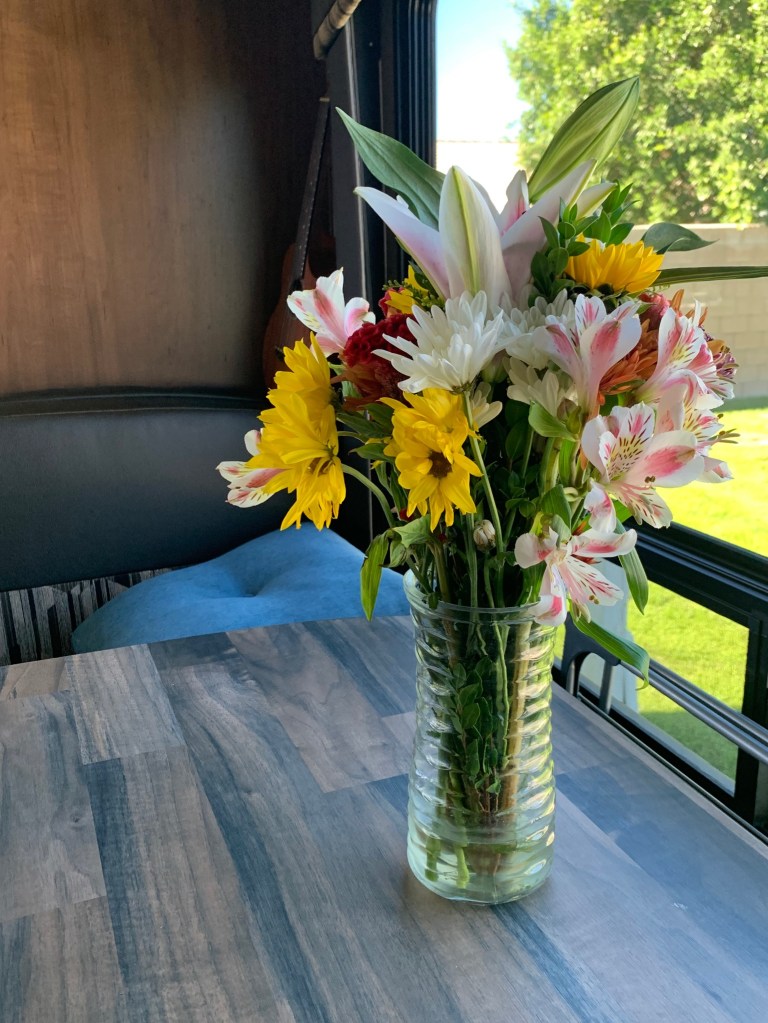
We are slowly heading eastward, and decided to stop over in Indio, CA so we could spend a little time in Joshua Tree National Park. To be honest, this ended up being a more low-key, utilitarian visit for us, taking care of repairs, taking a little breather from the “go, go, go,” and just being content doing nothing. 😌 Plus, I had another one of my sneezing attacks, which took me out of commission for an entire day. 🤧 Matt felt sorry for me, so got me some flowers, which I thought was really sweet. 🥰💐
Feel better flowers ❤️
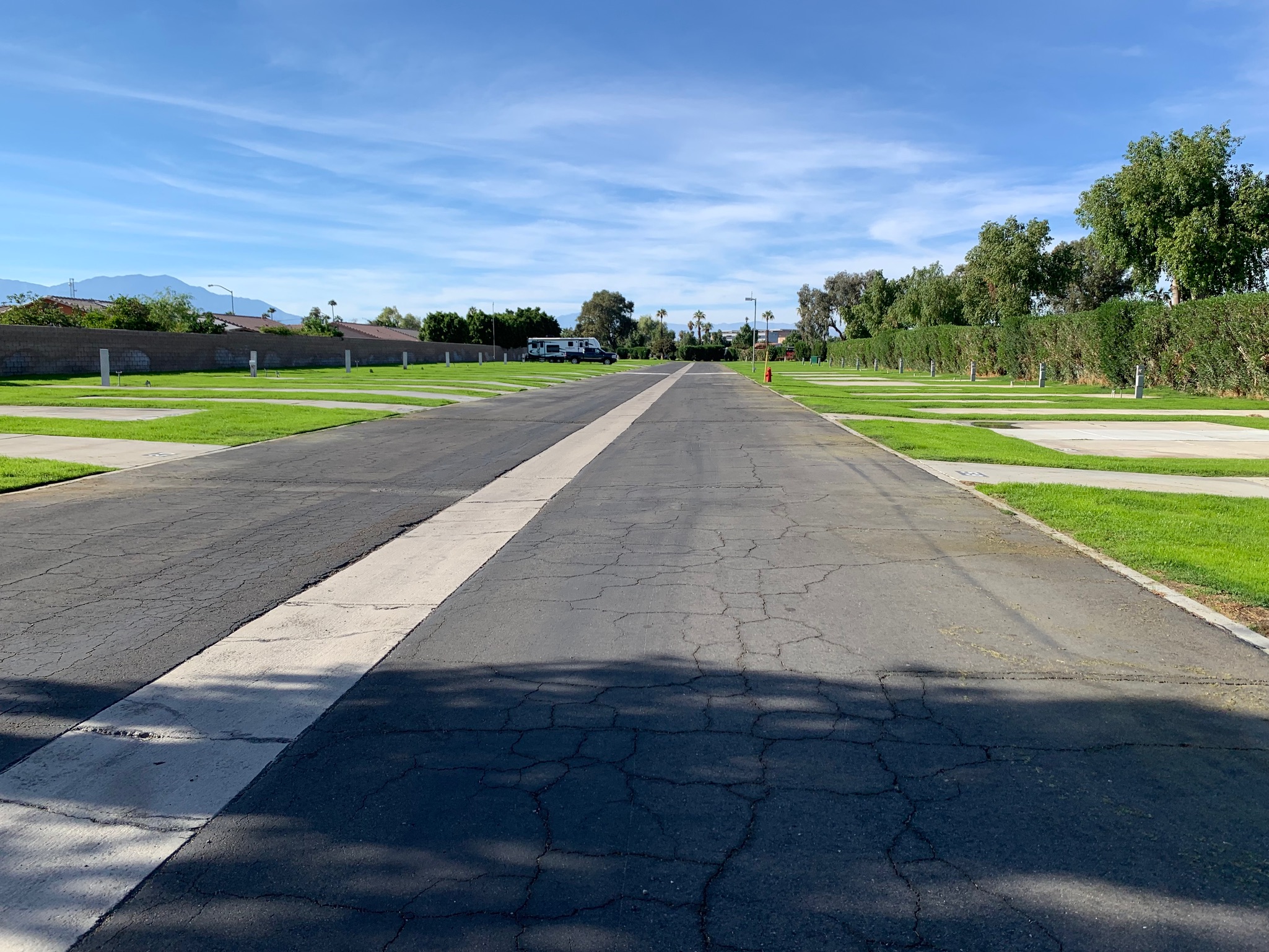
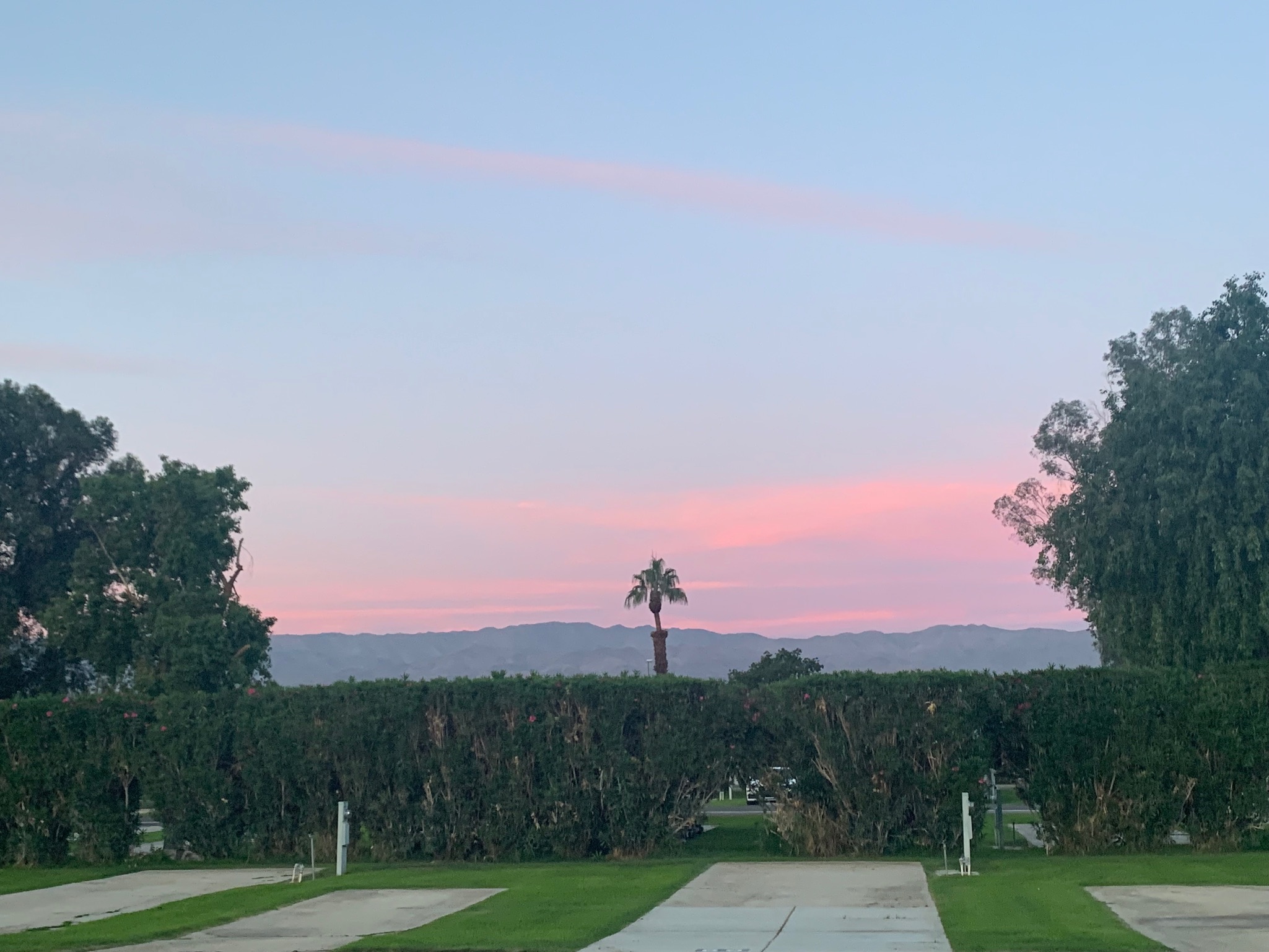
Indian Waters RV Resort
While in the area we stayed at the Indian Waters RV Resort. It was very curious, because we were put in a part of the RV Park where there was no one else. We had the whole area to ourselves! 😮 Everyone else was closer to the office and event center where the pool, laundry, and other amenities were located.
The bomb cyclone hit us the day after we arrived, which was definitely a nail biter, but thankfully it passed without too many issues. Driving around earlier in the day, there were many sections of town where the dust was so thick you couldn’t see where you were going. 😬 The rest of the time, the weather was really hot, so we were thankful to have electrical hookups to run the AC and to stay cool.
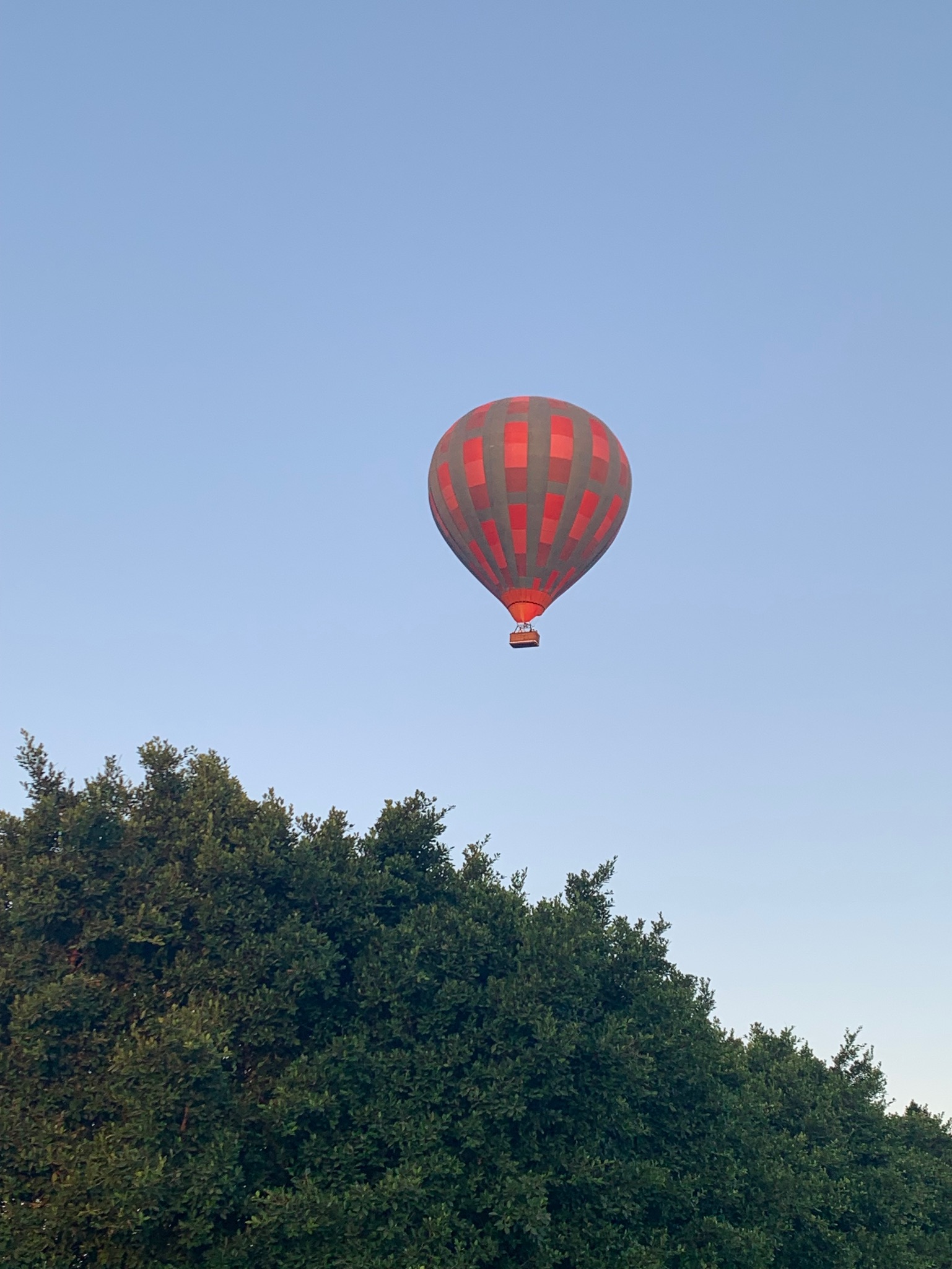
The resort itself is fairly quiet…we didn’t see a lot of kids in this particular resort; however, it is located right next to a fire department and police station, so you hear a lot of sirens, which incited most of the dogs nearby to start barking. 😂 But, the whole resort is very well taken care of, with upkeep happening daily, and the sites are spacious. There are some sections with more tree cover as well. I would recommend it for anyone passing through the area if the siren noise isn’t too distressing for you. Throughout our stay, we saw hot air balloons floating in the sky in the mornings, but on the last day, they flew right overhead! What a treat.
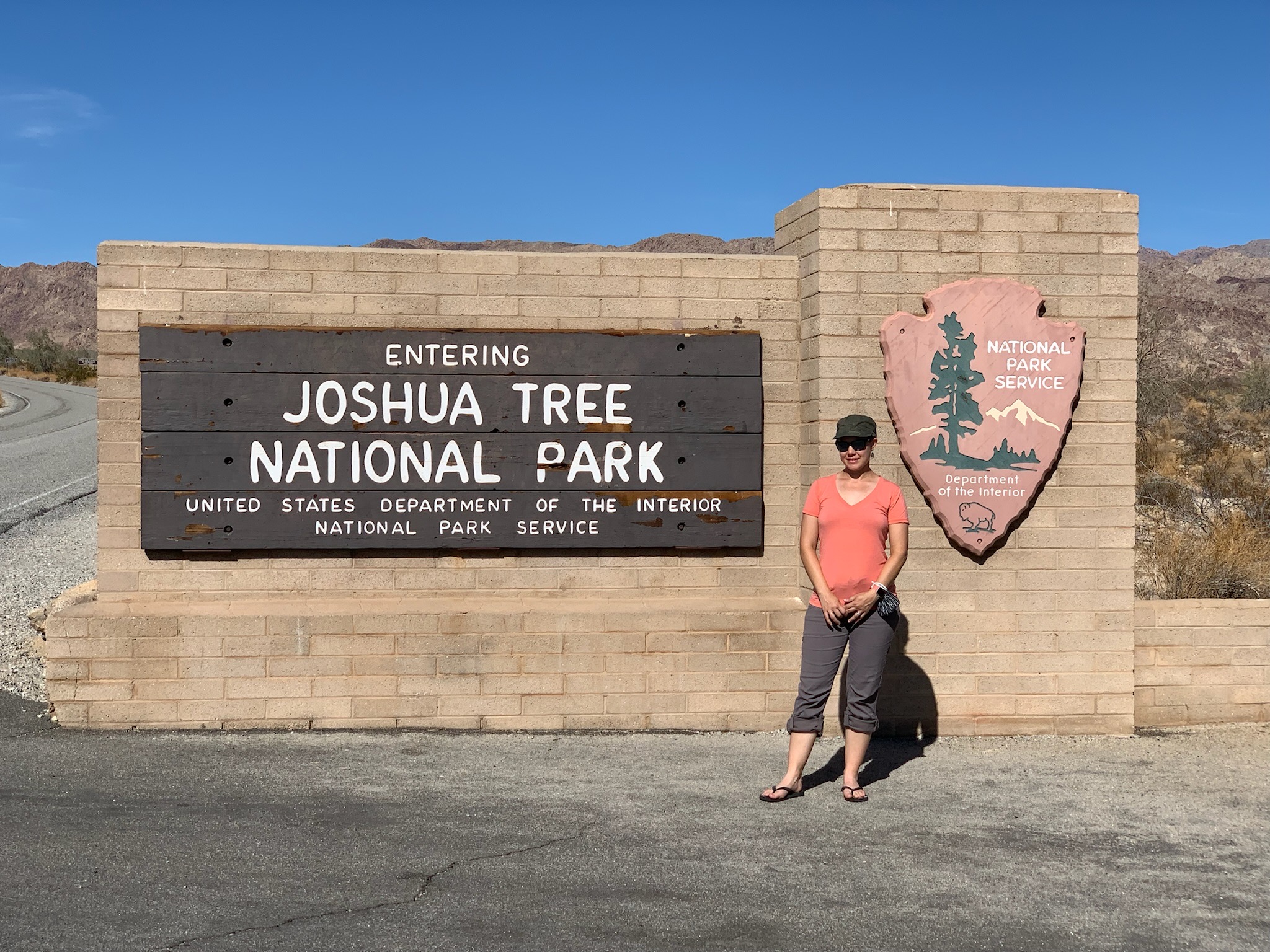
Joshua Tree National Park
We only went to Joshua Tree twice during our stay, but enjoyed what we saw. Originally, we were talking about doing an overnight backpacking trip, but between us needing to run errands and me feeling under the weather, we decided against it. Instead, we drove into the park through the southeastern entrance and stopped at the Cottonwood Visitor Center. Because it was already close to lunchtime, we opted not to do a big hike and instead decided to find a place to eat and then explore, so we headed westward.
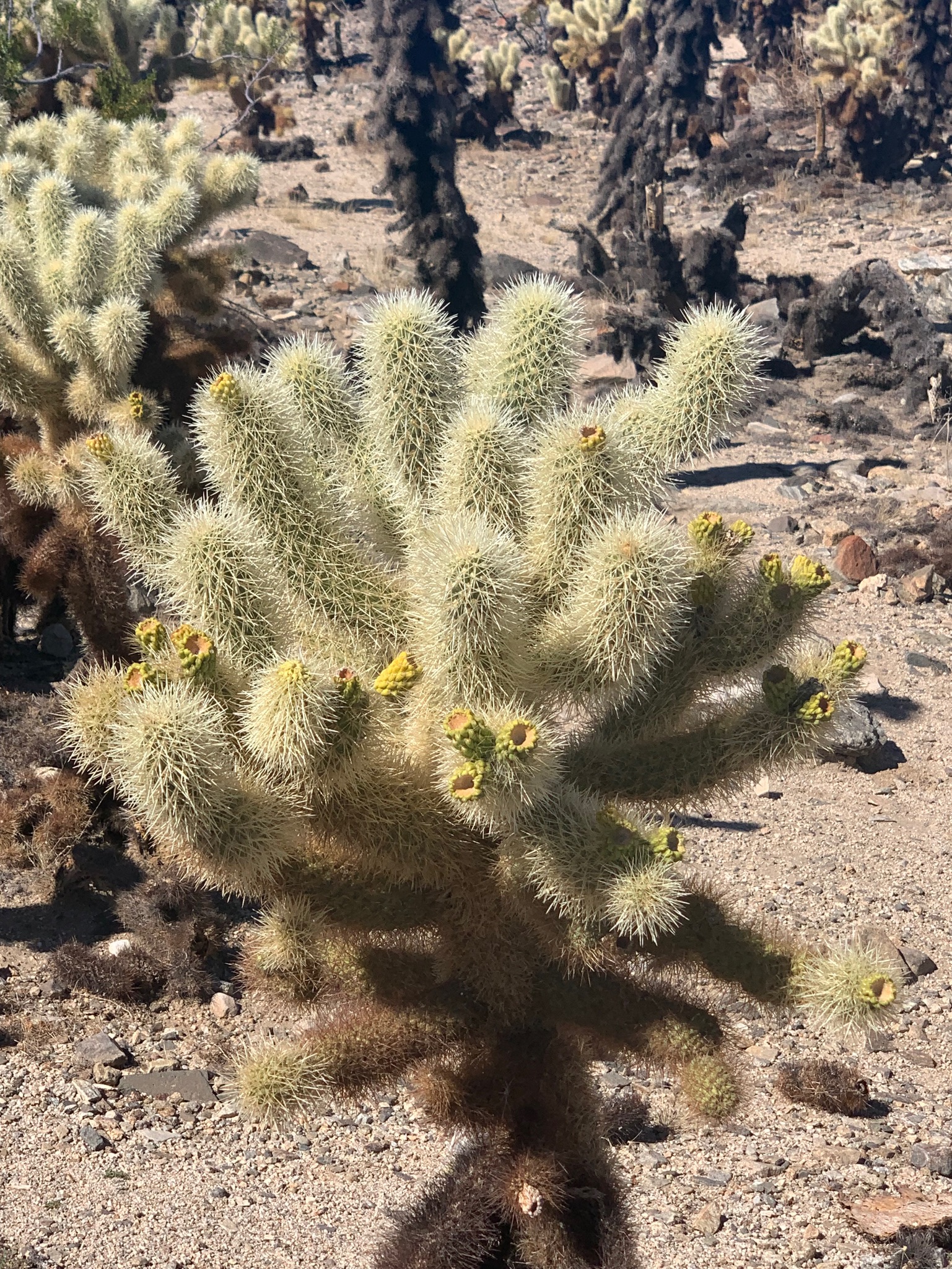
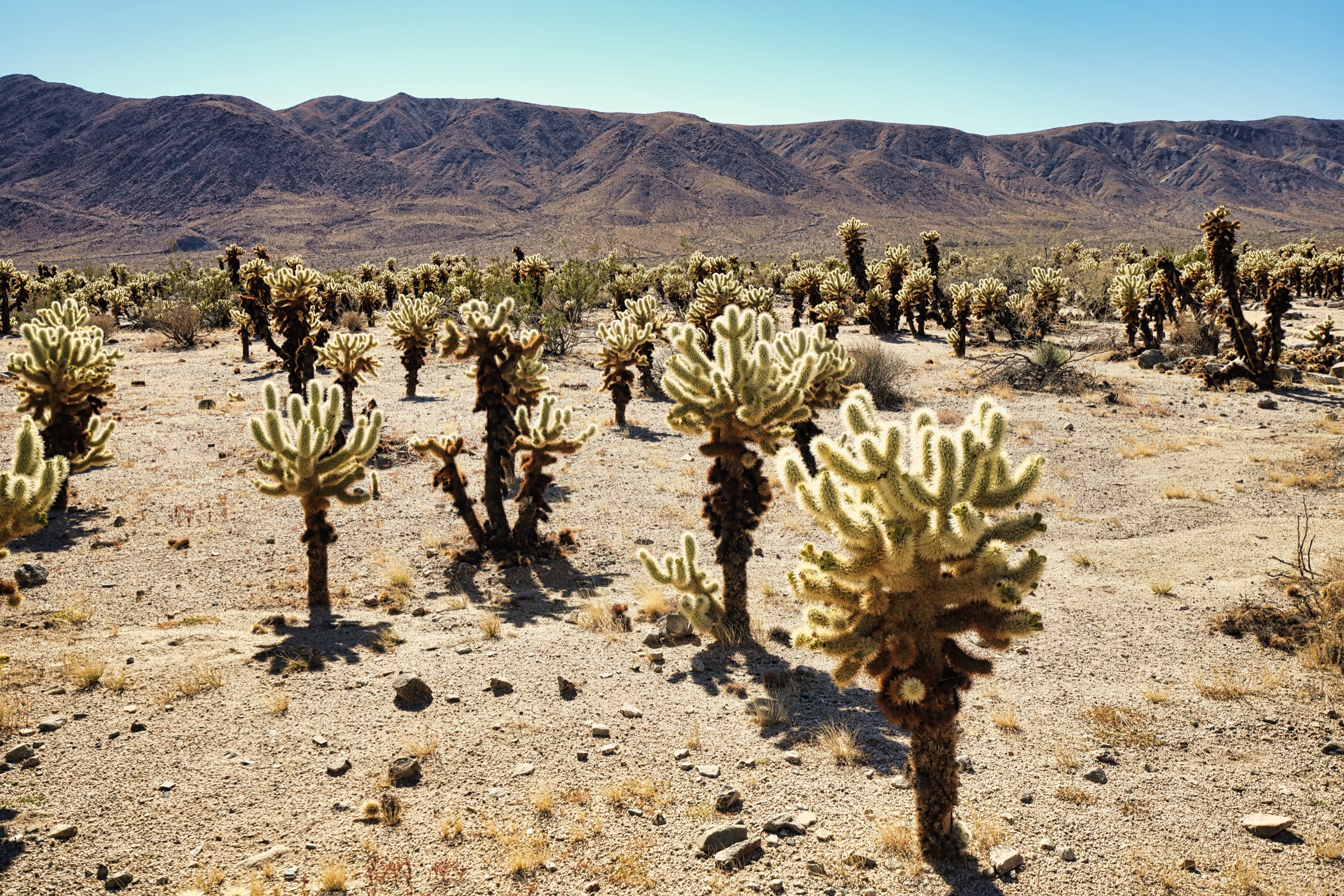
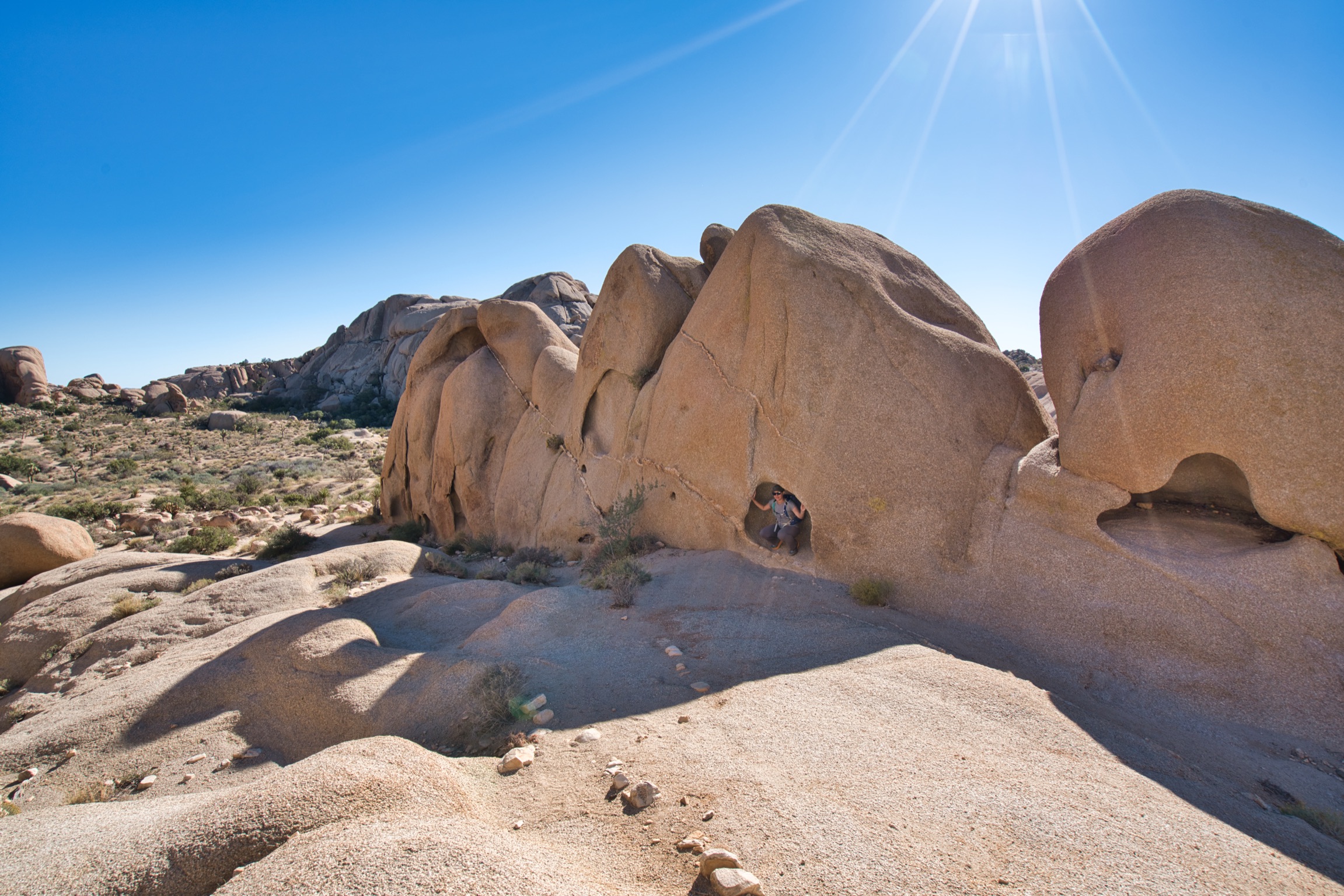
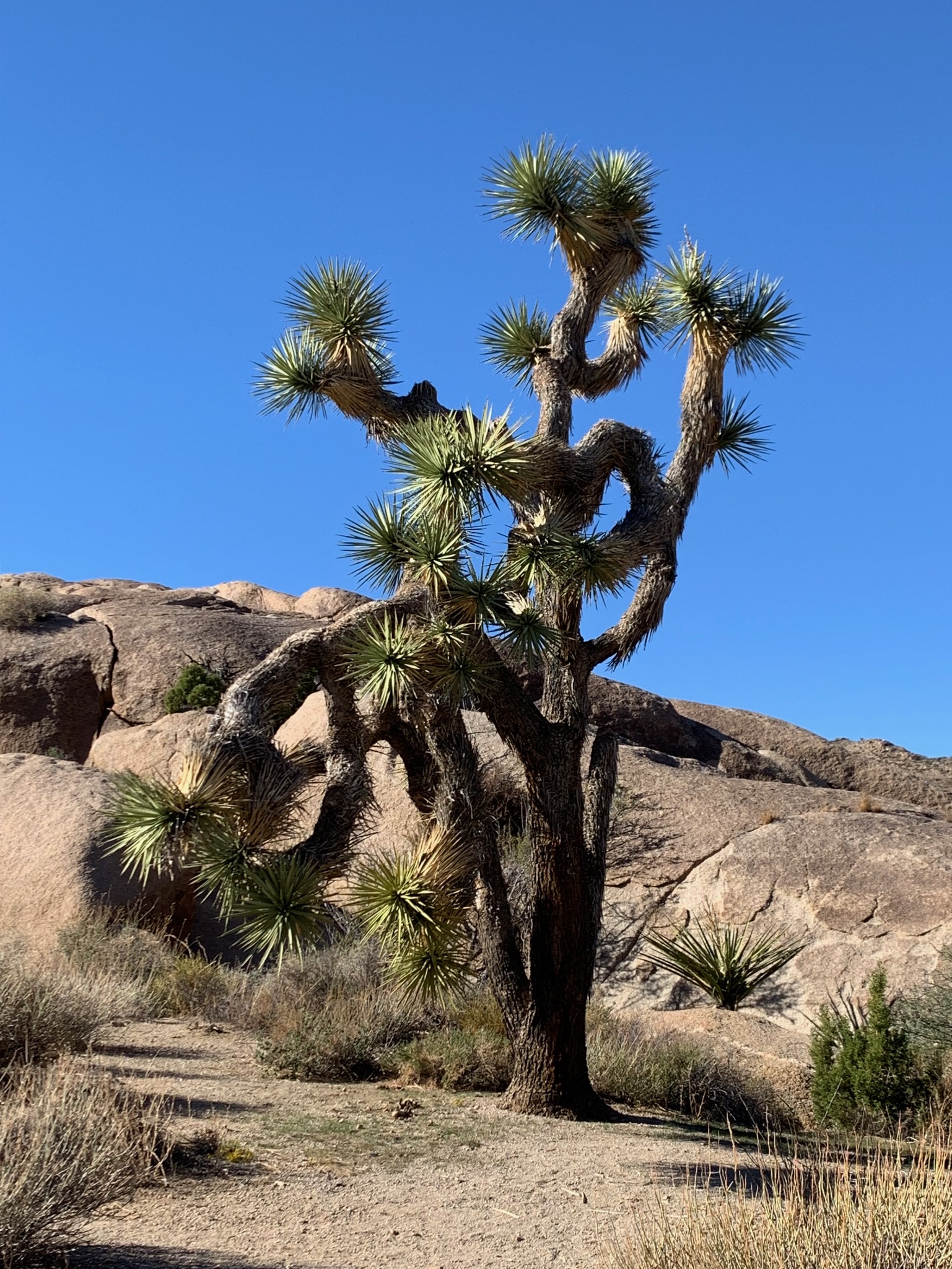
The first thing we were fortunate to discover was a tarantula crossing the road, likely because it was during their mating season. How cool! Soon afterward, we stopped off at the Cholla Cactus Garden. This was our first stop where we saw a lot of cacti, and I had never seen these species (silver cholla and teddy bear cholla), so it was really neat. A little farther to the west, we encountered a slew of sites to see, so we stopped at Split Rock for lunch and then went for a small hike.
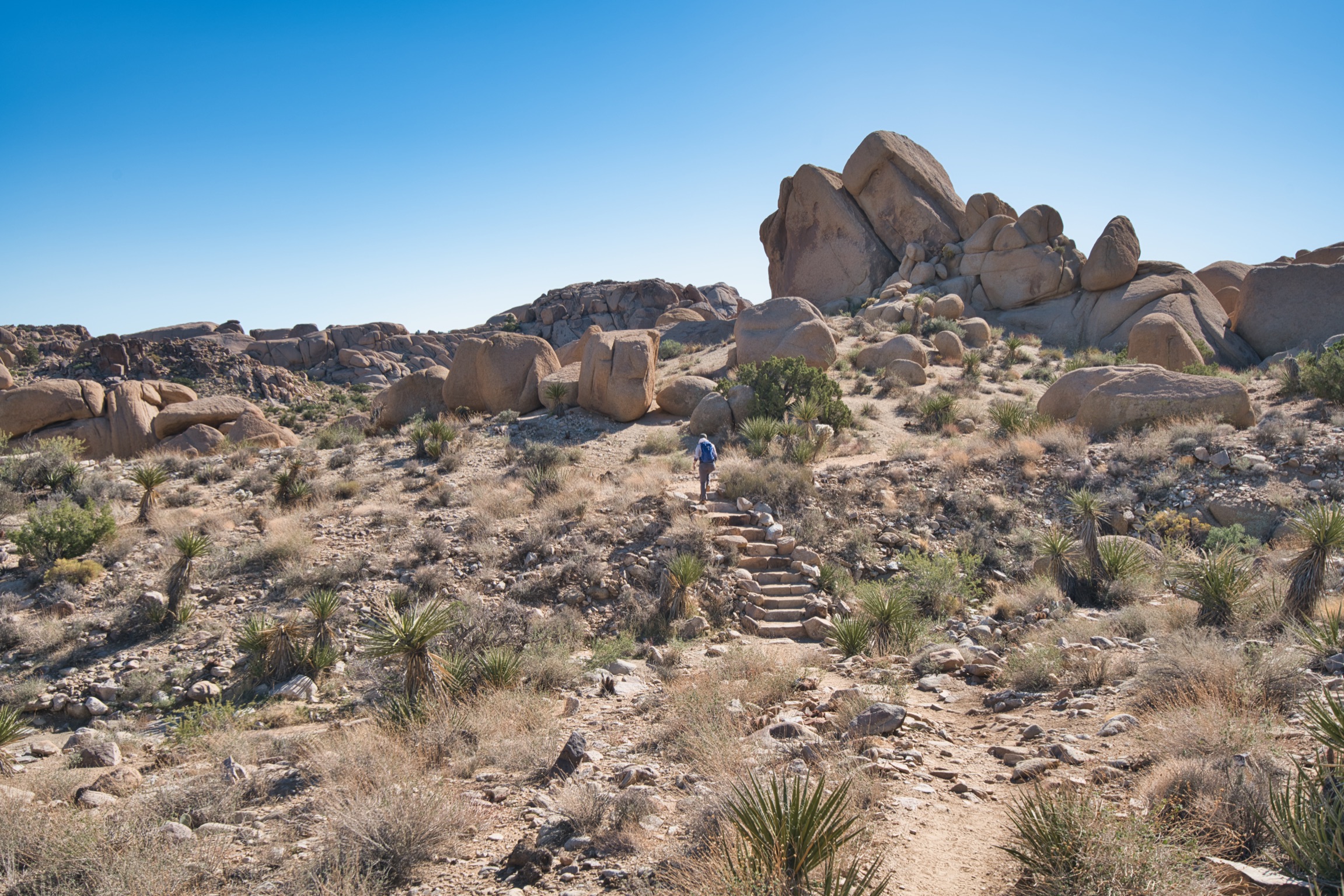
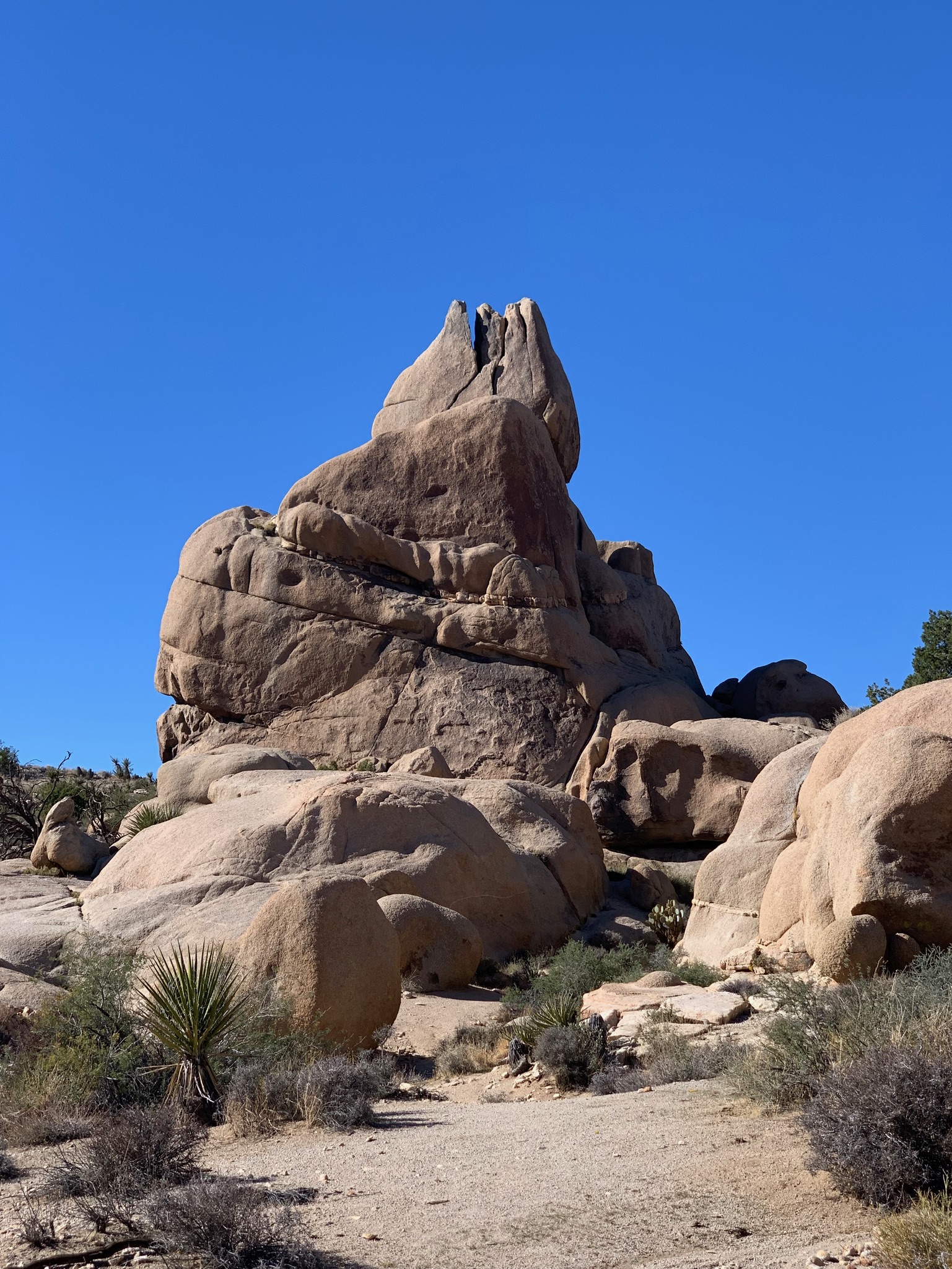
There are options to extend the Split Rock 2-mile loop to see Skull Rock across the highway, but we opted to drive by skull rock instead. We enjoyed this stop, seeing a variety of flora and fauna, and some interesting rock formations, but it was a lot more chilly than the desert valley we were staying in and I actually needed to put on a jacket. As such, be prepared for the temperatures to vary significantly from Indio and the surrounding areas. Bring your sunscreen, a wide-brimmed hat, and even a light jacket during the fall and winter months. We continued on and exited through the west entrance to the park and decided to come back another time to do more exploring.
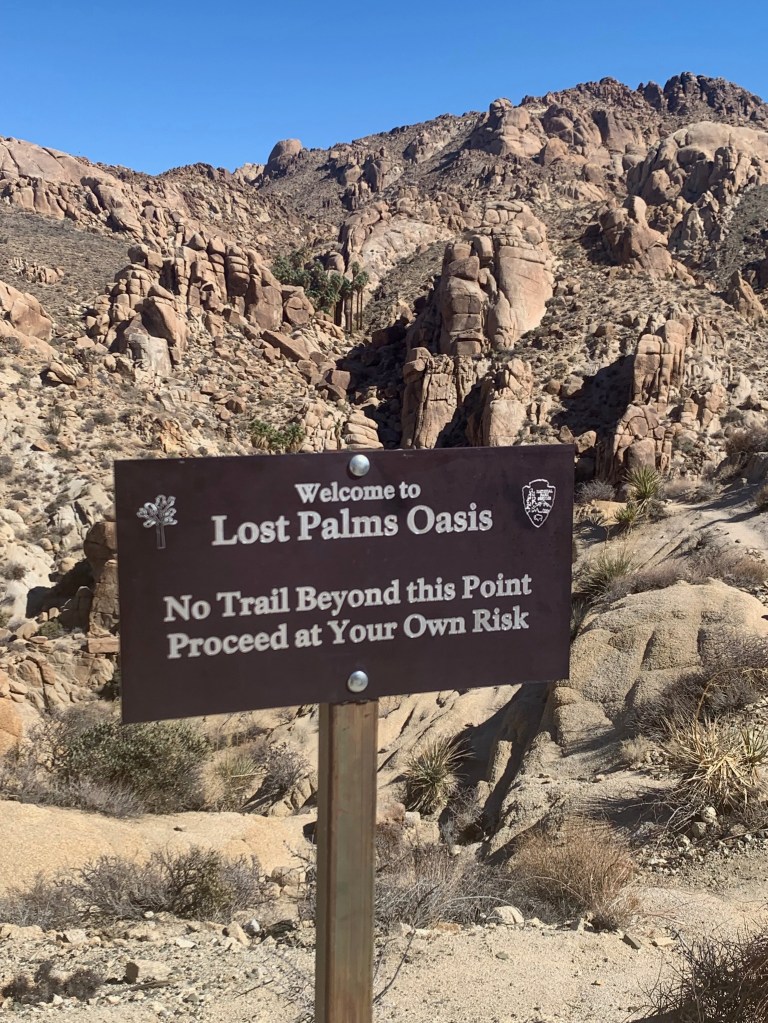
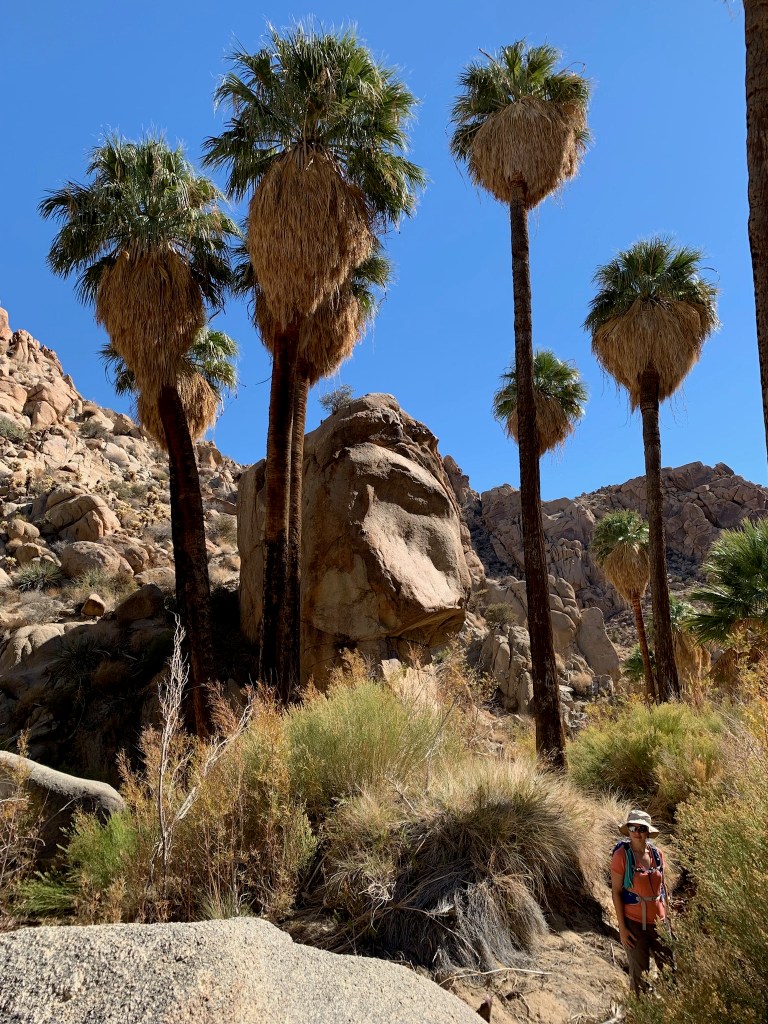
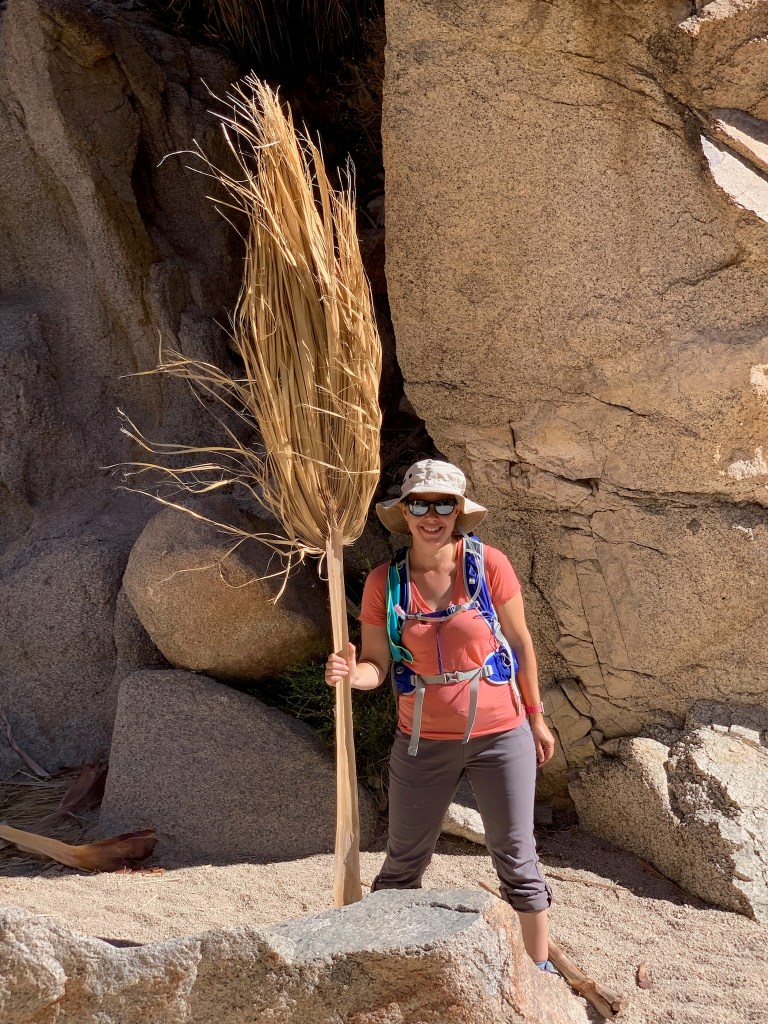
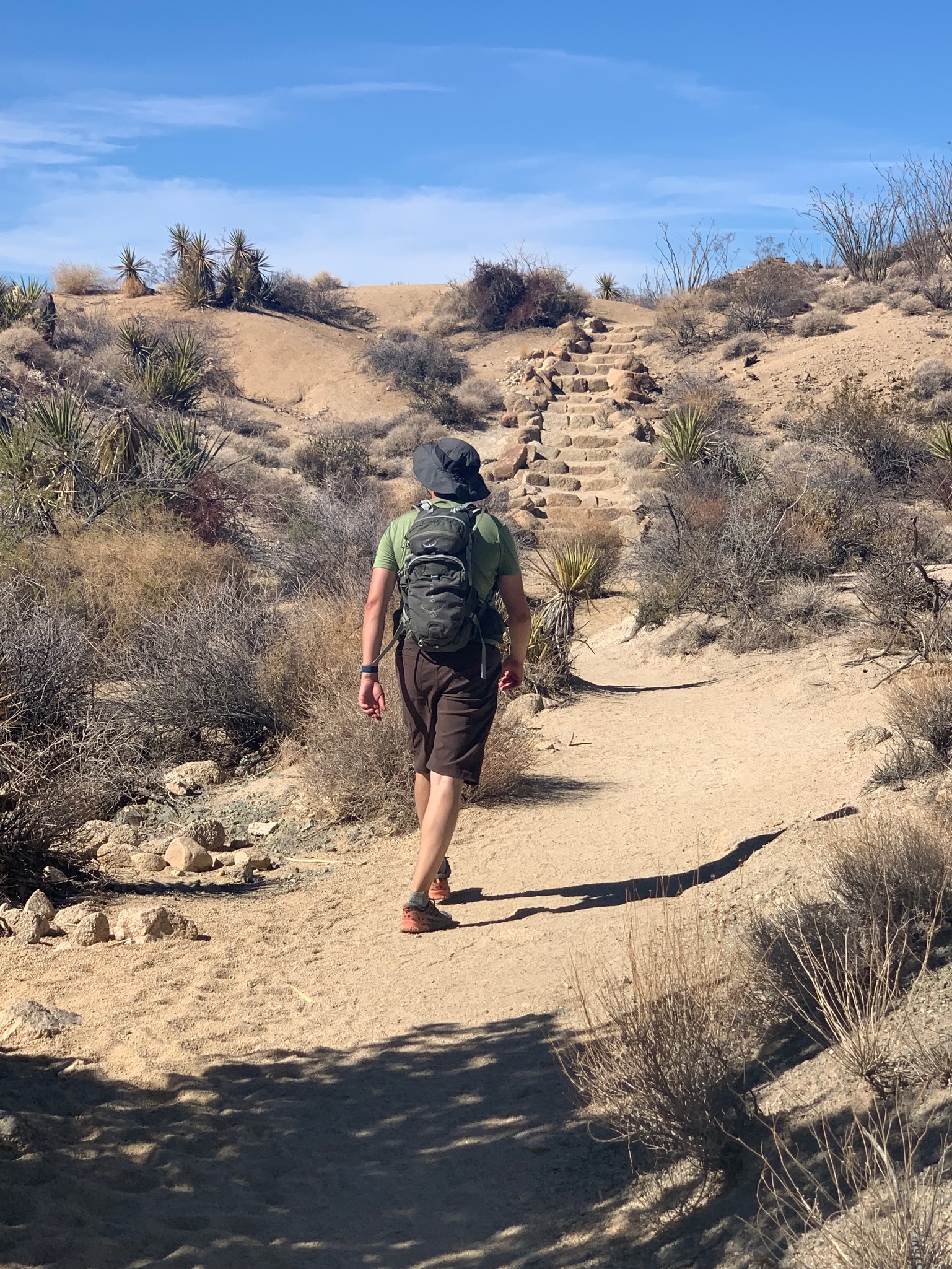
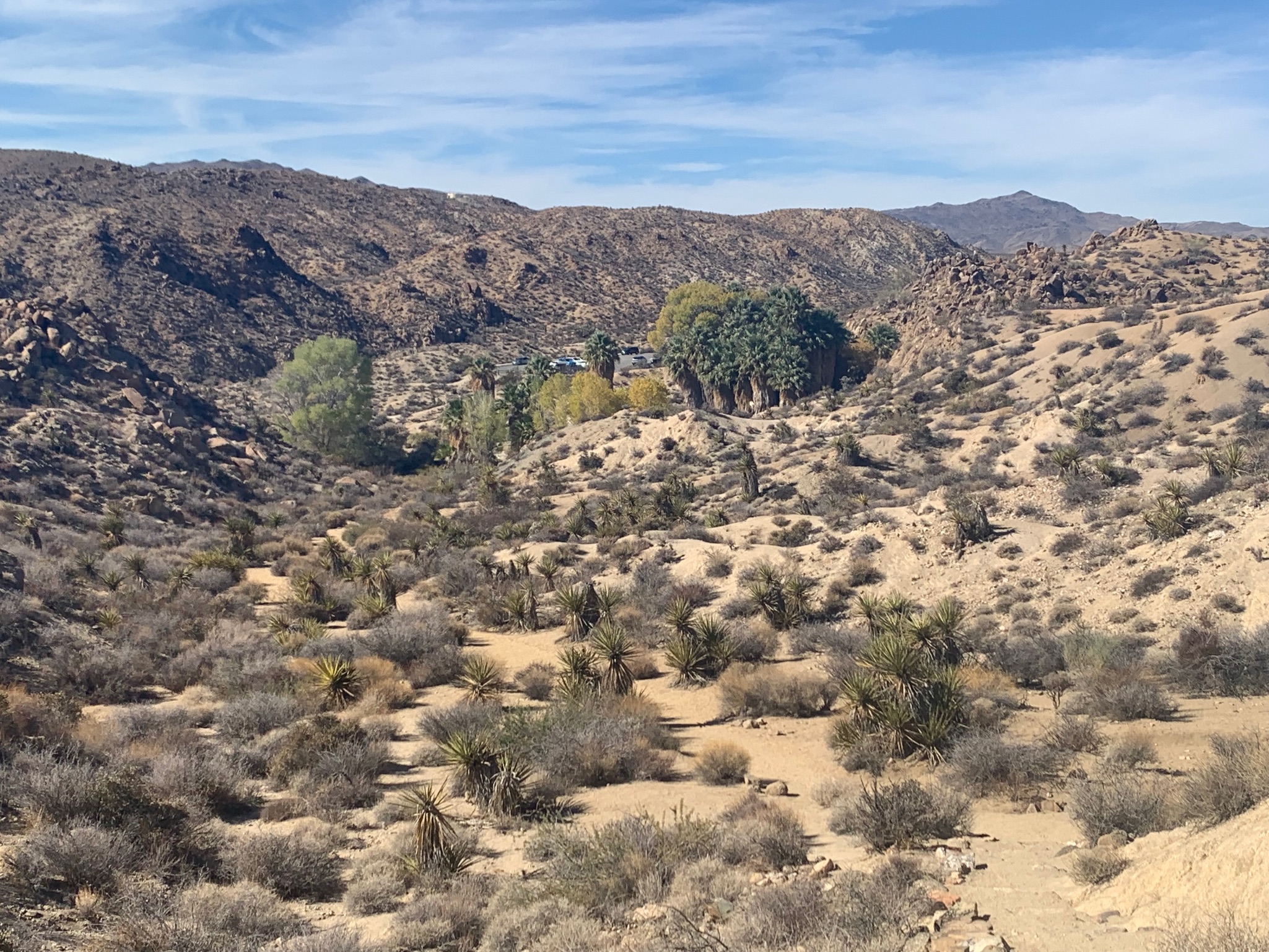
For the next visit, we circled back to the the southeastern entrance and continued past the Cottonwood Visitor Center eastward to hike to the Lost Palms Oasis. Unlike the previous visit that was a bit chilly, it was very hot 🥵 in this part of the park, so our sunscreen and hat and lots of water came in handy. This hike is anywhere from 7-8 miles round trip, depending on if you venture down to the actual oasis. The trail does not technically drop down to the palms, but it wasn’t too difficult to find some foot paths down and back up to the ridge.
Going down to the palm oasis in Joshua Tree National Park
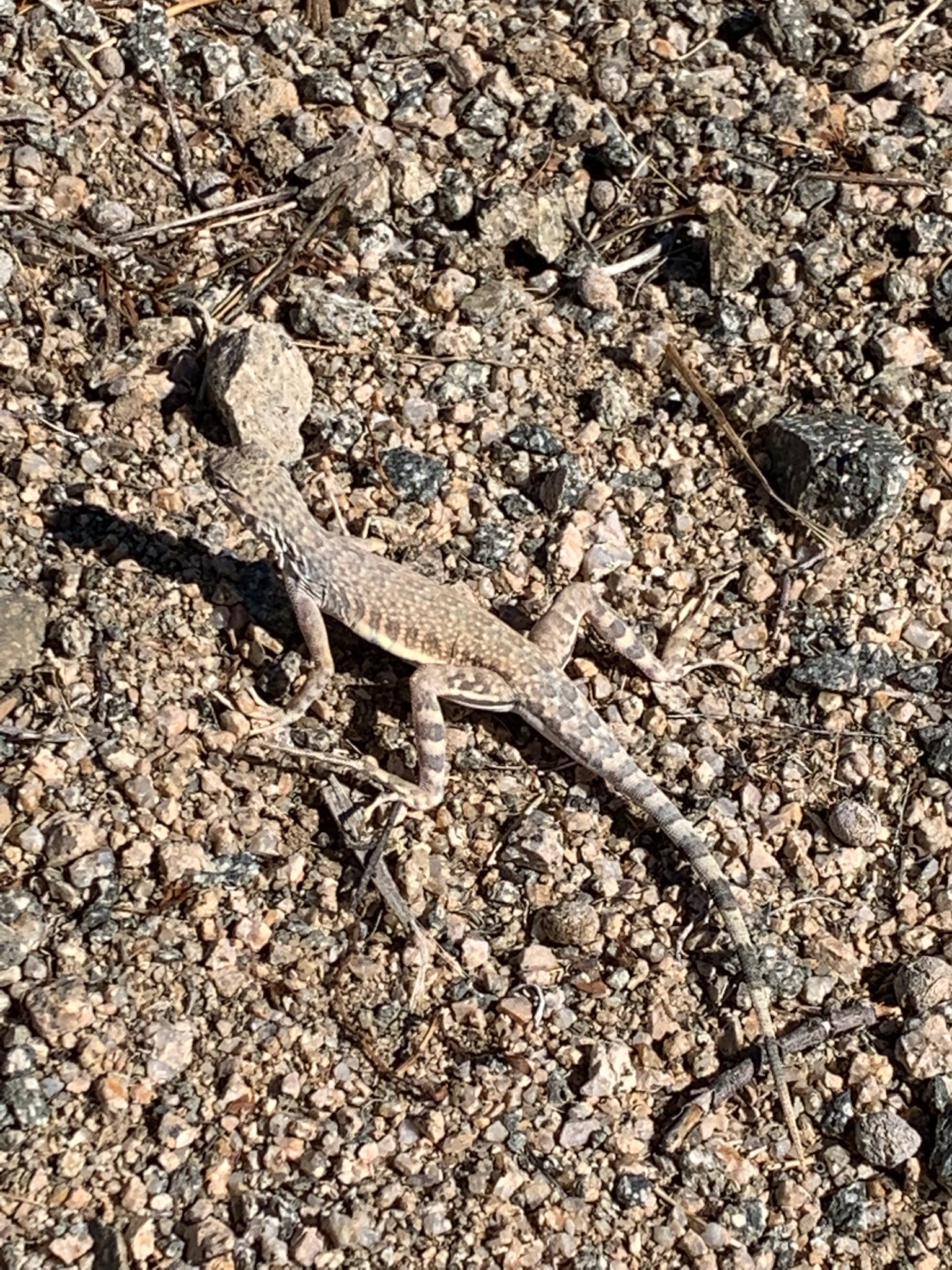
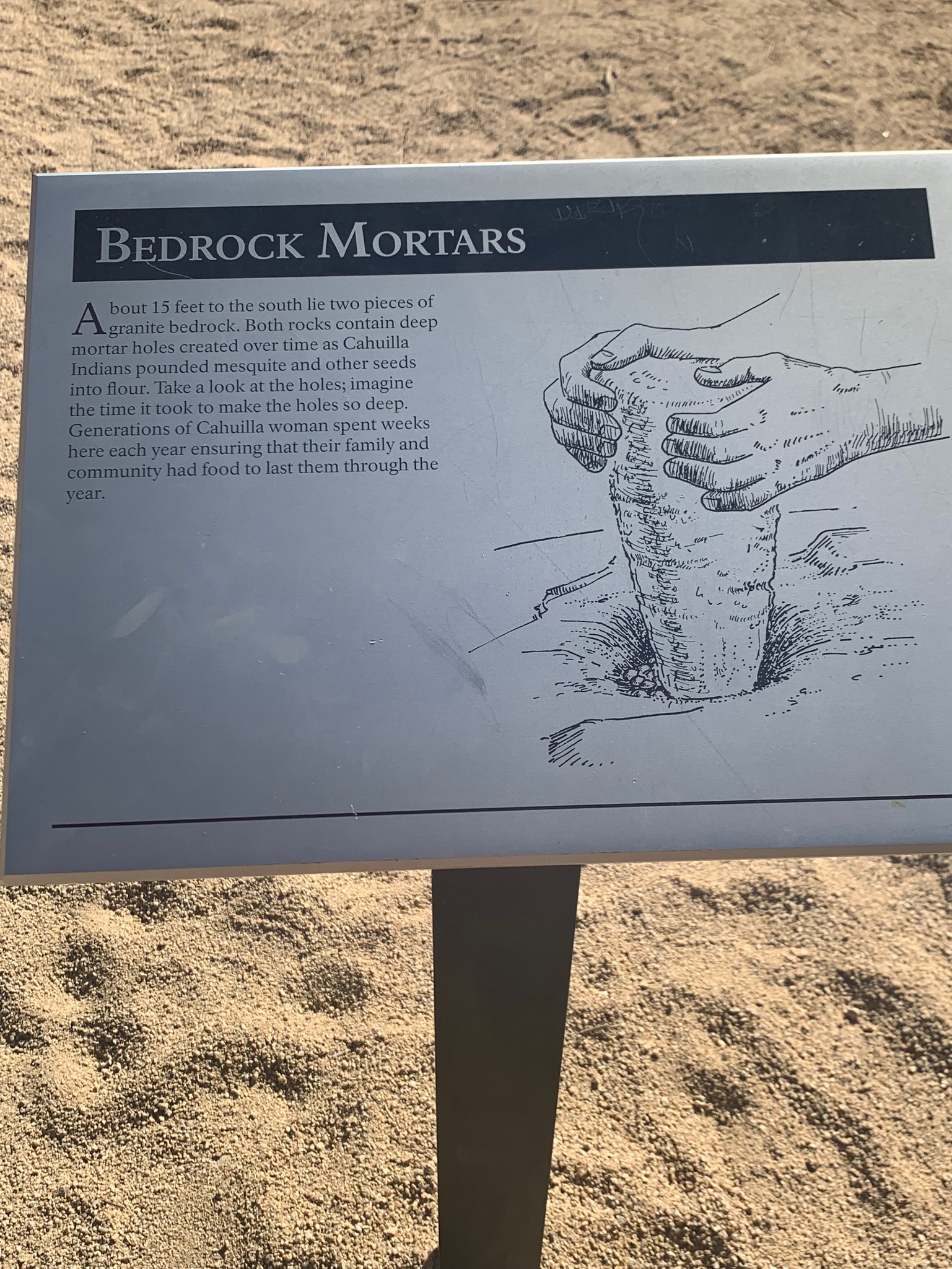
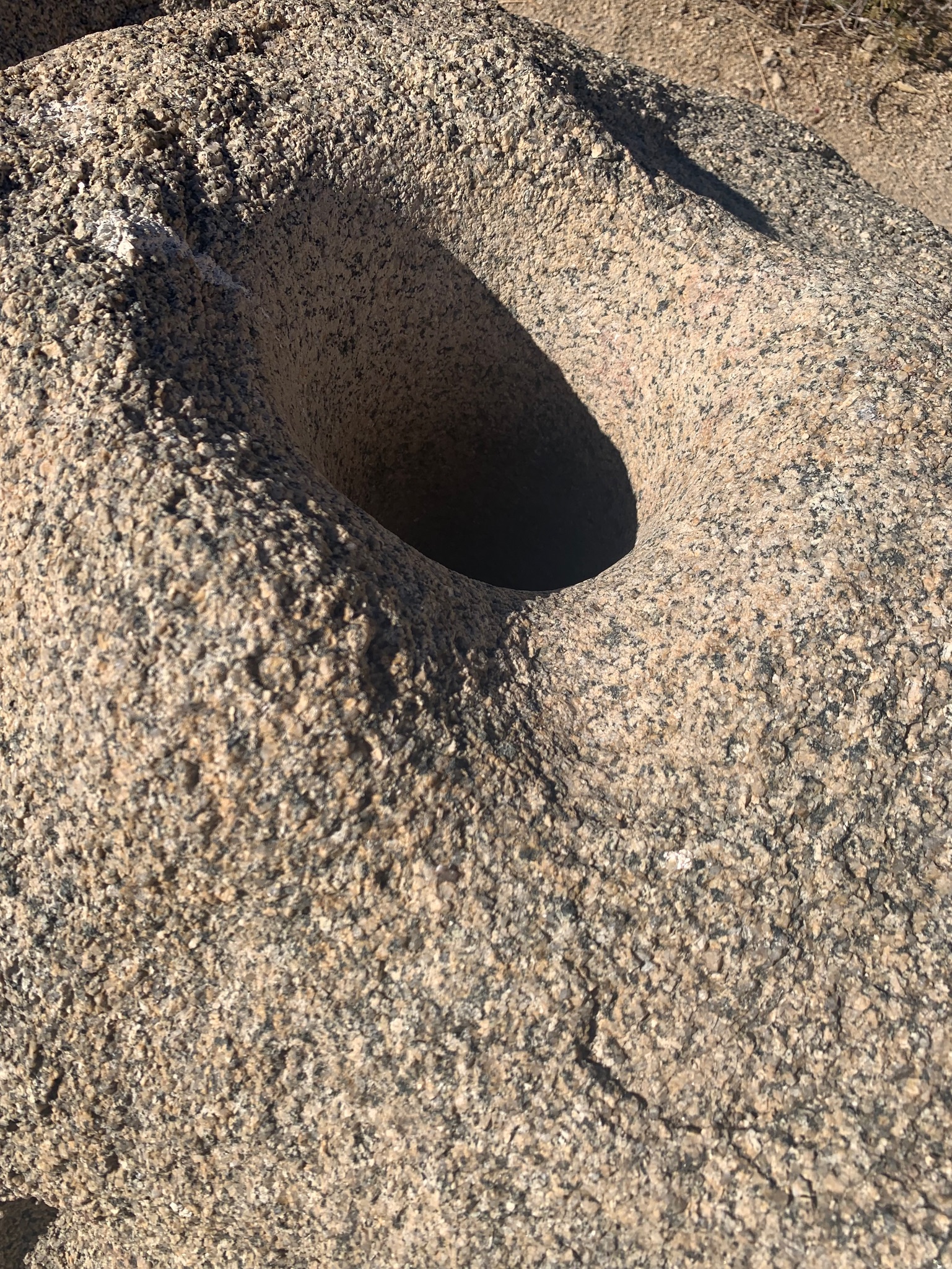
The views were expansive along the way, there were lots of birds and lizards, and I even saw a kangaroo rat run across our path. The irony of this hike was that the palms were more densely populated at the entrance to the trail than at the palms oasis. 😂 🌴 We also saw mortar holes near the entrance that the natives used to pound mesquite and grind seeds for flour. So, if you’re not up for a big hike, you can hike in just little ways and still enjoy some interesting sites.
The Cafe at Shields
We did have a few brief neighbors at the RV park during our stay, and one couple passing through was from Hillsboro, near Portland, OR. They had also spent time where we were heading next, so we exchanged some tidbits of information as they headed back to Oregon and we prepared to continue onward to Arizona. They also mentioned that Indio used to be a lot smaller, and that the big attraction back in the day was getting date shakes at the roadside stands.
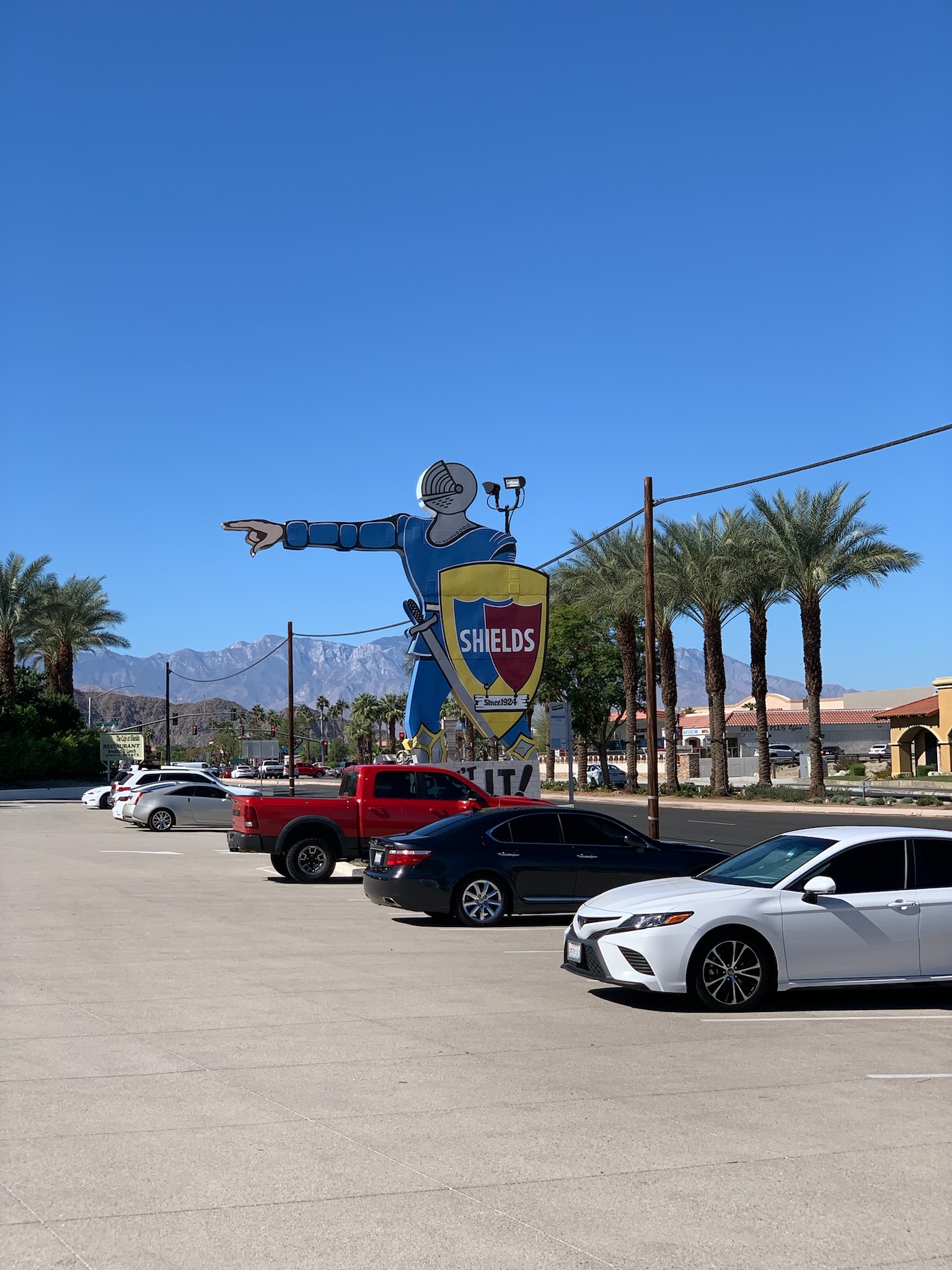
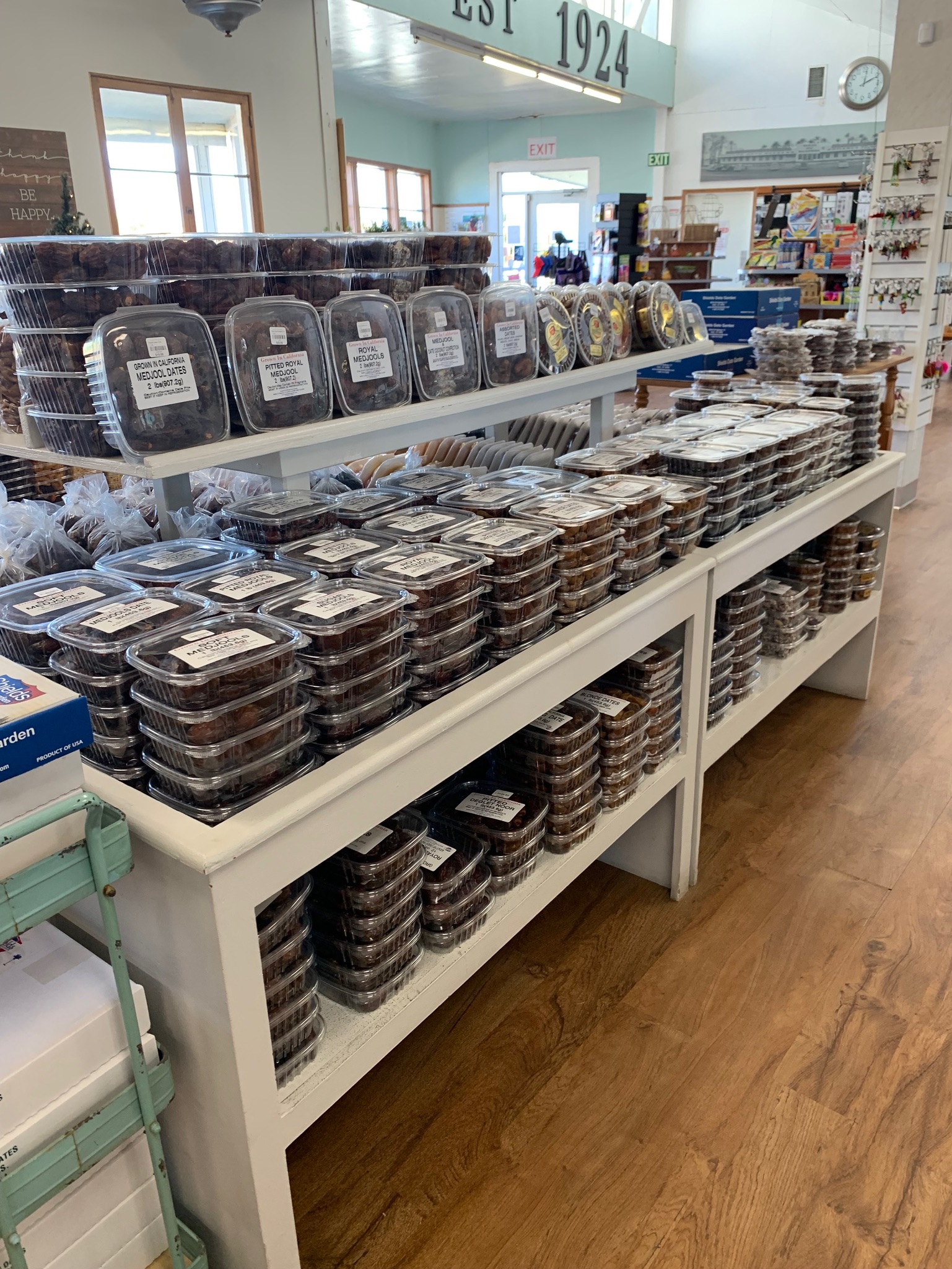
This tradition has been continued by Shields, where you can explore their beautiful gardens, eat at the cafe, or shop for dates and get a date shake in their store. We had lunch on their back patio, and they even had a guitarist playing music during our meal, so it was really relaxing and enjoyable. Matt got a date shake to go, and we perused the myriad of dates they had for sale in their store. It was a fun visit and worth stopping in for breakfast or lunch.
June Hill’s Table
During our one dining out experience at night, we decided to go somewhere close by, and ended up going to June Hill’s Table, within the Polo Club grounds. Make sure to enter off of 52nd Avenue, because not all of the gates are accessible without a code. The weather was really mild and we were seated on their outside patio, so it made for a pleasant evening out. This place definitely caters to the senior community between the music playing and the menu options, but our food was good and I would recommend it if you are in the area.
Burger and a salad on the back patio of June Hill’s Table
If you want to go extra fancy, head over to Palm Springs and indulge, or go to Palm Desert next door for an equally nice experience. There are casinos, spas, lots of shopping and other entertainment in these areas. Indio is a little quieter, to be honest, but just 20 minutes away. From the agricultural sections of northern California, to the Bay Area, to the Sierra Nevada mountains, then the San Diego southern coast and finally the Joshua Tree and palm desert areas, we saw the whole gamut of what California has to offer.
Now we head through the southwestern states on our way to West Texas. Stay tuned for a brief opinion piece on living in southern California, and be well this autumn. 🍁
Our last stop before heading eastward was near the San Diego area. After spending time boondocking down dirt roads off of Highway 395, our rig was looking pretty dingy. It was time to try out our first truck wash for big rigs, so we found a place along our route called Little Sister’s Truck Wash and pulled in around lunchtime to get everything looking spiffy again. 🤩 Plus, it was “RV Fridays”, so we even got a little discount on our wash. That being said, it still cost over $100 to get the truck and trailer washed, so it’s likely we won’t wash the entire rig again for another 3 months.
After making everything look all shiny and new again, it was time to face Friday rush hour traffic. 😬 The roads are not quite as rough as the Bay Area, but close enough that it was unpleasant at best working our way to Temecula. I survived the roads and the traffic, but it made for a very long day. Thankfully, the weather we were greeted with was amazing, which is definitely one of the big draws to Southern California (SoCal).
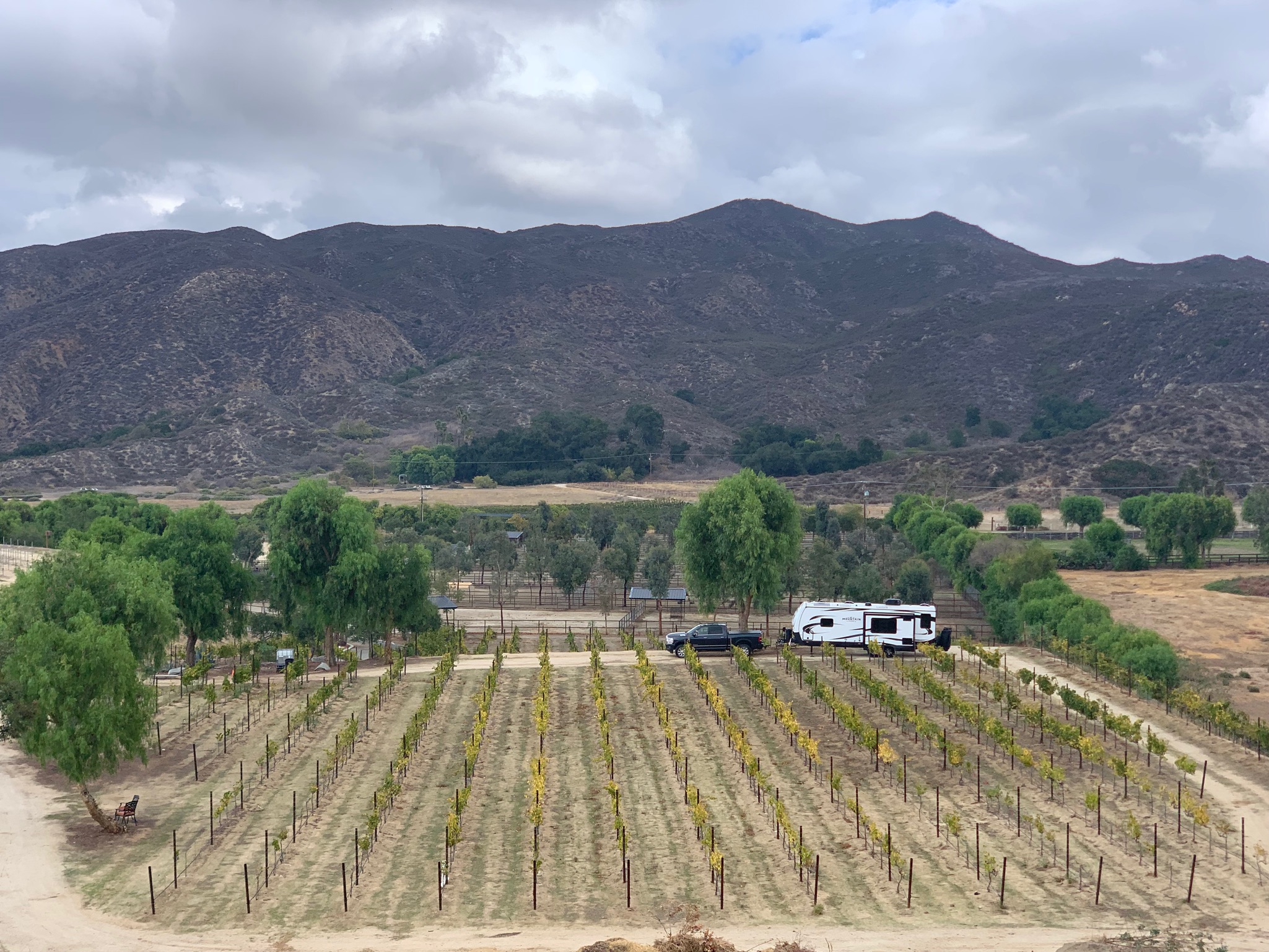
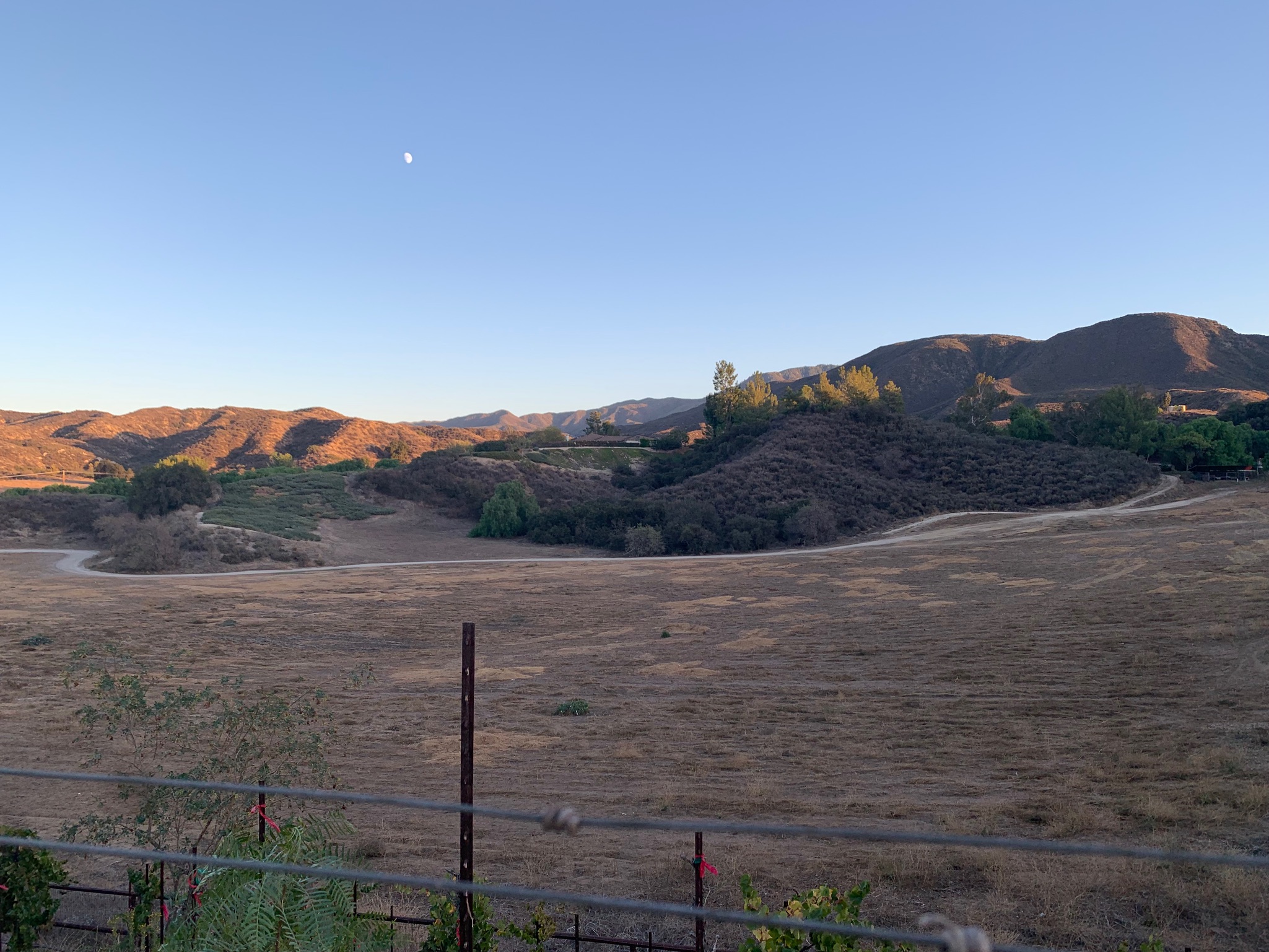
We finally arrived at our first destination: Sweet Oaks Winery in Temecula, CA, which is wine country in SoCal. Sadly, we did not get a chance to do a wine tasting while we were staying there, as our hosts Michael and Donna already had a day of wine tasting planned for us. But, we were fortunate to stay up on the hillside among the vineyards, so it was quiet, with a cool breeze and the views were breathtaking. Not a bad start to our experience in SoCal, if you ask me. 😍 The winery participates in Harvest Hosts, but we were able to pay to extend our stay by booking through HipCamp instead.
Temecula, CA: Wine Country
Temecula offers an extensive array of wineries to visit. Donna and Michael have been thrilled about its proximity to their new home and the overall vibe, which they believe suits them a little better in comparison with Napa Valley. We went to four wineries during our day of wine tasting.
To start, we had a wine tasting and charcuterie plate at Doffo Winery, which not only had really friendly staff and plenty of places to relax and enjoy your stay, but they also have an incredible vintage motorcycle collection. It’s not something you see every day, so between the atmosphere and the wine, I highly recommend visiting if you are in the area. You won’t be disappointed in the wine, the views or the motorcycles. 😊
The day was heating up fast, so although we had not planned to do a tasting inside at Robert Renzoni Vineyards, it turned out to be a blessing in disguise since it was much cooler inside the tasting room. Parking was a bigger challenge here (they had valet parking at Doffo), but the person helping us with our tasting was very nice, and Matt and I ended up buying a couple bottles of wine. They have a fairly wide selection to choose from, and are known for serving up delicious fresh pizza as well, so bring your appetite if you visit this vineyard.
Next up was one of Michael and Donna’s favorites due to its casual vibe and lovely back patio: Lorenzi Estate Wines. As such, they became members of Lorenzi’s wine club. Not only do they have some notable red wines to choose from, but they also have Winemaker Events, with an evening of dinner and featured wines. We had such a relaxing time here enjoying a glass of wine and escaping the heat of the day.
We were all getting very hungry at this point, so we finished our day at Avensole Winery. The menu was enticing, so we all indulged a little on the food and left with full, satisfied bellies. Though we didn’t participate in a wine tasting here, they do offer several award-winning wines to choose from.
After a day with lots of sun, heat, and wine, we were ready to head back. We gave Michael and Donna the “grand tour” of our humble abode we now call home, accidentally invited a lizard inside, said our goodbyes and called it a night. It was a lovely day of catching up, enjoying our beautiful surroundings and the wonderfully warm weather, especially after experiencing the cold snap from the week before.
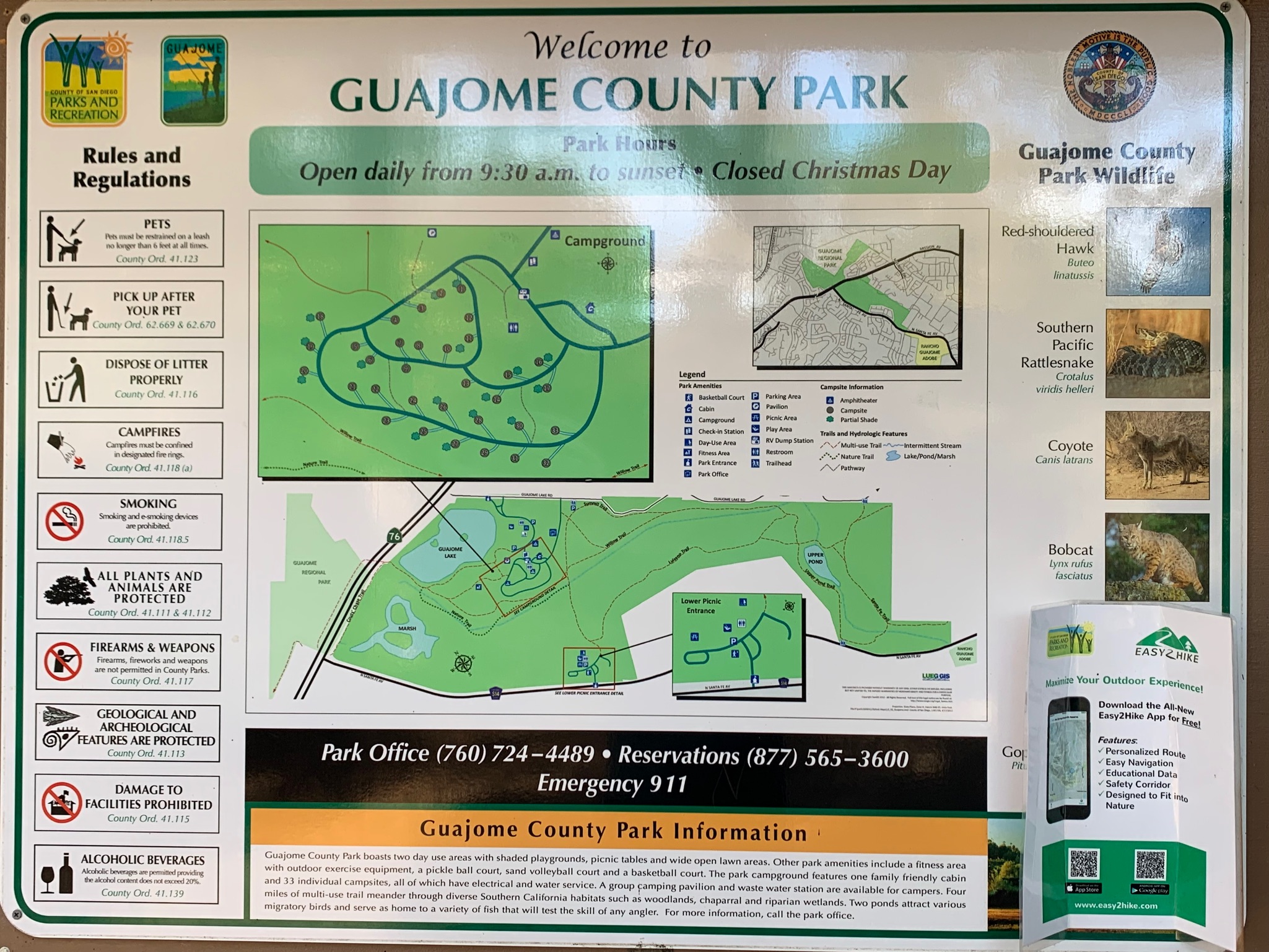
Guajome Regional Park
Our next stay at Guajome Regional Park was just 15 minutes away from Michael and Donna’s house. Truth be told, we only spent a few nights at the park, because we spent the rest of the time staying at Michael and Donna’s, but it is a nice park, and we did meet some friendly neighbors during our time there. Like Anthony Chabot, this park also closes the gate at night, but they have a night entrance, so there is no curfew. The bathrooms are also locked up and require a code for use after hours.
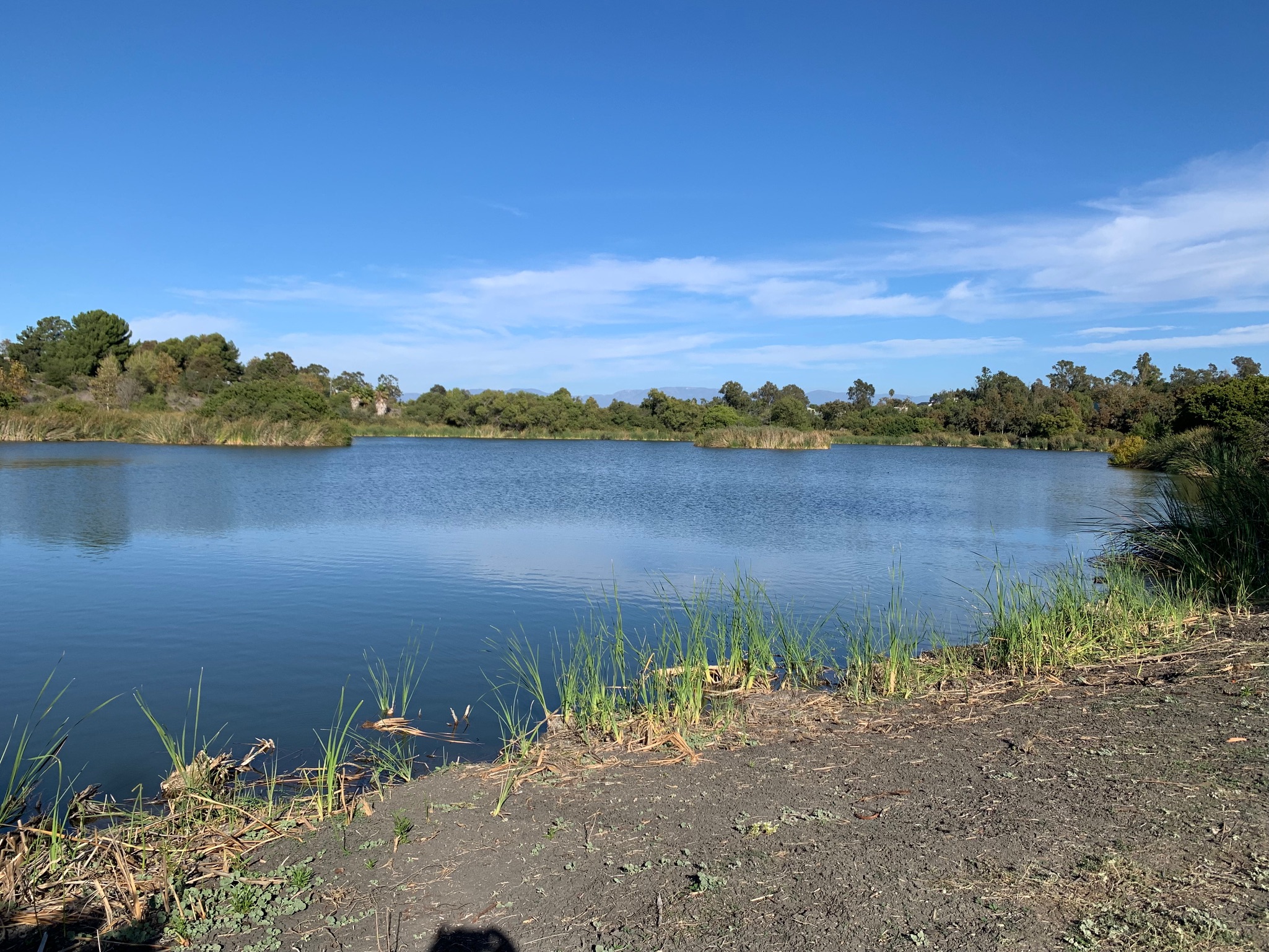
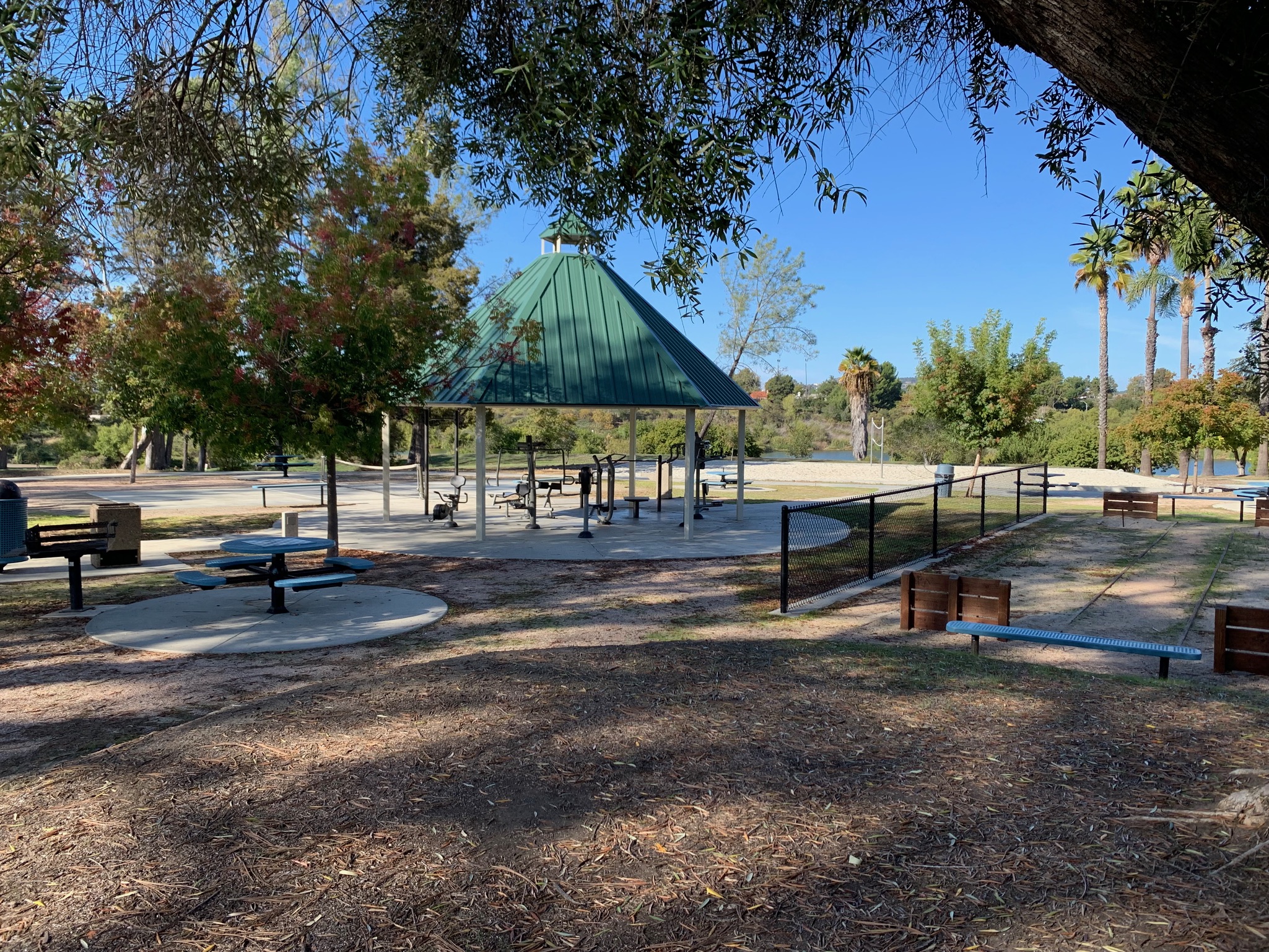
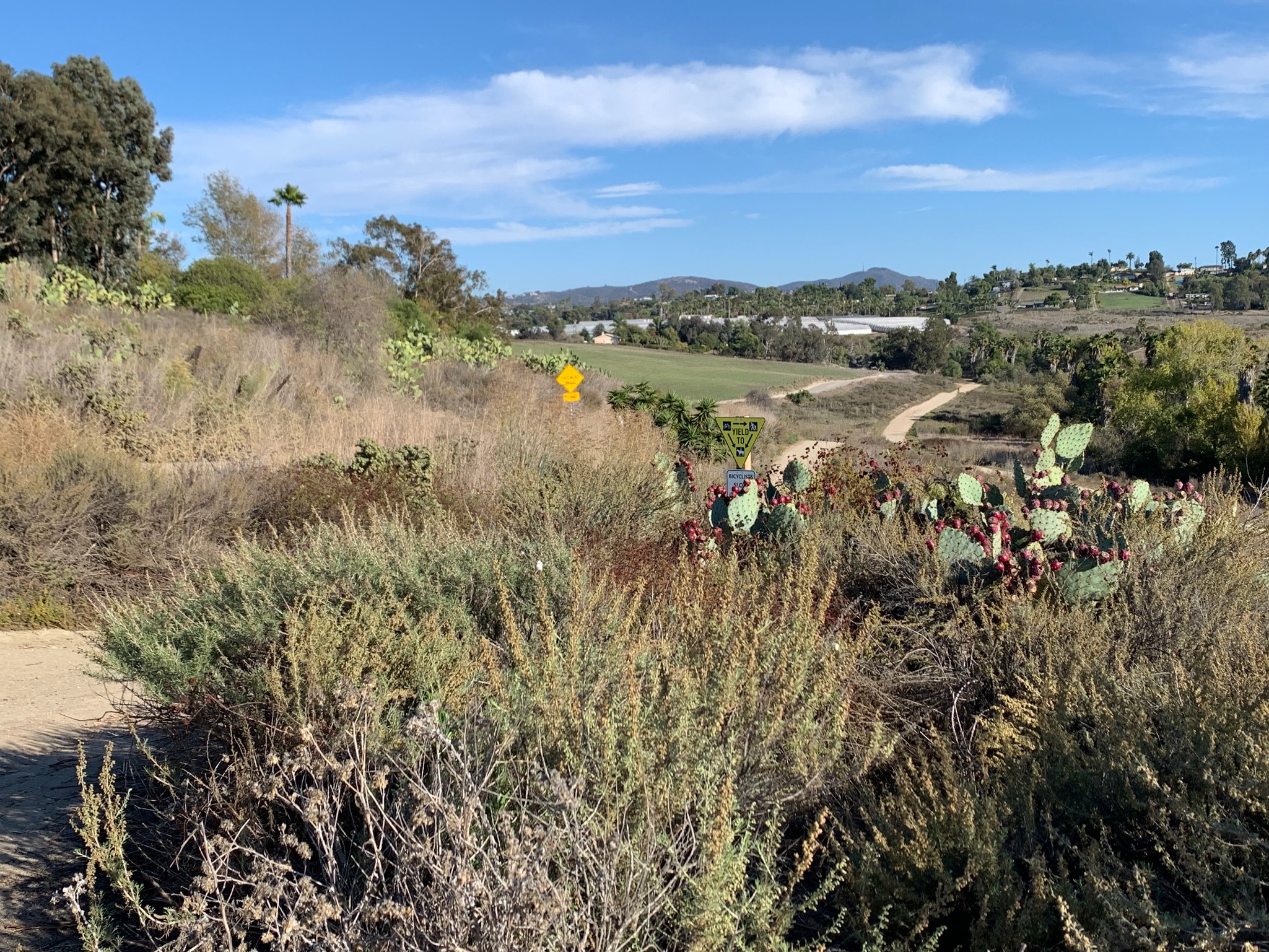
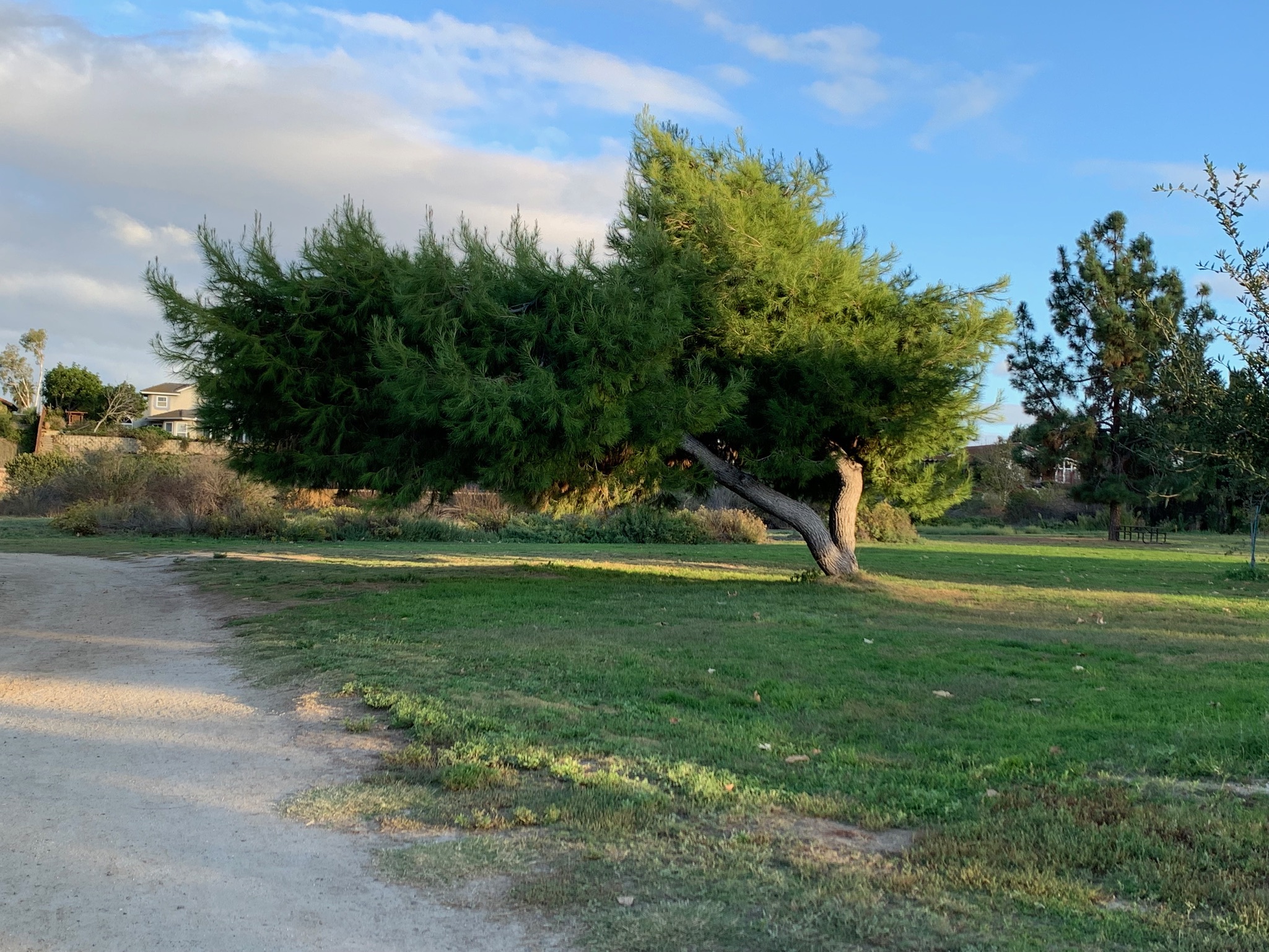
I enjoyed this park and am glad we found something so close by that was also affordable. The sites are spacious, there are plenty of trails to stroll along, a few lakes or ponds to enjoy, and the area is frequented by walkers, runners, bikers, and equestrians. It is more rustic than manicured, but has some interesting plant life and a “nature walk”, which wasn’t drastically different than the other trails, to be honest. But, the park does have children’s play equipment, picnic areas, and a section that has outdoor gym equipment, horseshoes, a pickle ball court, volleyball court, a chess/checkers table and a nice view of Guajome Lake.
The only major con we experienced while staying at this park was the traffic noise. The north border of the park is Highway 76, which motorcycles in particular like to open the throttle so everyone in the area can hear. 🙄 Aside from this, I think it would be a great place to stay if you can handle partial hookups. There is a central dump for black and gray tanks, but sites only have water and electric hookups. Overall, I would came back to this park to stay if the opportunity arose.
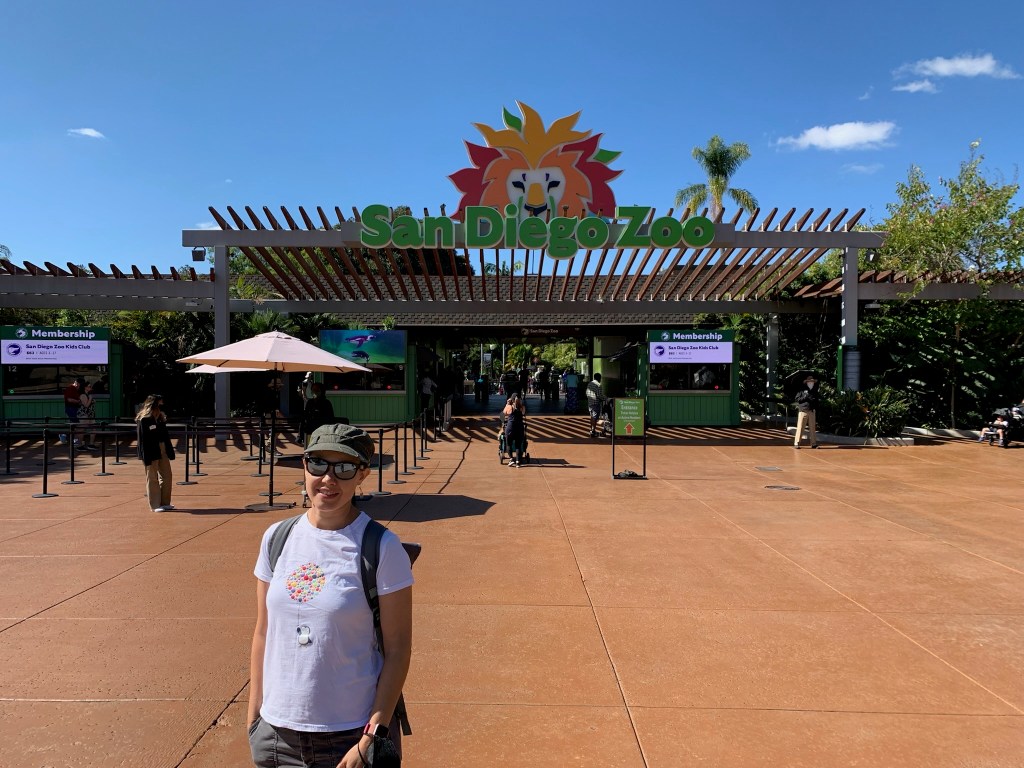
The San Diego Zoo
Although Matt and I don’t often go to the zoo, the San Diego Zoo is known for being one of the best in the country. It is also one of the largest and you would be hard pressed to see it all in one day, especially considering there is a separate Safari Park in Escondido. We spent about 4-5 hours there and still only saw about 75% of the main zoo. I have always had a hard time seeing animals in captivity, but am aware of the essential role zoos plays in wildlife conservation, providing a place for animals that would not survive in the wild due to injury or other maladaptation, or were otherwise recovered from the black market.
We started our visit by having lunch at what is likely considered the best venue in the park, called Albert’s Restaurant. And, it really was a lovely sit-down meal. If you want more than your typical overpriced carnival fare, this is the place to go. I was fortunate to come across the San Diego Zoo app, which came in really handy for finding our way around, looking for places to eat, specific exhibits, etc.
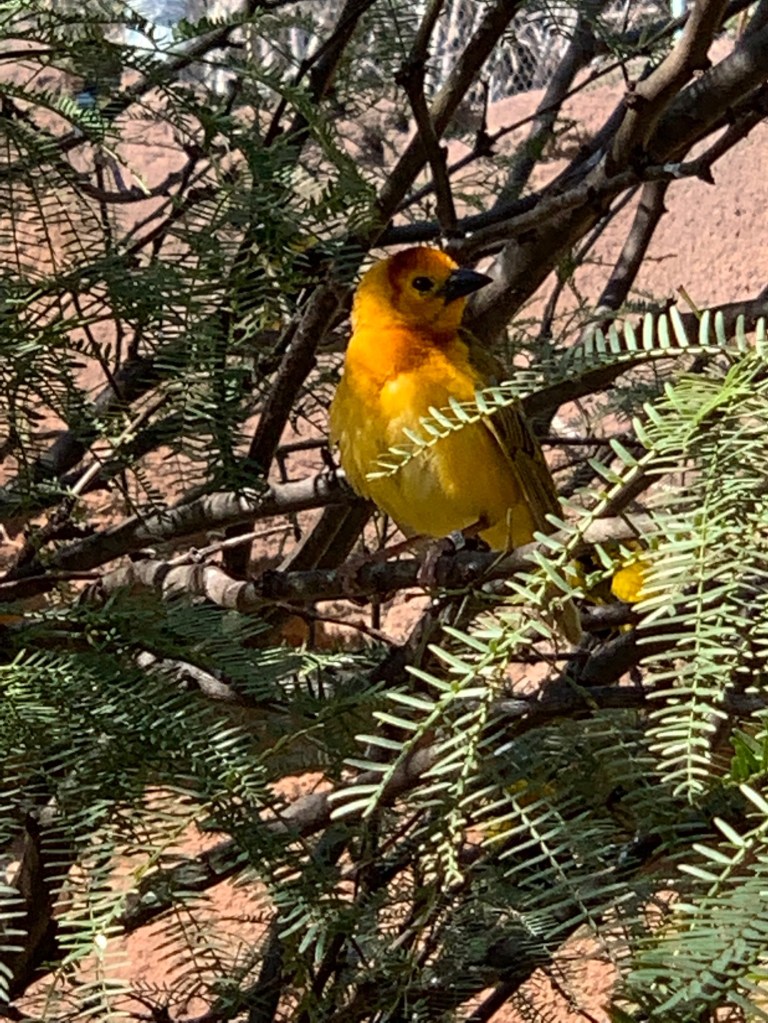
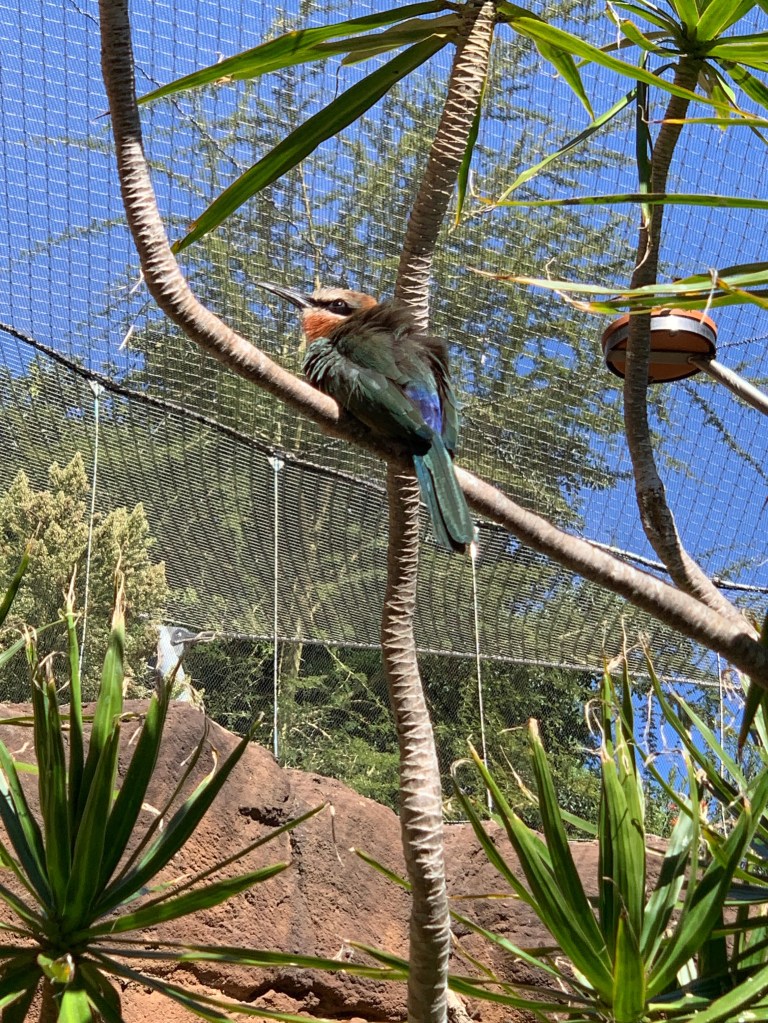
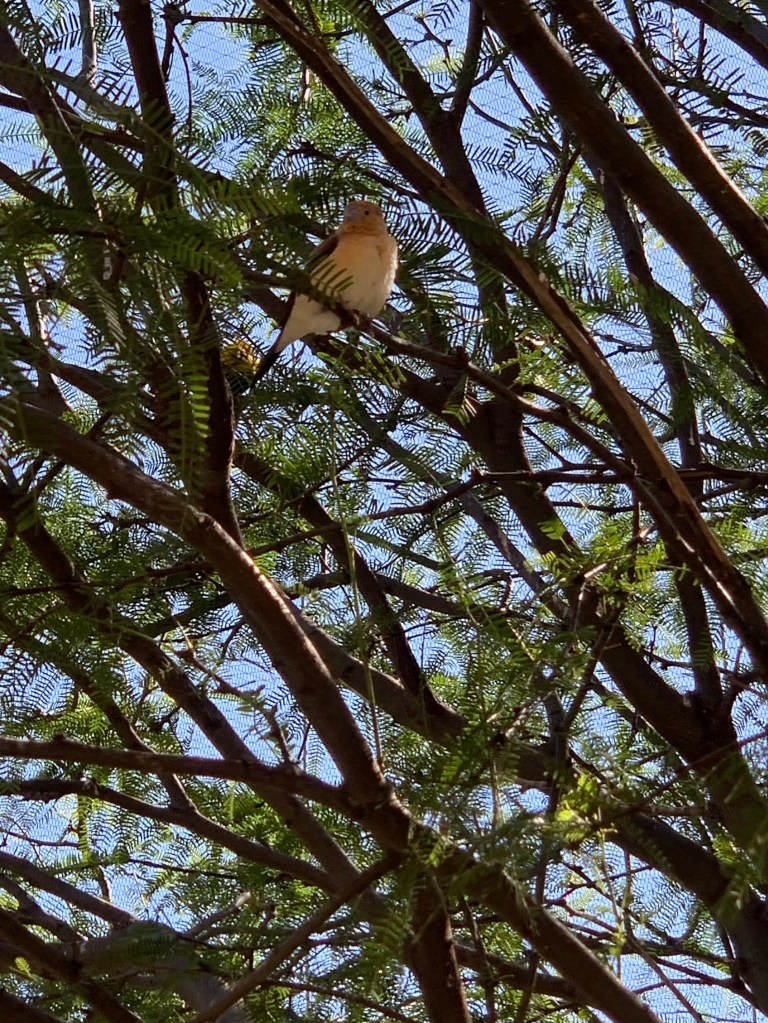
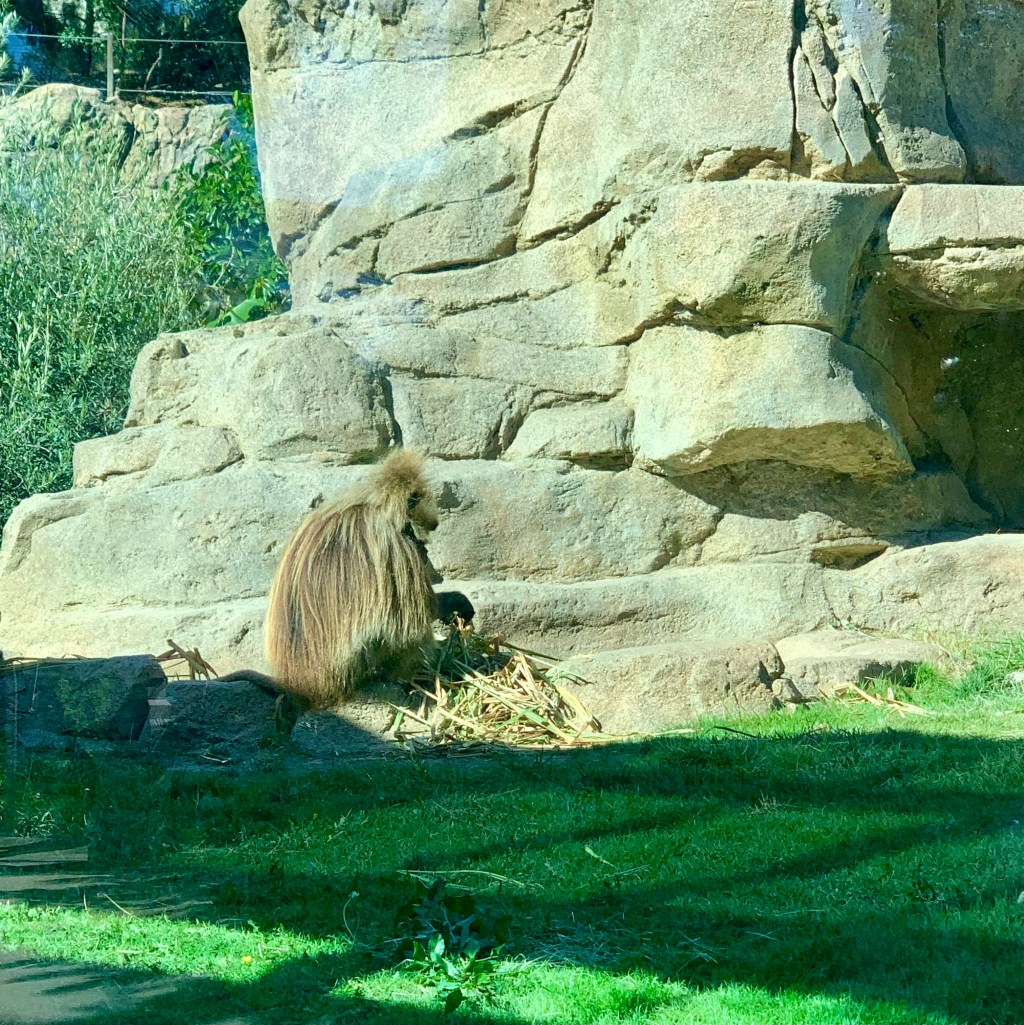
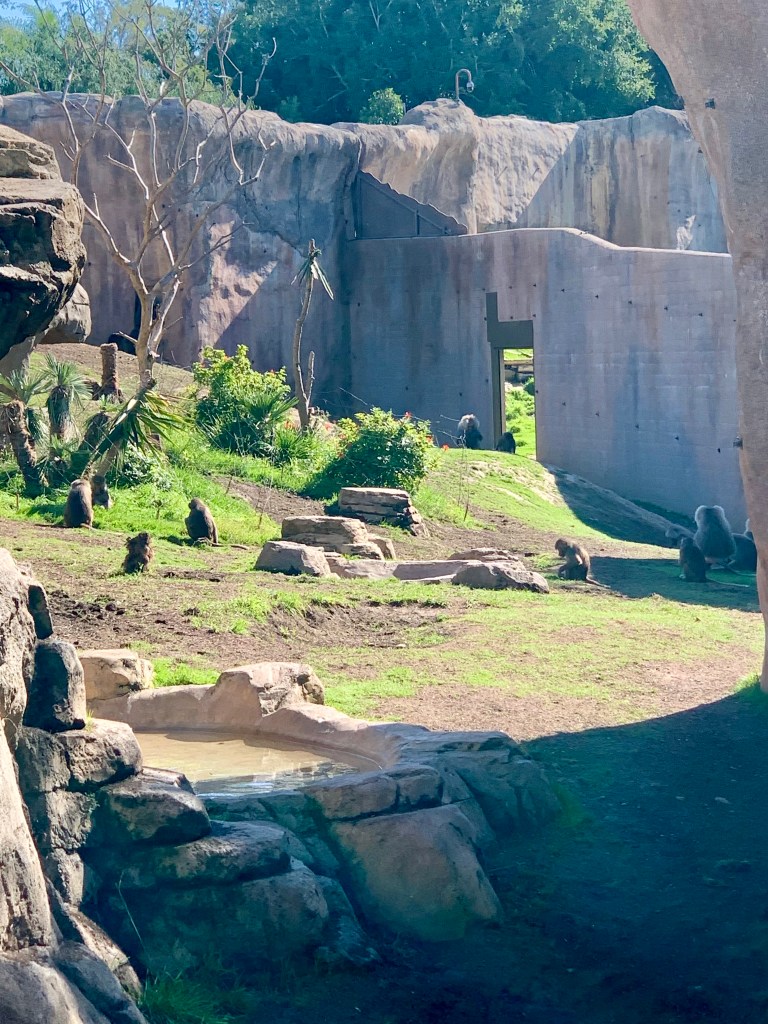
As a whole, we had a positive experience and were thankful we went on a weekday. The San Diego Zoo is a popular attraction, so be prepared for crowds. I was impressed with the plant life, and we both really enjoyed the walk-in aviaries in which the birds had a little more room to spread their wings, as well as the gelada and baboon exhibits. I was personally thrilled to see a small insect exhibit featuring a very colorful beetle, large grasshopper and a praying mantis. It was a beautiful day to tour the zoo and a nice break from our normal outdoor activities.
Birds from our favorite, large aviary
Gelada monkey, Hamadryas Baboons, and a very colorful beetle
Our stay with Michael and Donna
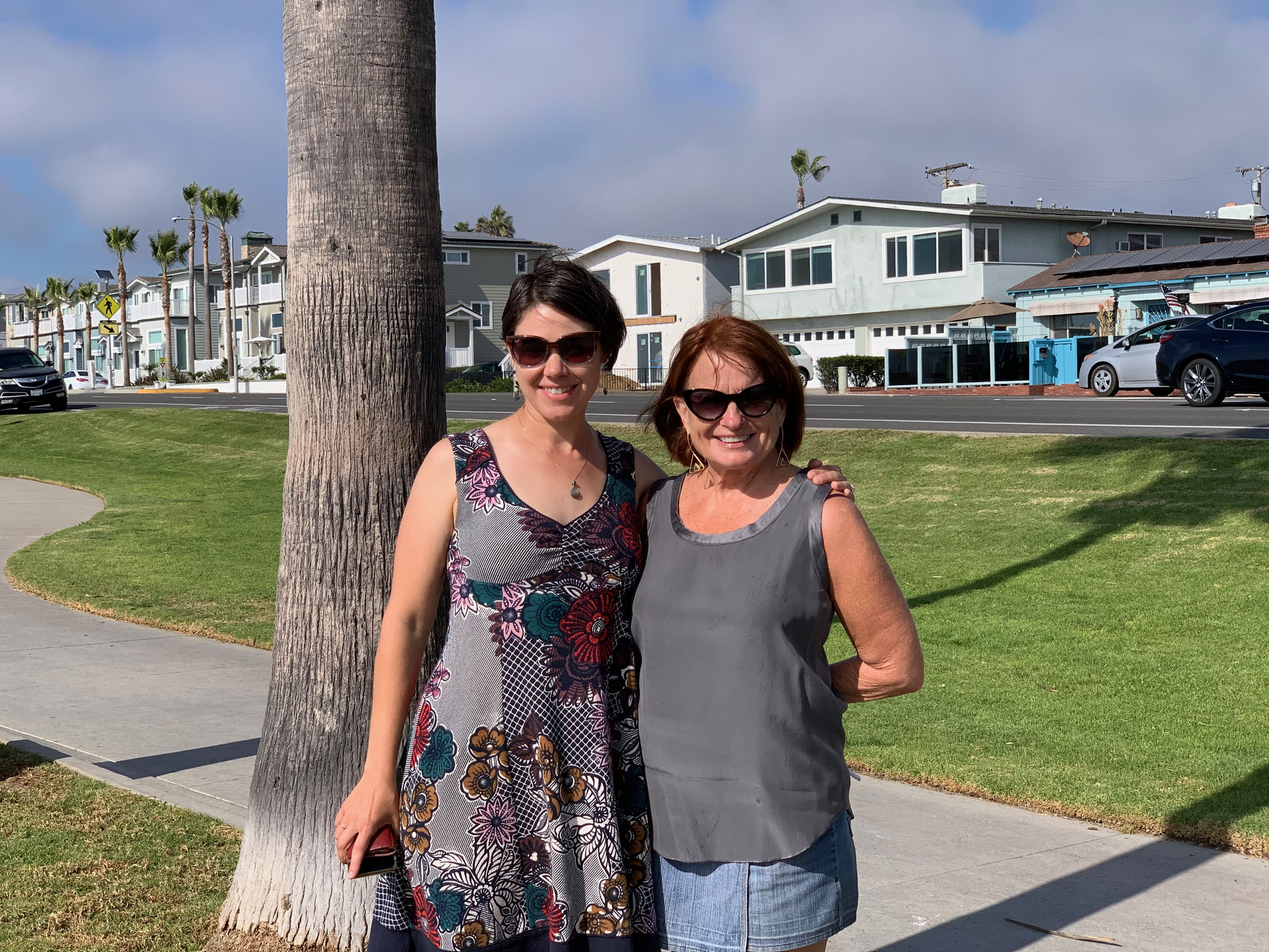
When I still lived in the Bay Area, Michael was one of the first people I met, and a few years later I met Donna. Having known them for a couple of decades now, they are like family to me here on the west coast, and it has been a long time since I have had the opportunity to spend time with them after having moved up to Portland. But now that they had resettled in SoCal, it was the perfect opportunity to spend time together and see their fabulous new home. Plus, Tuan, Donna’s son Jeff’s partner, was celebrating his birthday at the end of the week, so they planned to come down from Los Angeles and we were happy to join in the festivities.
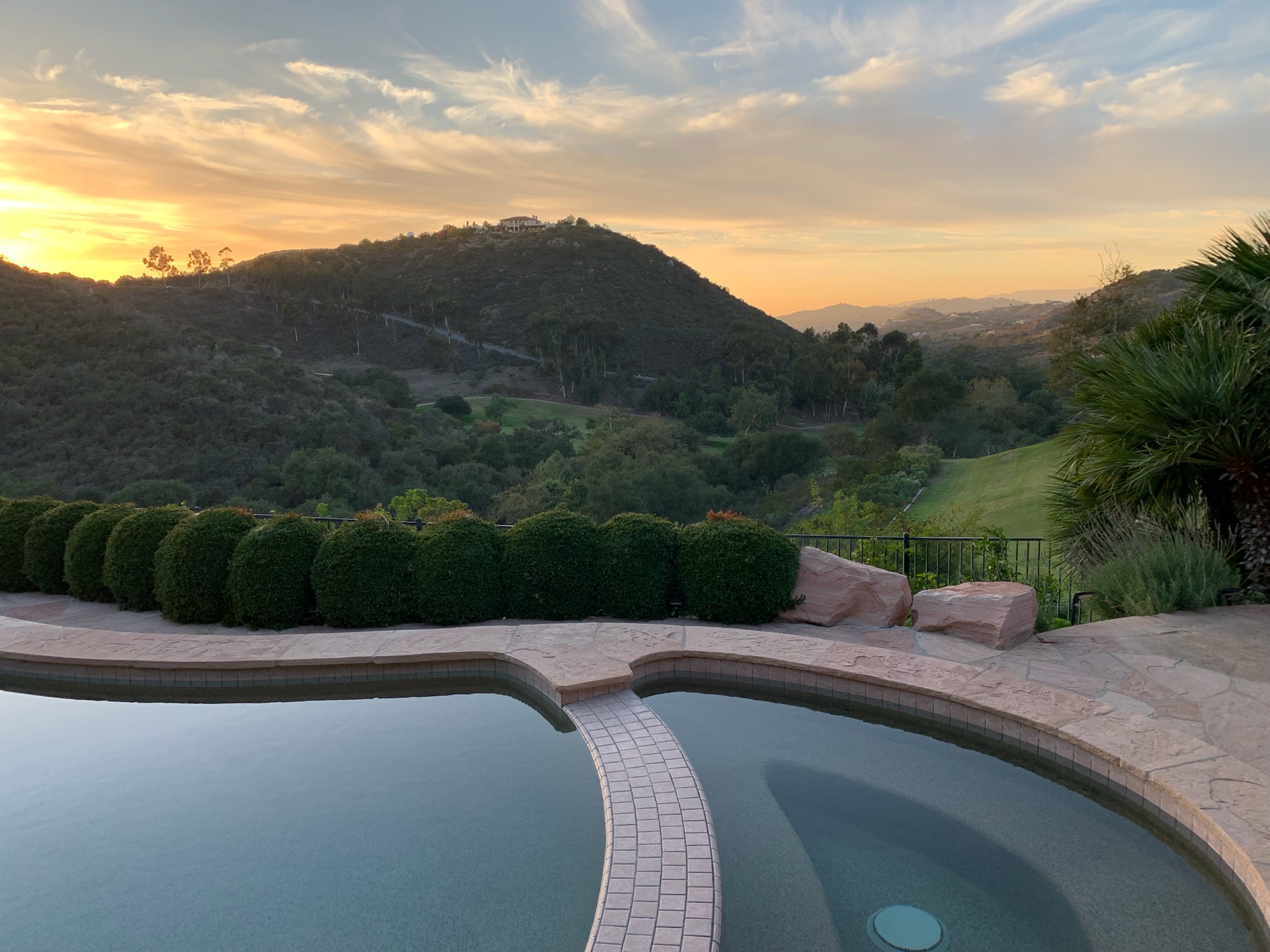
We took a break from trailer life for a few days and stayed with Michael and Donna at their beautiful house in Vista overlooking the Vista Valley Country Club golf course. They put a lot of work into their new home, including the landscaping, and also created a hummingbird paradise with about 10 different hummingbird feeders. It truly is a spectacle to watch these tiny birds zipping to and fro across their patio, battling for a spot at their favorite sunny bird feeder.
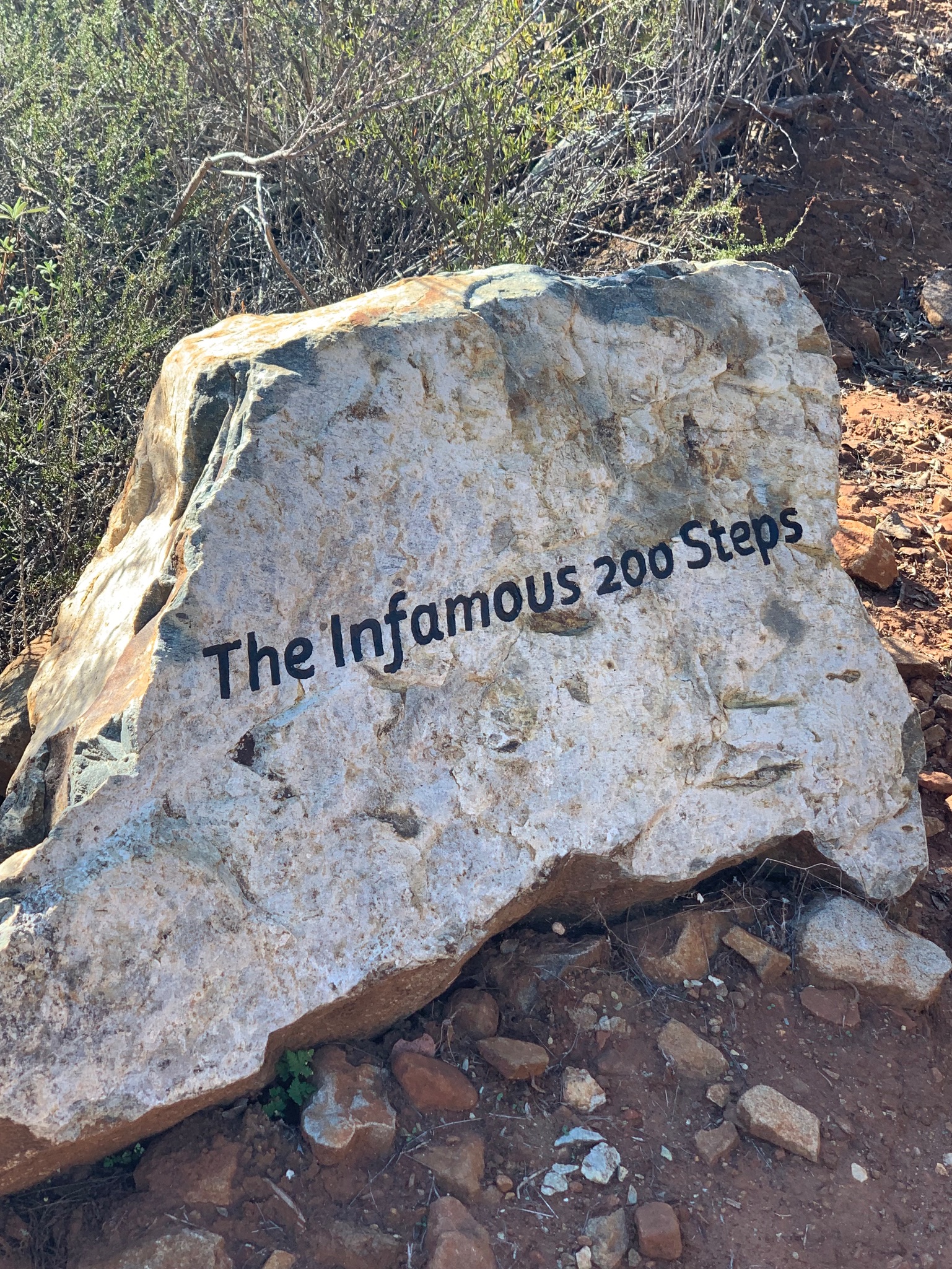
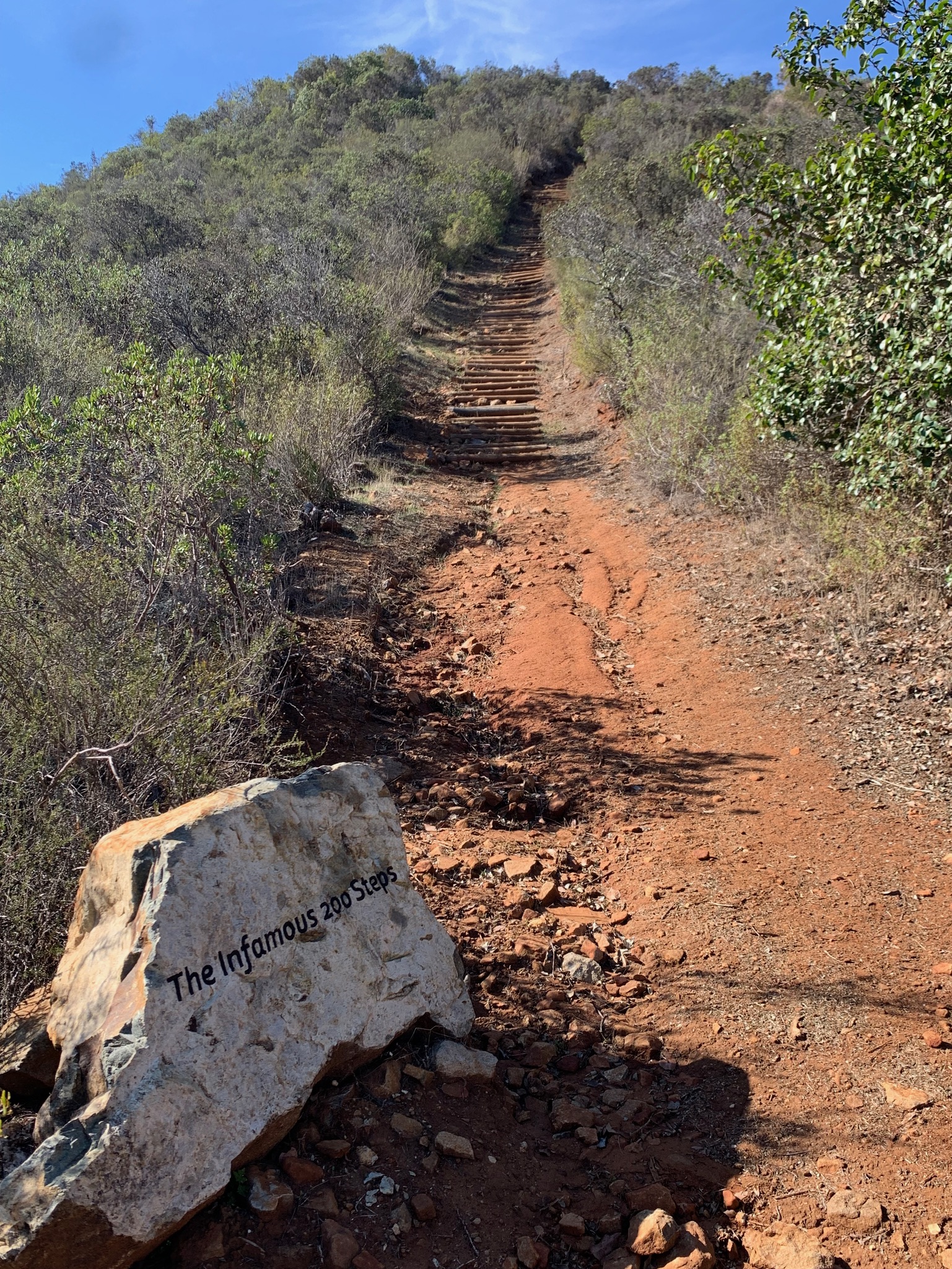
While visiting, we made many delicious meals together, I took advantage of Donna’s home gym space, and Matt and I did a covert walk around the golf course to get up to the “infamous 200 steps”. Technically, we weren’t supposed to walk on the golf course, but we snuck onto a few paths so we could wind our way up to the steps. The 200 steps gave us a good workout and connected us to a neighborhood road that had sweeping views of the golf course and valley below, and then we made our way along a fire road to loop back over to the house.
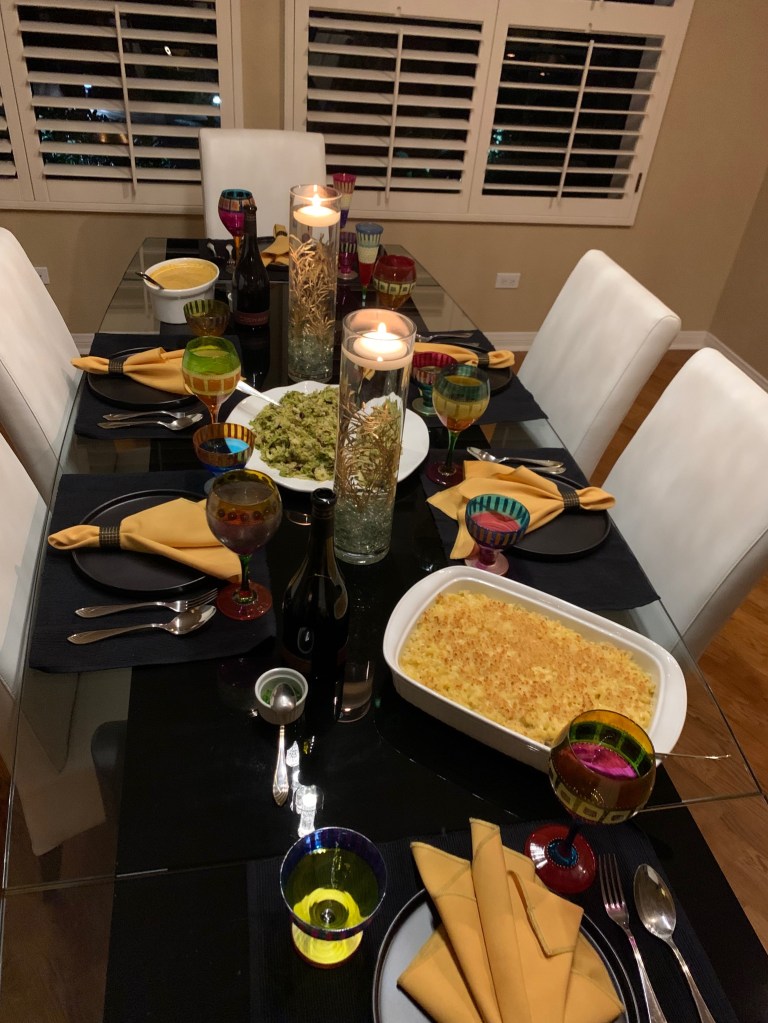
At the end of the week, Donna’s son Jeff and his partner Tuan came down from Los Angeles to visit and celebrate Tuan’s birthday. Prior to their arrival, Michael made two stellar cakes, Donna made a decadent lobster bisque and macaroni cheese and I made cacio e pepe Brussels sprouts. It had been ages since we had all been together, so it was lovely to enjoy a big meal and each other’s company.
Lobster bisque, mac and cheese, cacio e pepe Burssels sprouts, and wine of course!
Final night and Escondido RV Resort
We extended our stay by one night so that we could also go out to eat as a group one last time. However, finding a place to stay last minute on a weekend is challenging no matter where you are. After calling around to several places, we found one spot available at the Escondido RV Resort. The person at reception who greeted us was very friendly, and the place was clean and tidy, but it was very close quarters. Plus, the entire park is surrounded by a triangular section of major roads, so it is also quite noisy with road traffic. In a pinch, it was what we needed, but I wouldn’t want to stay here for an extended amount of time. Funny side story: the lizard that came in while we were at Sweet Oaks reemerged when we arrived in Escondido. 🦎 I hope the lizard found a way out before we left the next day. 🤞
Common Side-blotched Lizard on our blinds
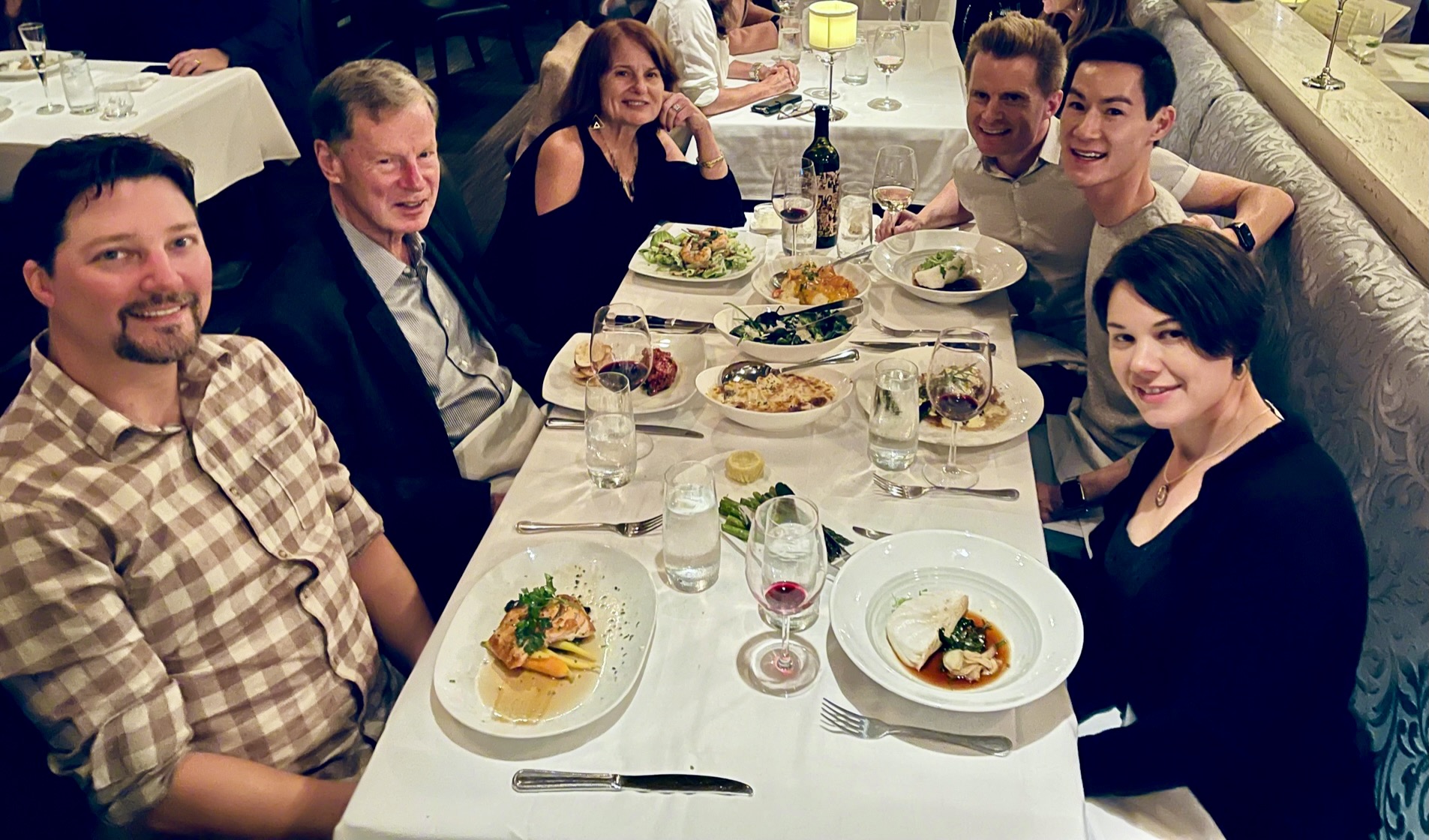
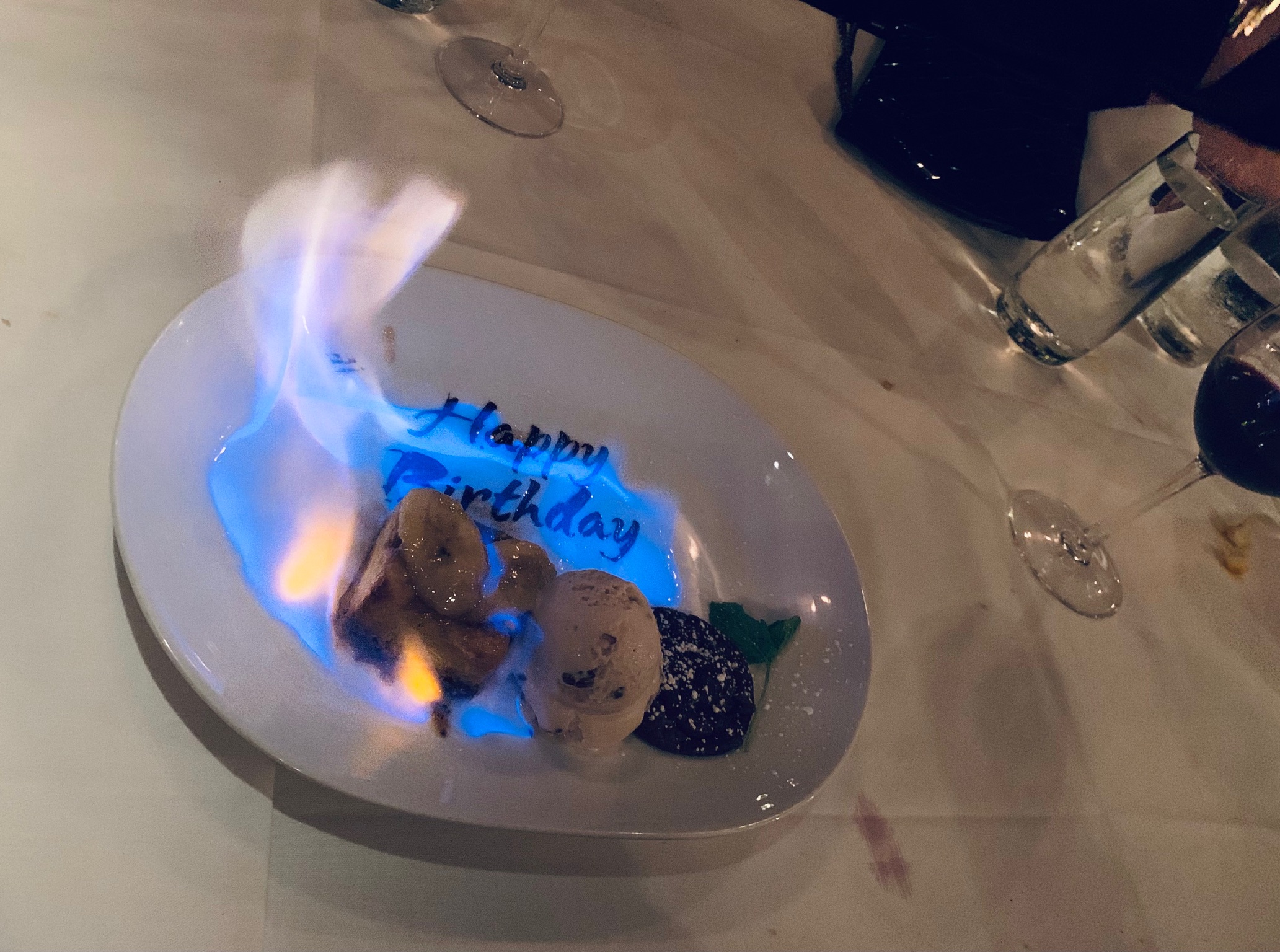
Jeff and Tuan picked us up, and we drove down to meet Michael and Donna in La Jolla to eat at Eddie V’s Prime Seafood, which was packed to the gills with patrons, most of which were also celebrating special occasions. Our service was excellent, and the food was superb. I don’t think there was a single thing we ate or drank that wasn’t to our liking. I was surprised to discover there are Eddie V’s spread across the US, so if the other locations are as good as this one, you will be in for a treat. Tuan received a fiery flambé birthday dessert, which we all oohed and awed over, and we eventually said our good byes and headed back.
We were so grateful to spend this time with Michael, Donna, Jeff and Tuan, to reconnect despite spreading out across the west coast, and to share hugs, laughter and heart to heart talks as if no time had passed. Much love to you all and thank you for hosting us. ❤️ Now we begin our mosey eastward, starting with Indio, CA near Palm Springs, Coachella and Joshua Tree National Park in the heart of the desert. Much love to all of you readers as well, and thank you for continuing to follow us on our journey. 🥰
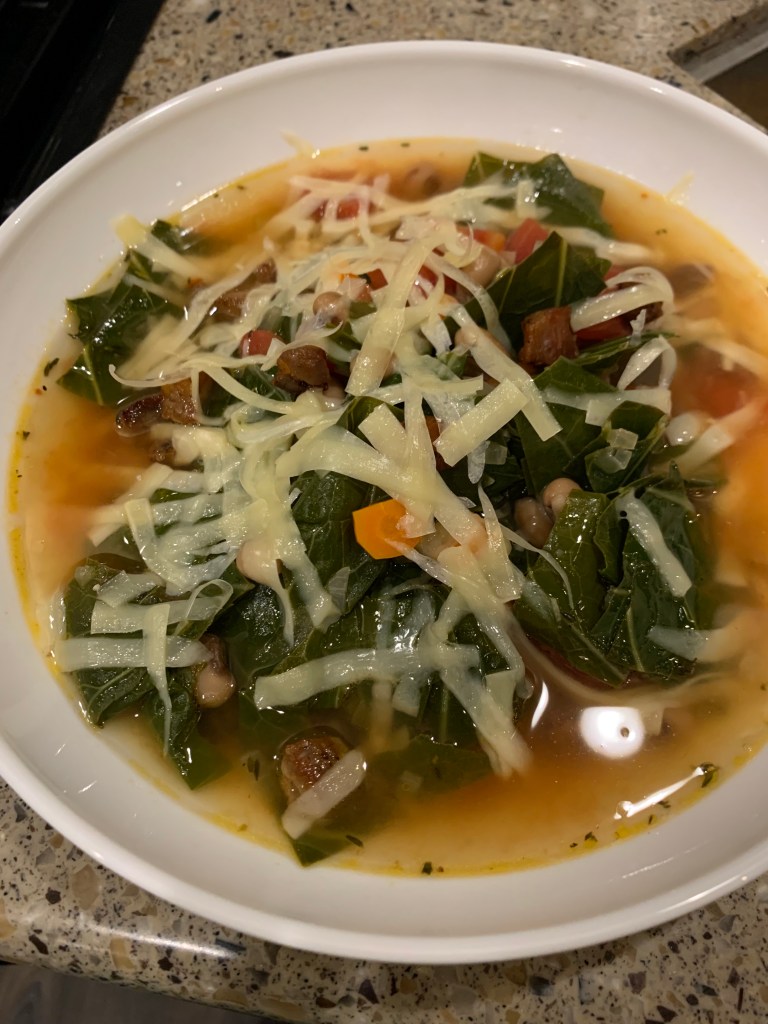
I love collard greens, but don’t usually enjoy the collards you get at BBQ joints that have been cooked all day long. I know that’s probably a sacrilege thing to say, but it’s just my personal preference…Matt disagrees, but the way. And our friend Scot has a great recipe he shared a while back, so I know it’s possible to have great collard greens; it’s just rare, in my opinion. They get acrid and lose the brilliant flavor that you get when you don’t cook them to death. This recipe gives you a brighter version of collards, plus the option for non-vegetarians to add a little smoky flavor with pancetta or bacon, and some gruyere cheese on top.
Here isanother lesson learned from the road: If you are about to head into an area with zero, zip, zilch WiFi, make sure you download, print to PDF, save screen shots or write down any online recipes you get from the web. It completely slipped my mind to do this before we arrived at our campground near Crater Lake. 😳 Thankfully, I have made this soup enough times that I didn’t have any issues reproducing it from rote memory.
Regardless, you can get this recipe from EatingWell, one of my favorite magazines and sites that I started learning to cook from in addition to Epicurious and my America’s Test Kitchen “bible” The Best Recipe cookbook. All of these resources gave me enough creative ideas and baseline knowledge to start experimenting in the kitchen and develop my love of cooking, baking, and anything involving food.
Collard green and black eyed pea soup
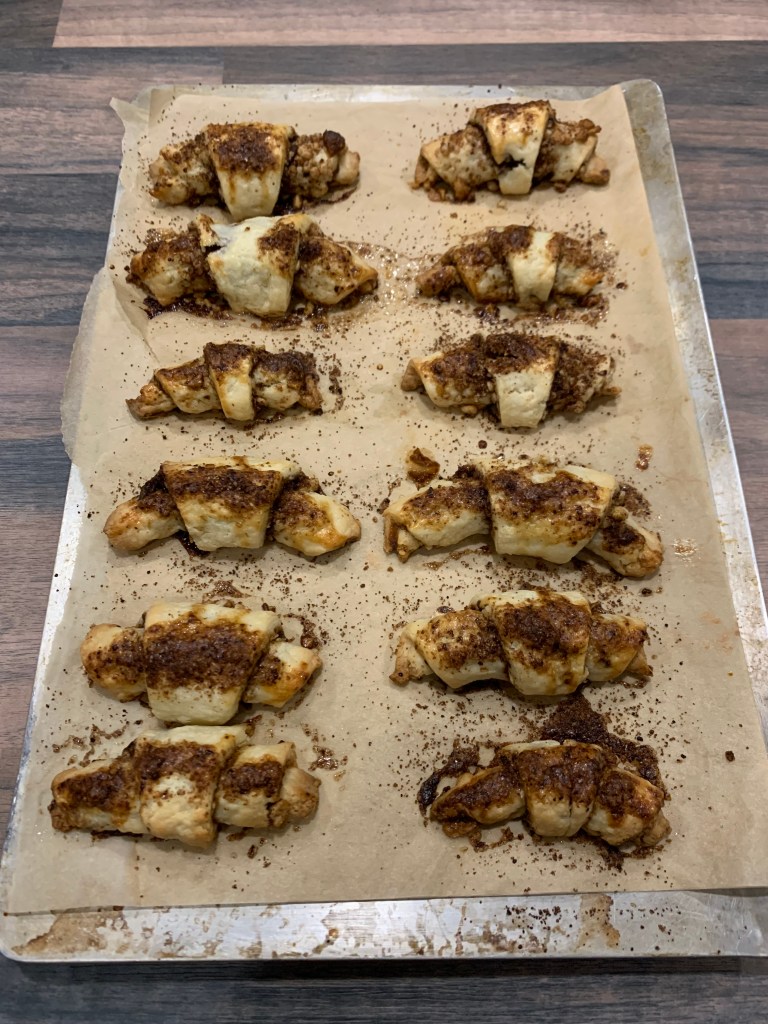
Macadamia Nut Coffee Rugelach:
One of Matt’s impulse buys was a bag of macadamia nuts. Nuts will spoil if you don’t eat them in a timely manner, so it always makes me anxious when they sit unused because I hate wasting food. He said he wasn’t as motivated to eat them as when he originally purchased them, so he encouraged me to use them instead.
I found this recipe for rugelach on the Food Network by one of Matt’s favorite chefs: Emeril Lagasse. Having enjoyed some mouth watering rugelach last winter during the holidays that my friend Shannon had made, I was excited to try making them myself. We landed in Prospect, OR just outside of Crater Lake National Park, and it was very cold and rainy for the first two days. This was the perfect rainy day project to heat up the inside of the trailer and make something to enjoy with our morning coffee, a cup of hot cocoa or snack on while hiking.
My biggest challenge was the fact that the only food processor I brought with me holds just 2 cups, and because it makes such a high pitched sound, I fondly refer to it as “the screamer” and wear ear protection while it’s running. This thing is no joke! It’s really, really loud! After reading the recipe and discovering I needed three separate discs of dough, I divided the recipe into thirds to fit in the food processor, which mostly worked. The butter pieces were not getting fully blended at first, and I didn’t want to overwork the dough, so with each successive batch I made the butter pieces smaller and each batch did improve.
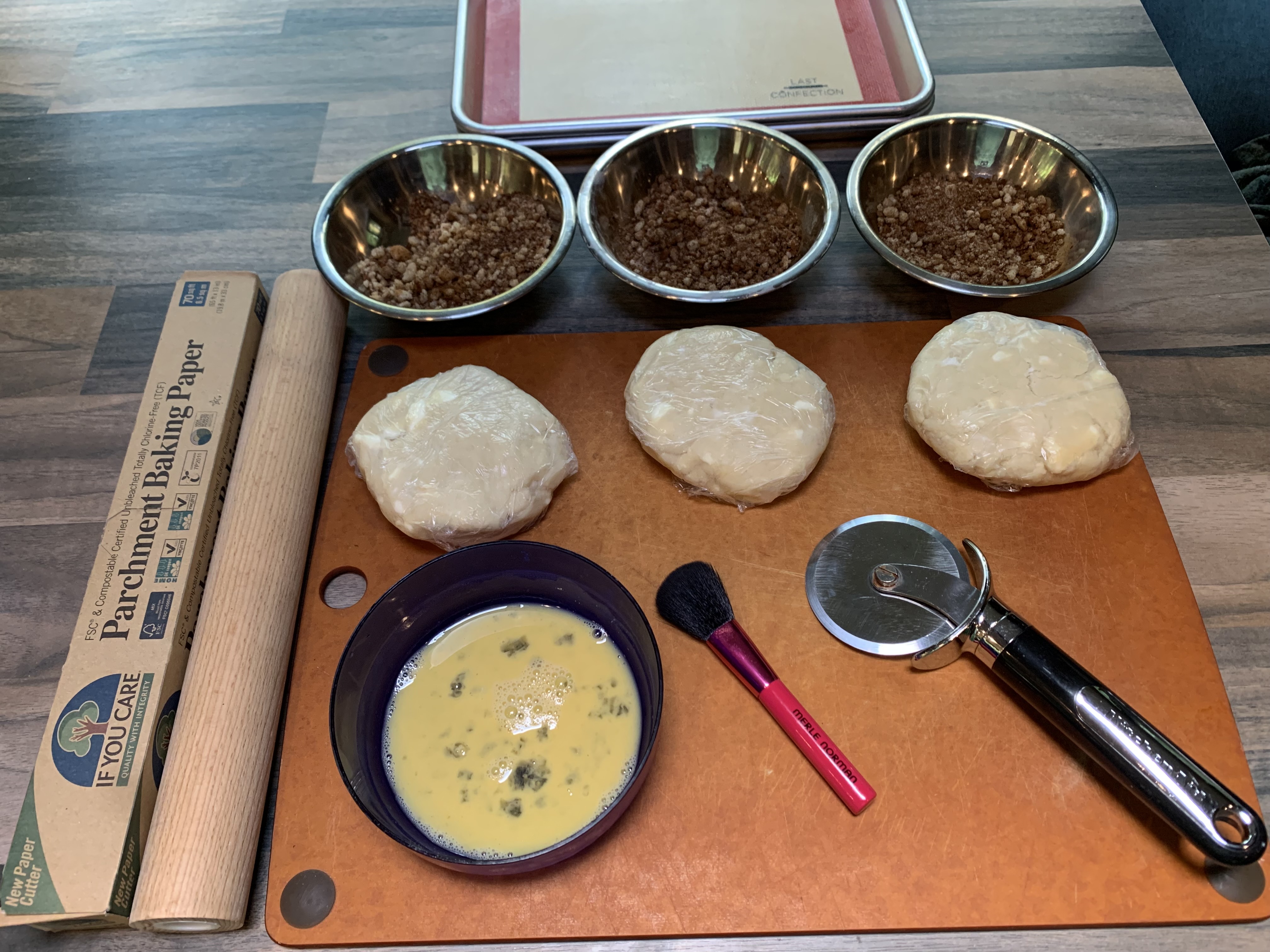
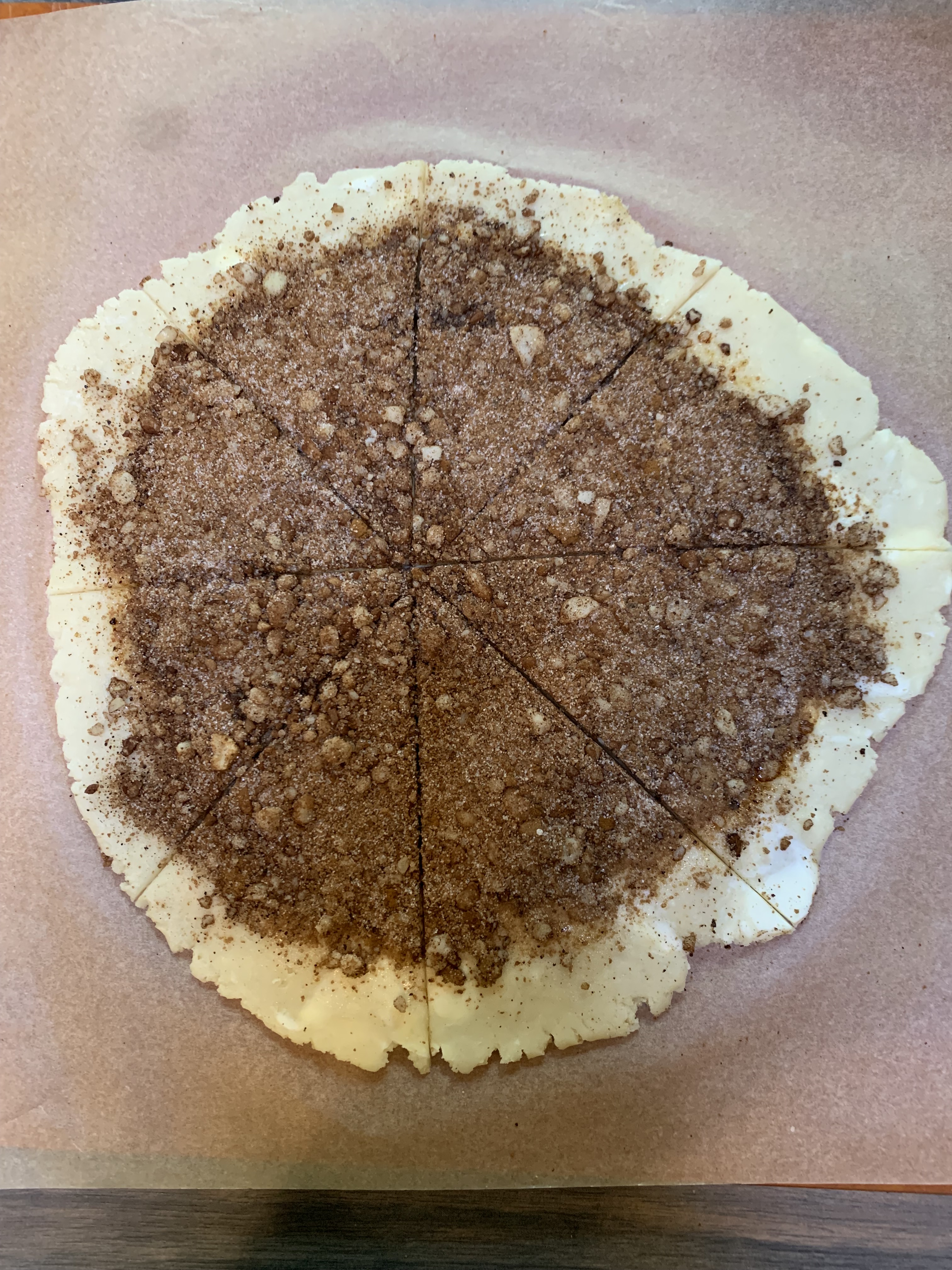
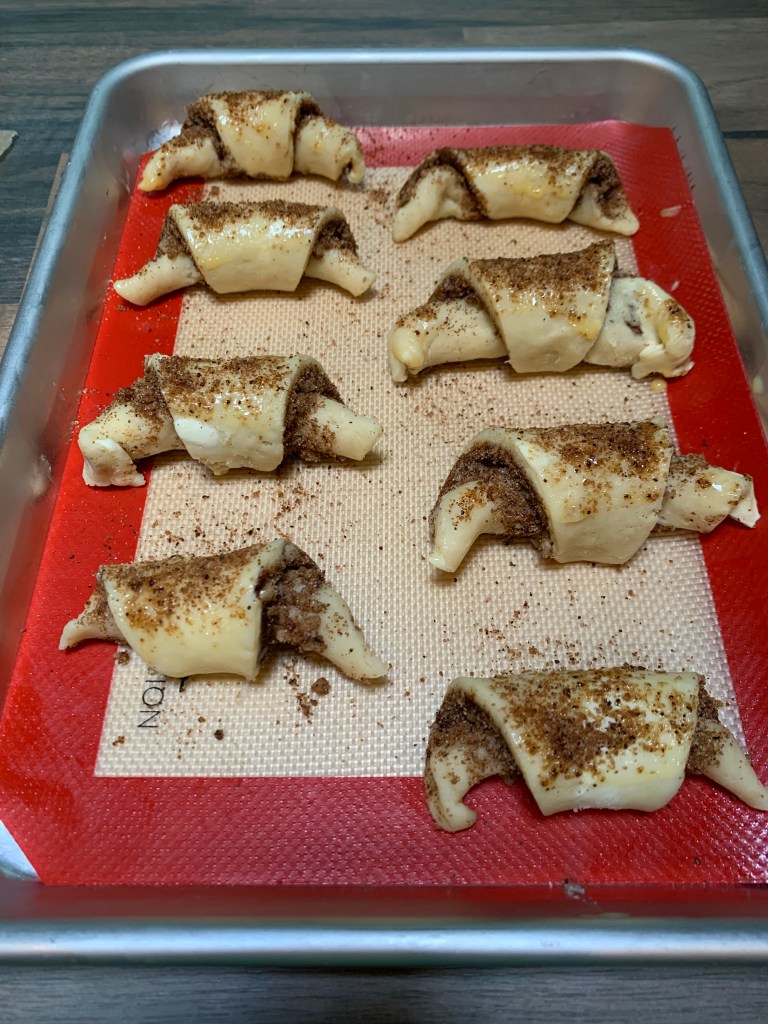
I had freeze dried coffee on hand, so I got out the mortar and pestle to grind it finer and divided that, the spices and ground macadamia nuts into small bowls to spread on the dough as I rolled it out. I used a pizza cutter to divide the dough and rolled every other piece to make it easier to roll the final pieces. I didn’t have a basting brush, but I had a brand new powder brush, which worked just as well for putting egg wash on the rolled rugelach before adding more coffee and spice mixture on top. As suspected, the first batch flattened significantly with “butter bleed” from the dough once I put them in the oven, but they were still tasty. I went from dividing the rolled discs into 8 pieces, then 10, and finally 12 pieces. Between the refined dough-making and smaller pieces to roll, the final batch turned out as I had hoped.
The only ingredient I didn’t already have on hand was cream cheese, so that made this an easy lift from the pantry, though it still took me over 4 hours because I had to bake each batch individually, so baking took 2 hours, or 40 minutes for each batch in my little oven. The finished result was absolutely worth the effort. If you have a larger oven and food processor, then it won’t take nearly as long, and you should have even better results than I did.
First batch ready to go in the oven
Last successful batched baked and ready to eat
Before and after shots of my macadamia nut coffee rugelach
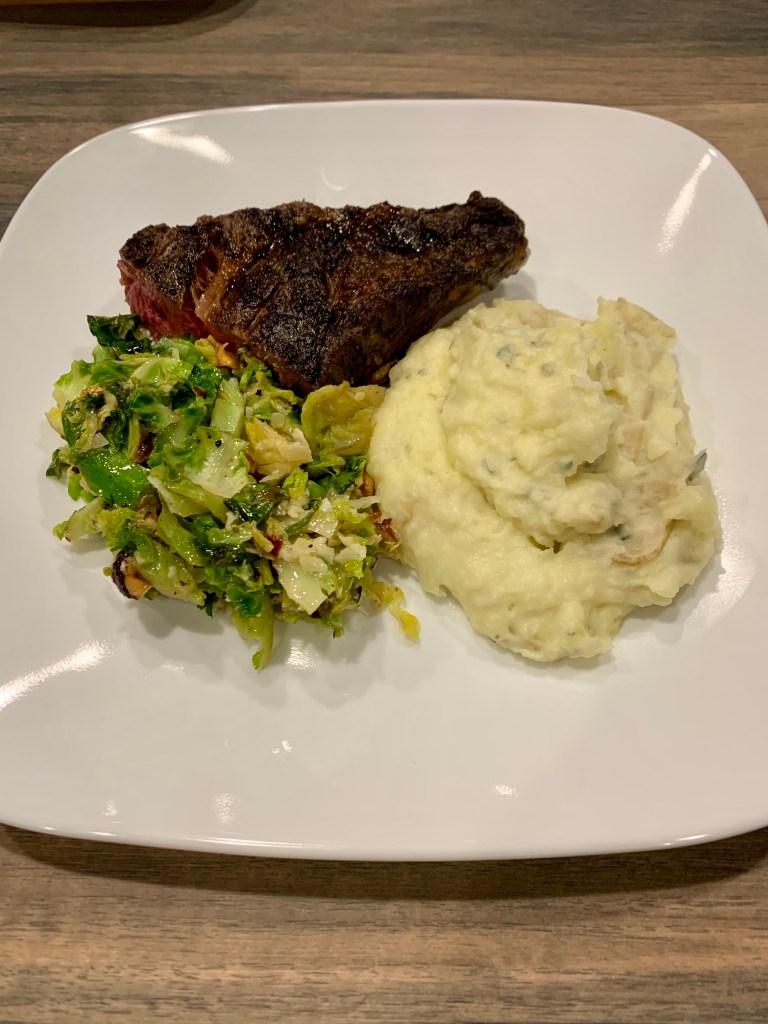
Bison steak with instant pot mashed potatoes and Cacio e Pepe Brussels Sprouts:
After visiting Diamond P Grassroots Bison farm in McCammon, ID, we finally decided to cook up some rib-eye bison steaks. Thankfully, our Harvest Host Jenny included Bison Cooking 101 instructions as a guide, because bison steak is much leaner than beef and you do not want to overcook it or it will get incredibly tough. Matt was in charge of these, coating them in olive oil, generously seasoning them with salt and pepper, cooking them slow and low on the grill to an internal temperature of 155 degrees Fahrenheit, and then letting them rest. They turned out nice and tender and flavorful. Having grown up on venison, I’d say they have a bit more “personality” than beef but not as much as venison, if that gives you a good flavor guide.
One of my favorite recipes from the Half Baked Harvest cookbook by Tieghan Gerard is the “The Best Pressure Cooked Mashed Potatoes.” I substituted half and half for whole milk, and warmed it up with the butter for easy incorporation into the drained, cooked potatoes so they wouldn’t cool too significantly. Furthermore, I have a hard time finding mascarpone cheese, which she lists in the recipe, so I usually use sour cream, but I think you could also use cream cheese or neufchâtel for richer mashed potatoes, if desired. Finally, I love sage, so I doubled the fresh sage from 1 tablespoon to 2 tablespoons, but add it at your discretion, and please be sure to quarter this amount if you are using dried sage.
The Cacio e Pepe Brussels sprouts are also from the Half Baked Harvest cookbook by Tieghan Gerard on the very next page, in fact! If you’re buying whole Brussels sprouts, cut them in half first and remove the root of each sprout as they are very tough and not fun to eat. I couldn’t find whole ones, so I settled on a bag of shredded ones, but still had to sort through them and cut out inedible pieces. One adjustment I made was omitting the additional salt. Depending on how finely you grate your parmesan, you are adding quite a bit of salt that’s already in the cheese. I recommend starting without any additional salt and adding it as needed. You cannot take it away if you oversalt!
I also chopped and toasted the hazelnuts and suggest roasting whole hazelnuts in the toaster oven first, letting them steam in the tea towel afterward if you have these tools at your disposal. Then you can rub off the tough outer skins of the hazelnuts before you chop them for a slightly less bitter result. Sadly, we did not take our toaster oven with us…I miss it dearly! So, I settled for chopping and toasting the hazelnuts in a dry fry pan over medium heat instead.
The combination of the steak, mashed potatoes and Brussels sprouts was a winner, and gave us the comfort food satisfaction we were craving. If you happen upon a bison steak, this is a good combo for you to try. Let me know what you think!
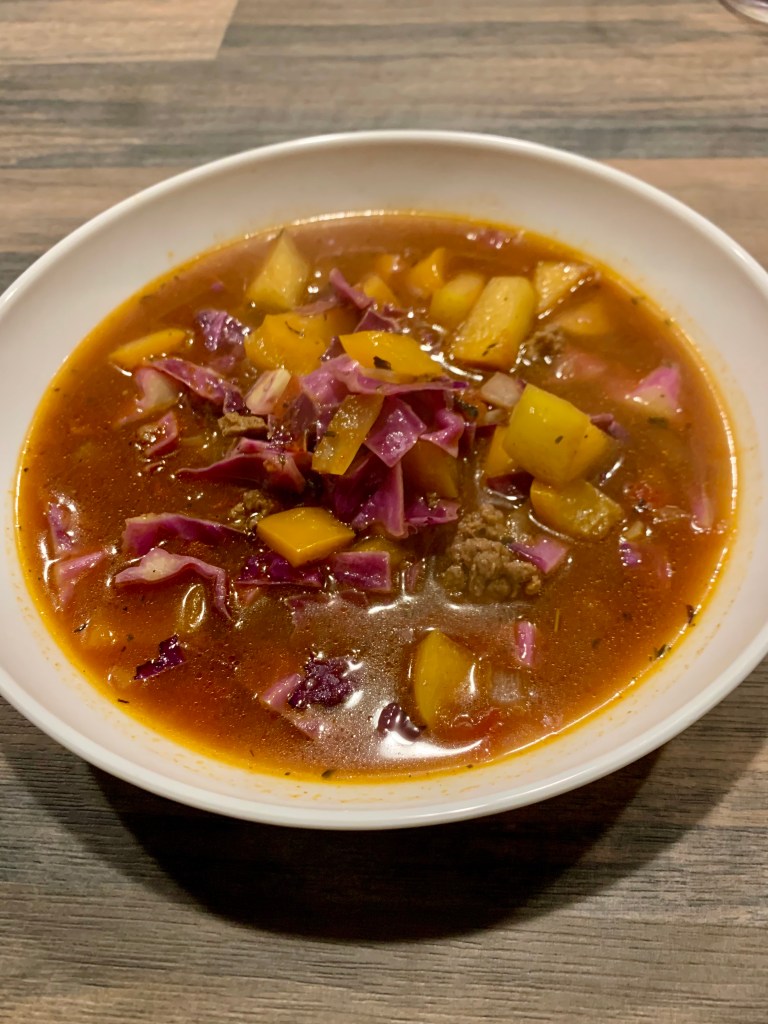
Sweet and Sour Beef Cabbage Soup:
Another favorite soup from Eatingwell, this really satisfied us during the latest cold snap that hit the area while traveling down Highway 395. One modification I make to this recipe was using red cabbage instead of green, because red cabbages are usually much smaller. Sometimes I don’t mind having left over cabbage to use in another dish, but as stated before, we don’t have a lot of refrigerator space, so smaller is better! I also used a fresh bell pepper and onion instead of frozen, mainly because I always have bell pepper and onion on hand anyway. I love honey crisp or pink lady apples personally, but I think just about any crisp, tart apple will do. Finally, I love smoked paprika instead of sweet paprika, and it really deepens the flavor of this soup if you happen to have it on hand. Bon appetit!
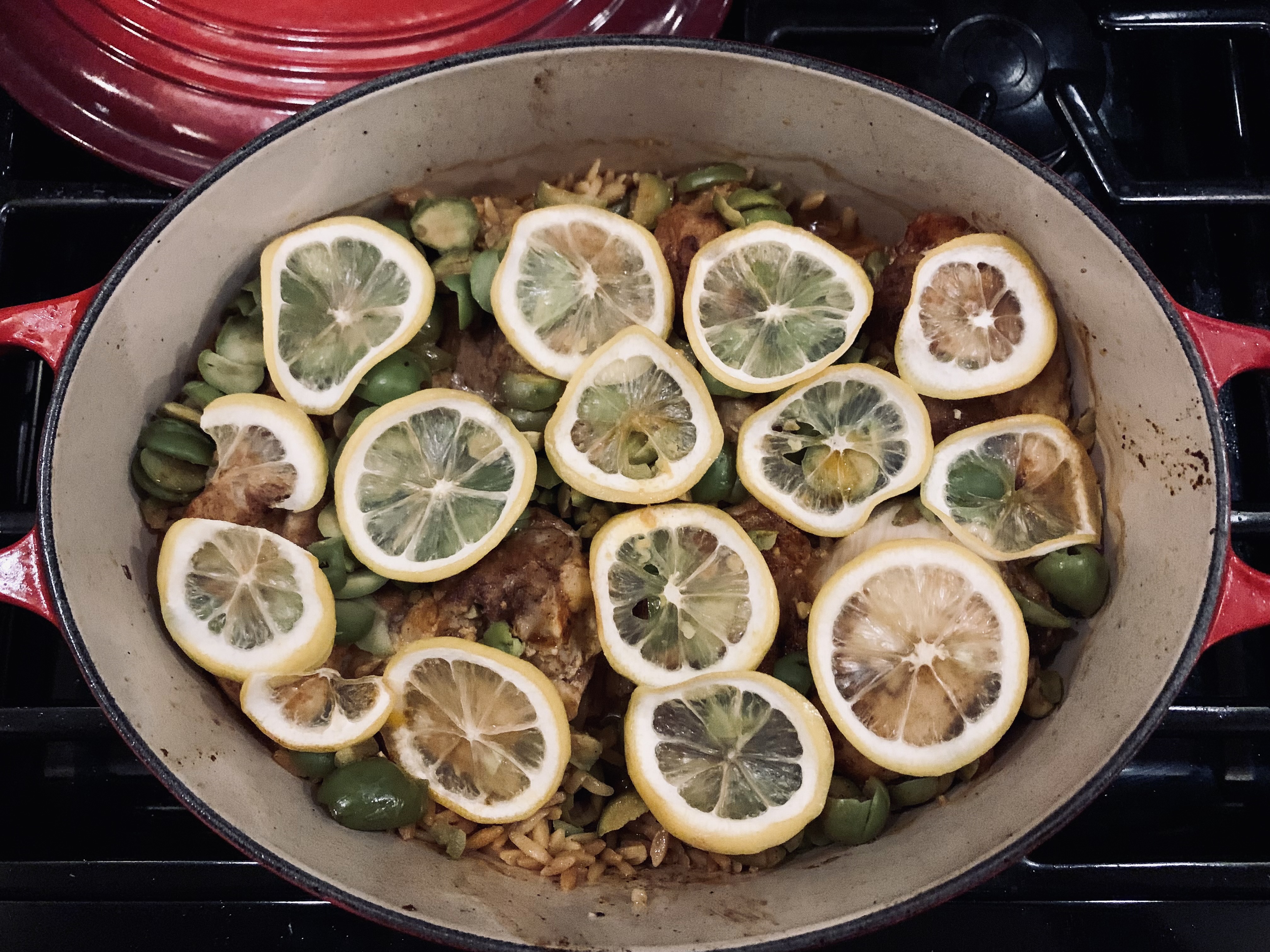
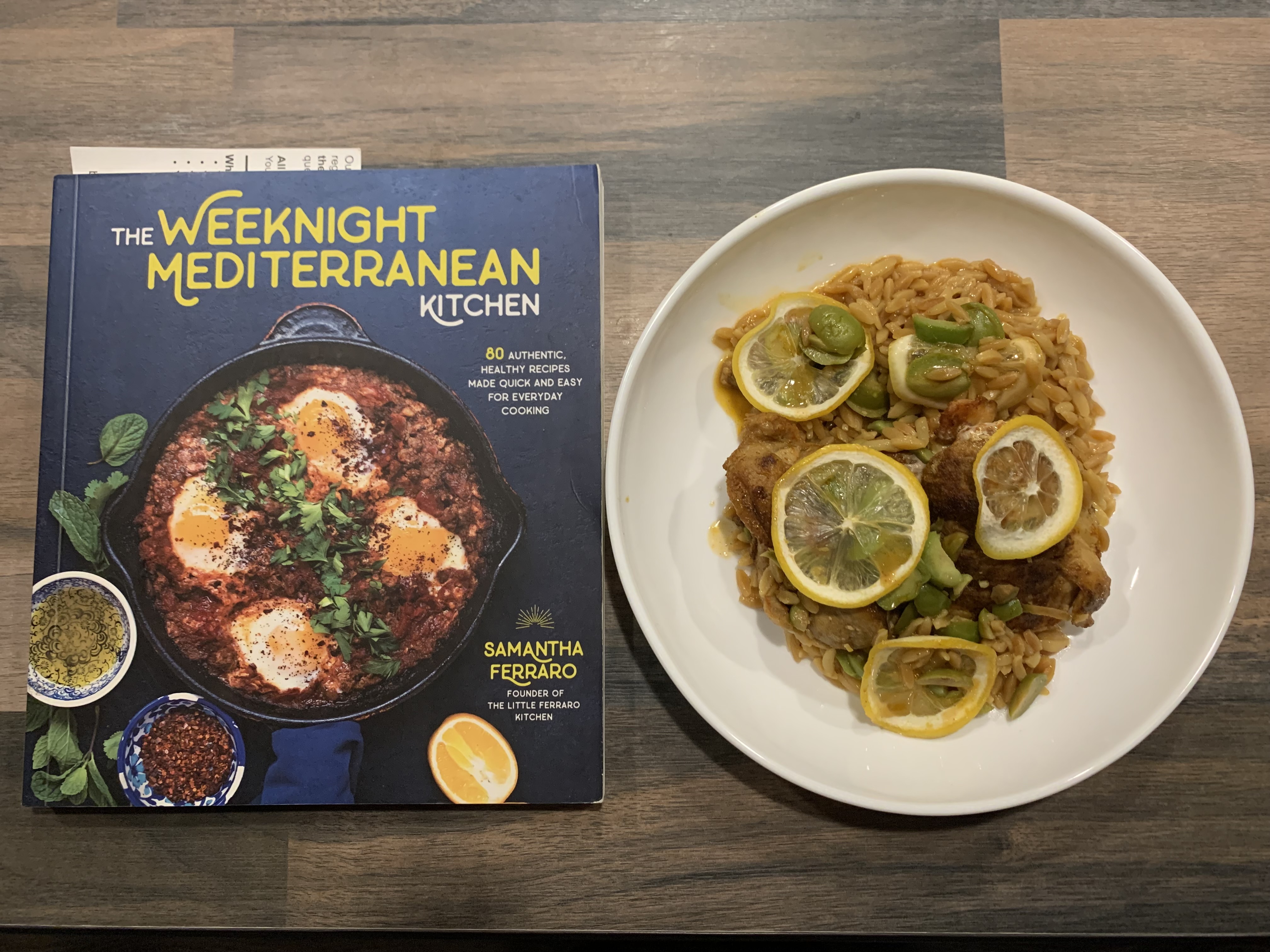
One-Pot Paprika Chicken with Olives and Orzo:
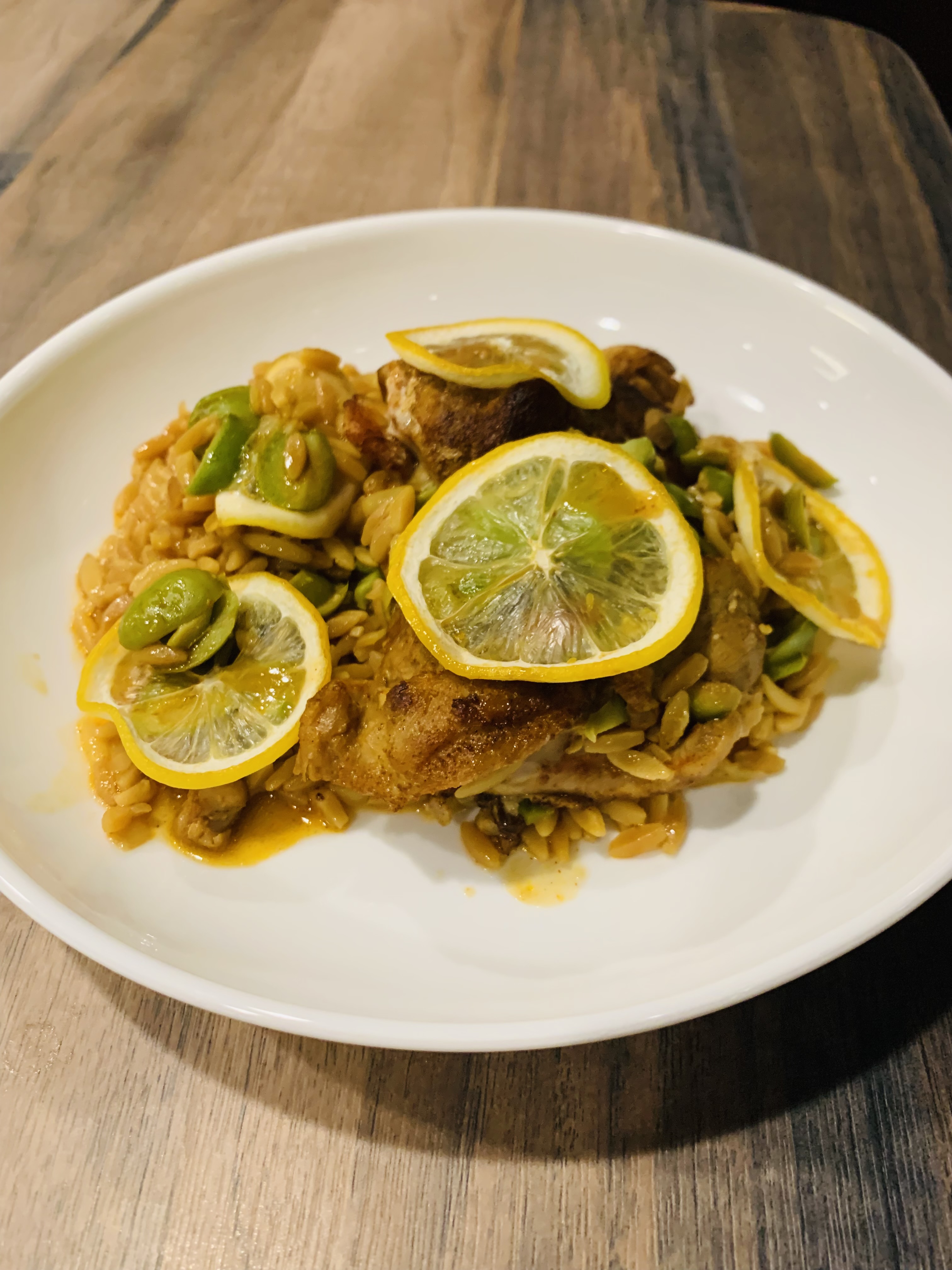
Matt and I agree that this one-pot meal from The Weeknight Mediterranean Kitchen by Samantha Ferraro is a keeper! 😋 It compelled me to make all of those sounds you would make if you had just eaten something unbelievably flavorful that really satisfied your tastebuds. The recipe calls for 2 lb of bone-in, skin-on chicken thighs, so if you choose to substitute boneless, skinless thighs instead, cut the weight down to 1 1/2 lb. I replaced half of the semolina and durum wheat orzo with chickpea and red lentil orzo from Trader Joe’s, and it worked just as well, so you can easily make this dish gluten-free without compromising texture. If you make sure to slice the lemon as thinly as possible and remove any seeds, the lemon slices will be fully edible once roasted.
Finally, it can sometimes be difficult to find places that sell pitted castelvetrano (green) olives, which are milder than the manzanilla olives you see filled with pimentos in the supermarket. Manzanilla olives are more briny, and could likely work just as well, but I haven’t tried them yet. I like the brighter green, milder tasting, yet more meaty castelvetrano olives, even though I often end up having to pit them myself. It has become a ritual with this meal to sit down and watch a show while cutting the meat off the pits.
Once you brown the chicken thighs, pull them out and set them aside while you introduce your aromatics to the pot. Then mix in your orzo, add your broth, add a layer of chicken, and finish by sprinkling olives and lemon slices on top. You put the whole pot in the oven, and it not only cooks the orzo and chicken thighs fully, but also adds depth of flavor into the whole meal. The lemons give it tang and sweetness once they are roasted, the olives provide a nutty background, and the savory, smoky chicken rounds it out, while the orzo soaks up all of these flavors and provides a nice base that pulls the whole dish together. If you get the cookbook, this recipe is a relatively quick and easy one to put together without too much fuss, and it will make your mouths and bellies happy.
That’s it for this round of cooking on the road. These selections took us from Crater Lake in Oregon to Joshua Tree in California. I took more breaks from cooking in between while visiting with friends in California, so it’s likely you’ll see another edition sooner than later with our next stretch until we visit with family lasting about a month. Until then, happy cooking! 😋
There is an impressive amount of sightseeing you can do while traveling down Highway 395. Not only can you do all of these things, but you can also visit two more national parks: Yosemite National Park, near Mono Lake and Lee Vining, and Death Valley National Park, which happens to be the largest national park in the lower 48 states, though Alaska still has them beat. 🏔 Now having shortened our time to just three days for this part of our journey, and it being unseasonably cold for the area, we had to be practical and selective about the places we visited.
Lee Vining and Hot Creek:
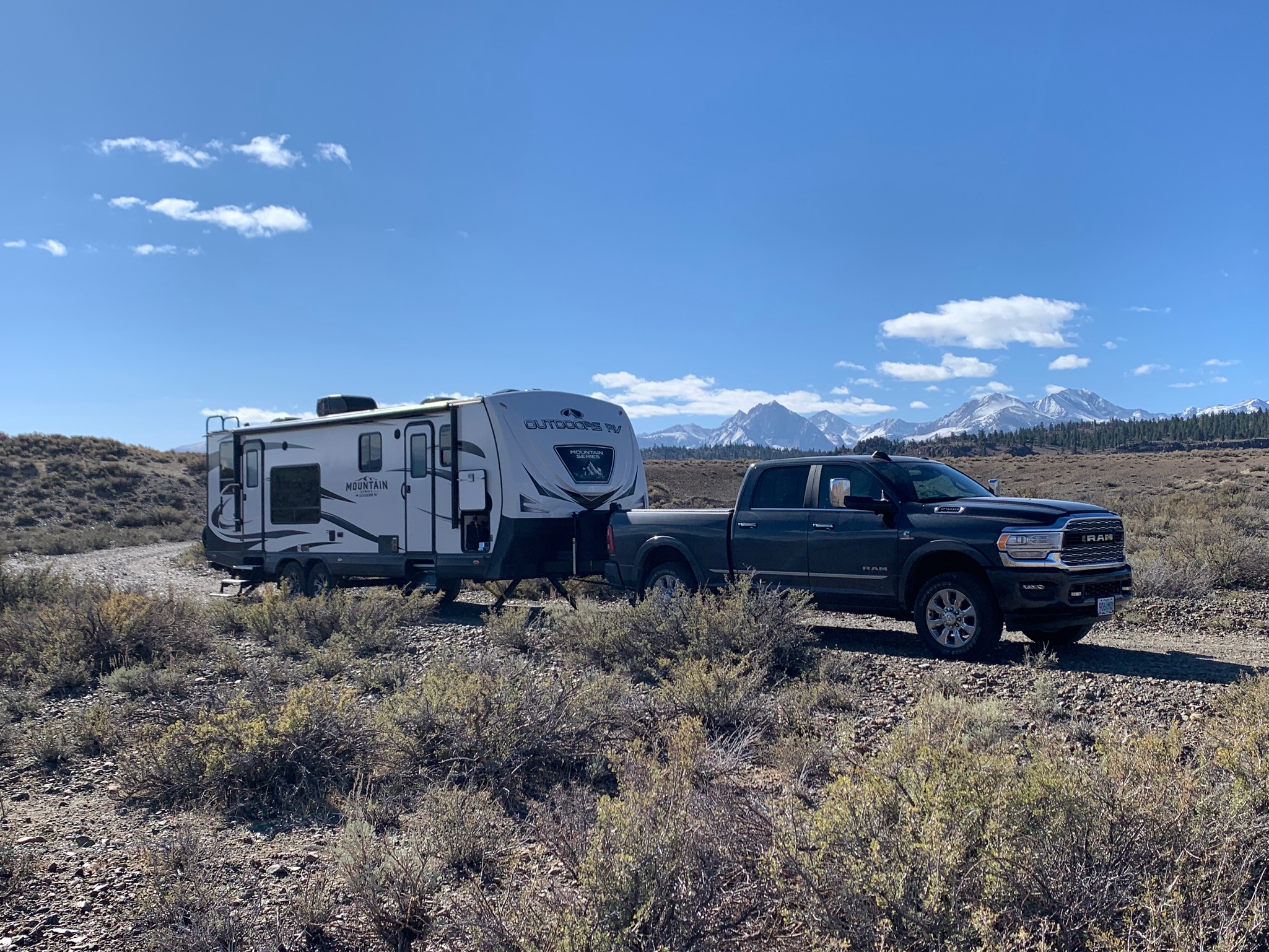
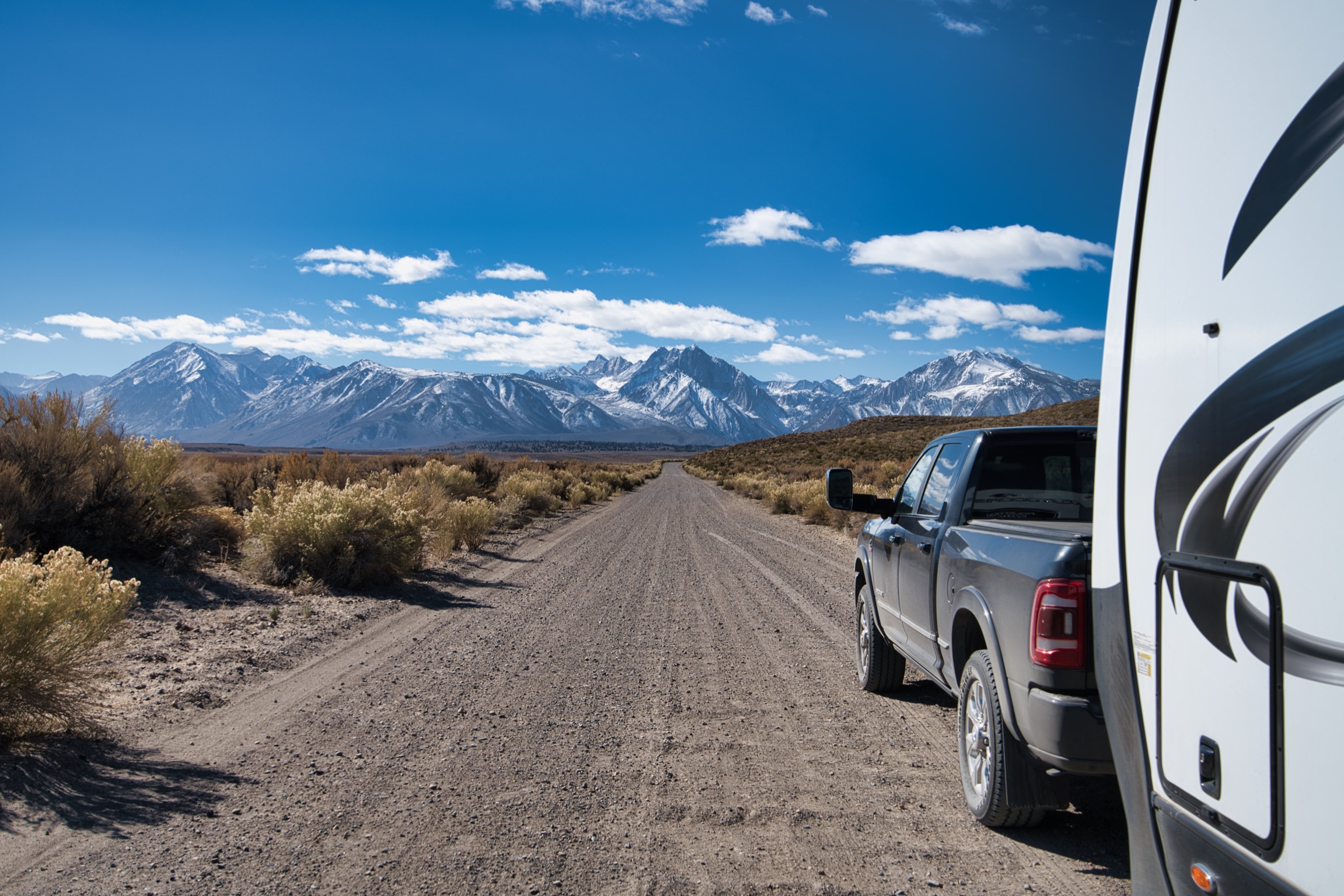
Because the snow didn’t melt enough for us to get going any earlier than 2pm on Tuesday, and we also needed to refuel and stock up in Gardnerville, NV, we were in a race against the sunset to get to our first destination near Lee Vining, which is situated at around 6780 feet in elevation. Matt found a suggestion on a boondocking Facebook group for camping down Owens River Road, but as he drove farther down the road and saw most places to camp still covered in snow, we were nervous that we wouldn’t find a place to park for the night without fear of getting stuck in snow or mud. 😬 The sun dipped down below the horizon, the pavement gave way to gravel, and we were still driving!
After several miles, Matt found a spot tucked away in an area where the snow had fully melted, and we set to work trying to heat the trailer. 🥶 The temperature dropped down to 15 degrees Fahrenheit, so it was another night of bundling up and burning through propane! However, the views of the mountain ranges surrounding us on all sides were incredible! Not too shabby for a free camping spot all to ourselves. 🏕 Plus, between our snowy adventure in Kirkwood and low temperatures in Lee Vining, we were testing out the trailer’s capacity to keep the underbelly warm and prevent our water pipes from bursting. So far so good!
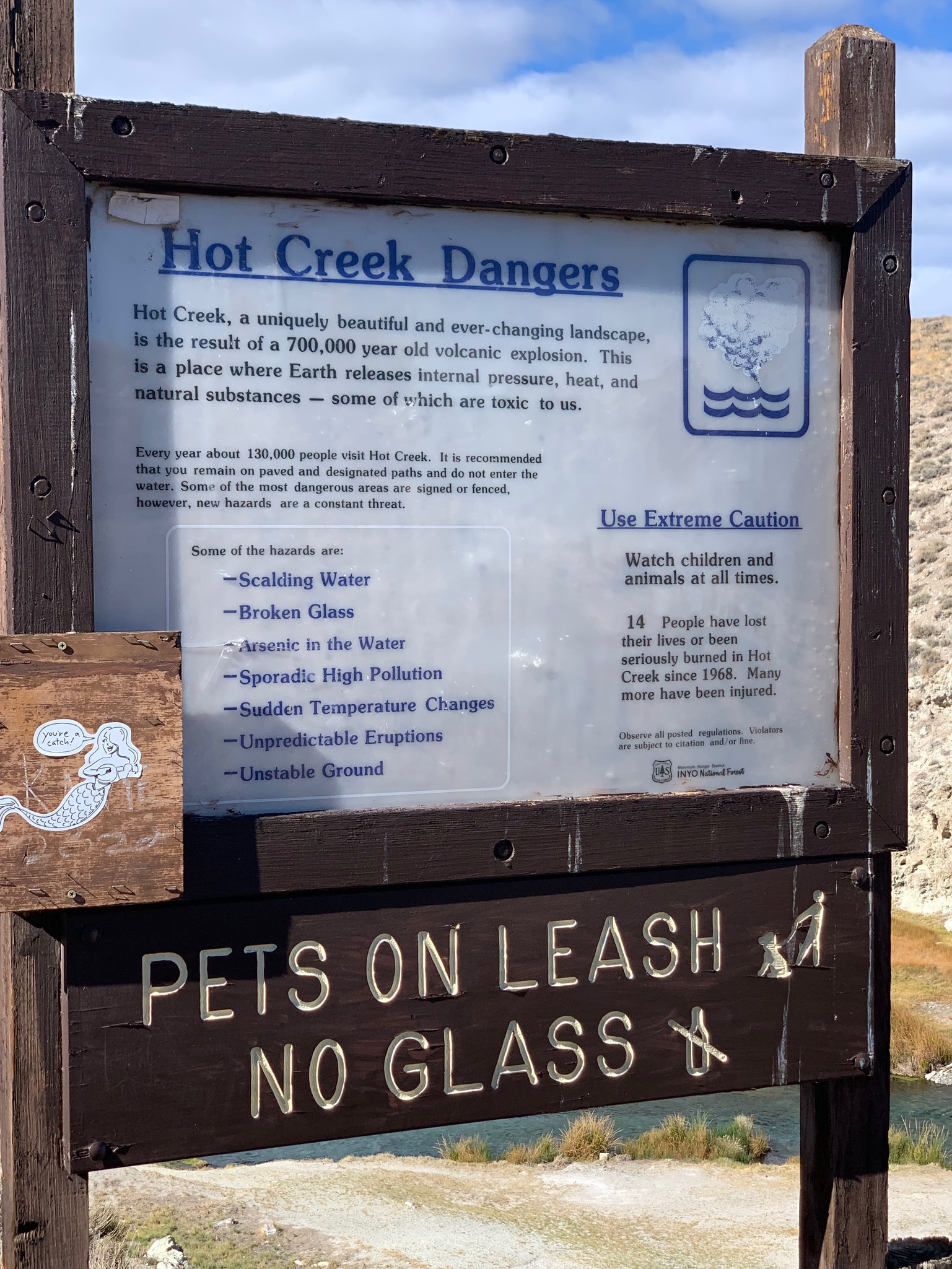
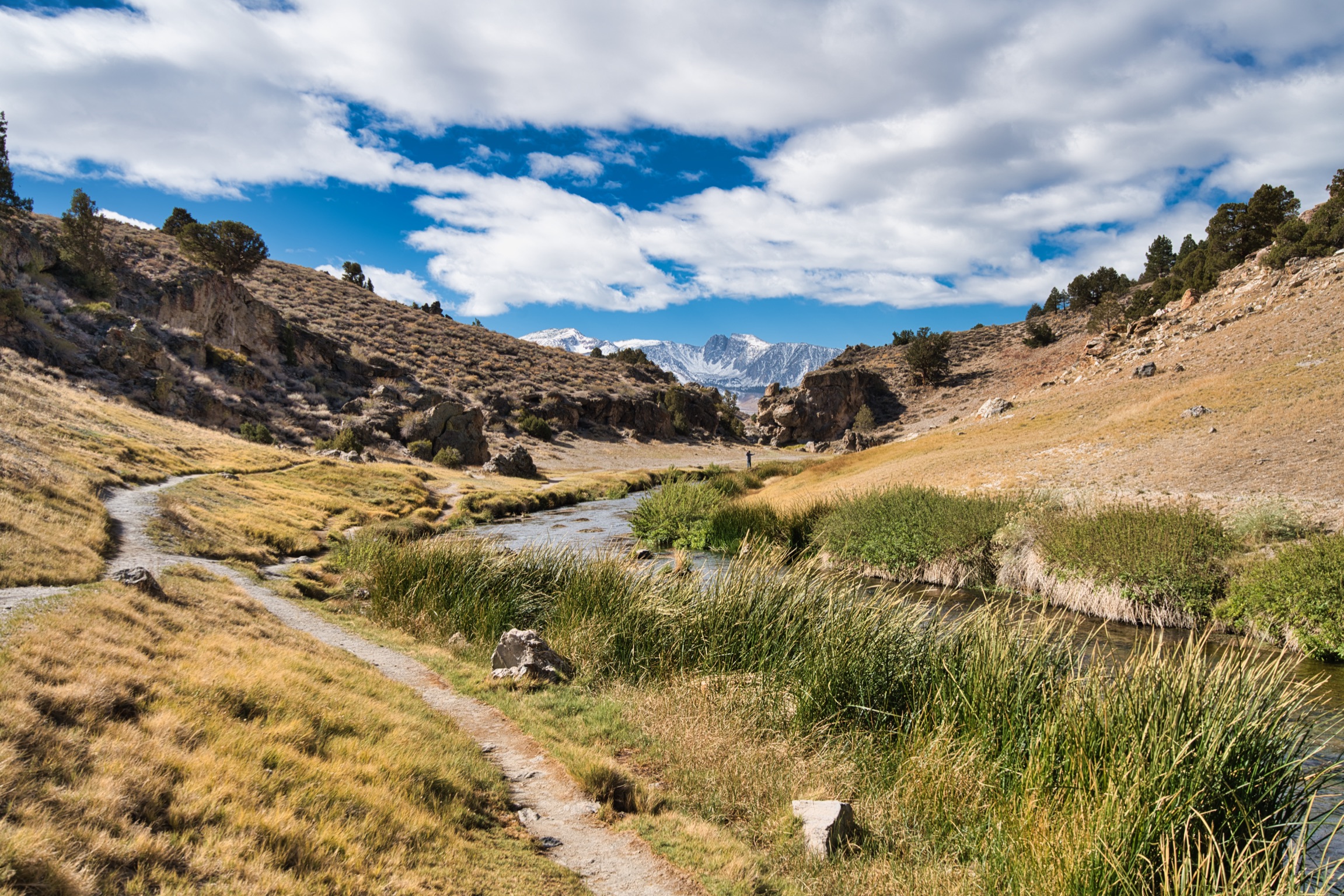
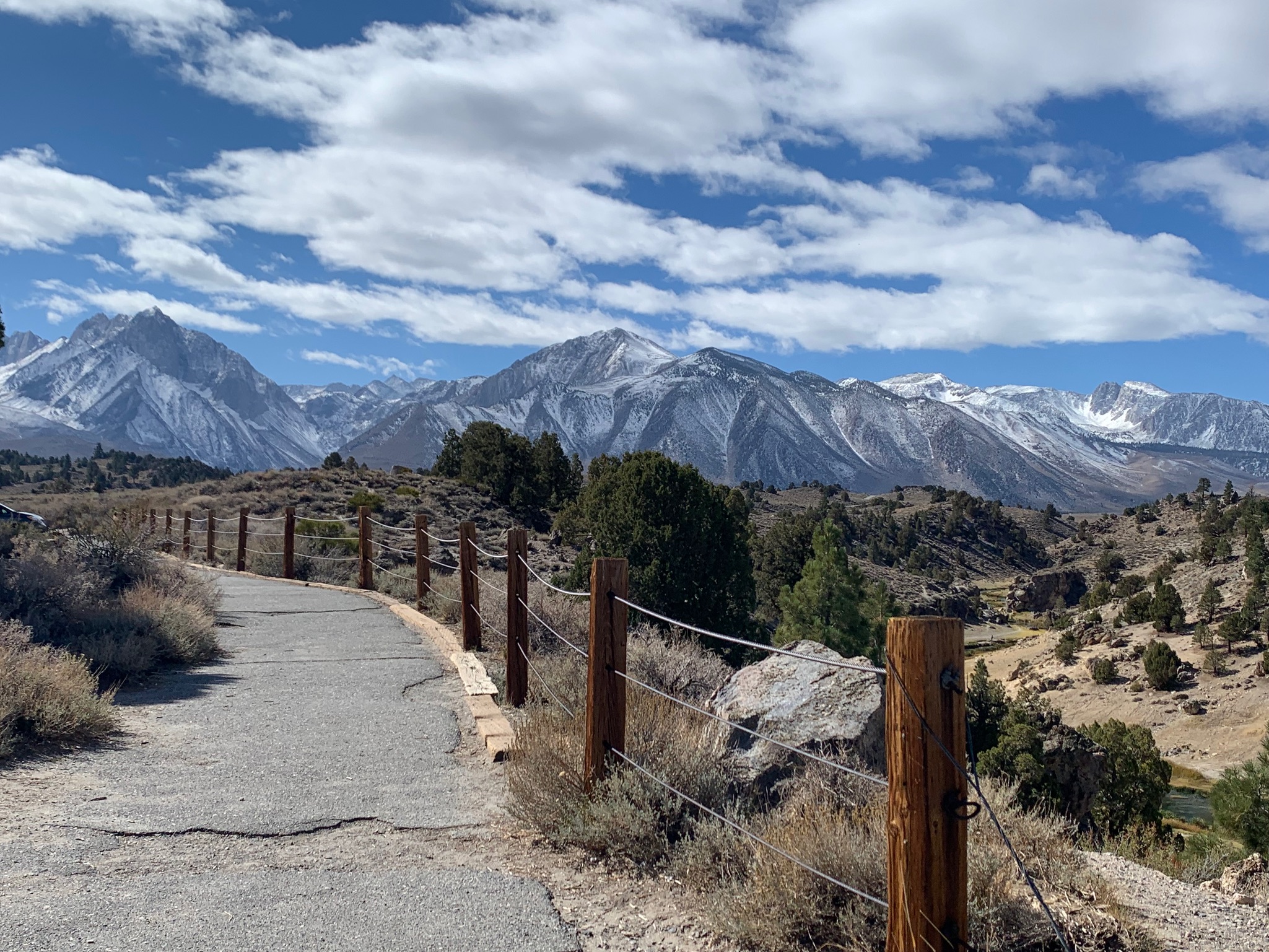
Matt also found a hot spring nearby called Hot Creek, so the next day we decided to visit this geologic site on our way back out to Highway 395. It was surprisingly popular for being out in the middle of nowhere down miles of dirt roads, but worth the visit if you enjoy geological wonders. We went over some very bumpy sections of road, so after exploring the creek we right-sided quite a few things in our trailer that had been tossed around. Thankfully, most of our travel was smooth sailing after this. 🤞
Lone Pine and Alabama Hills:
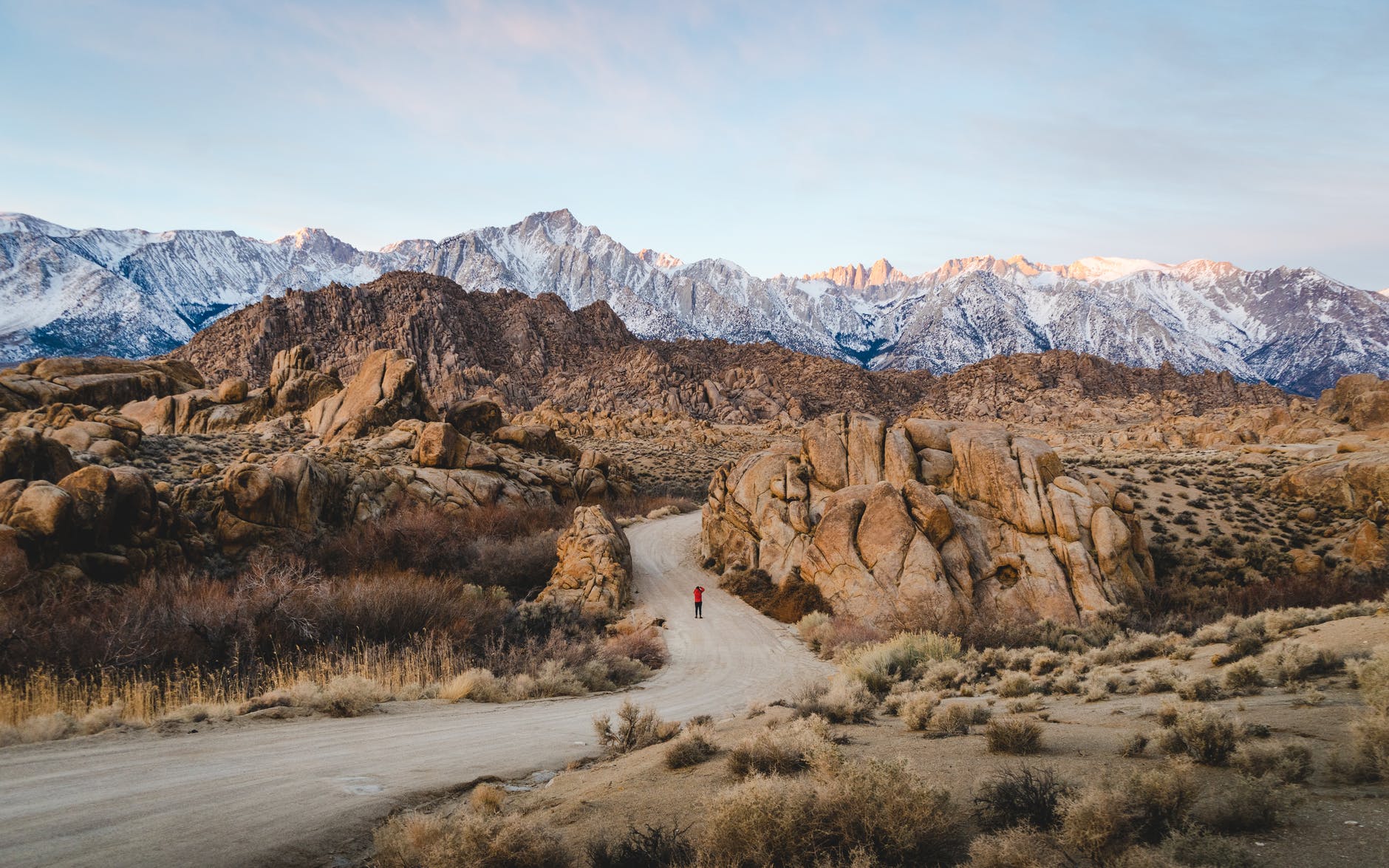
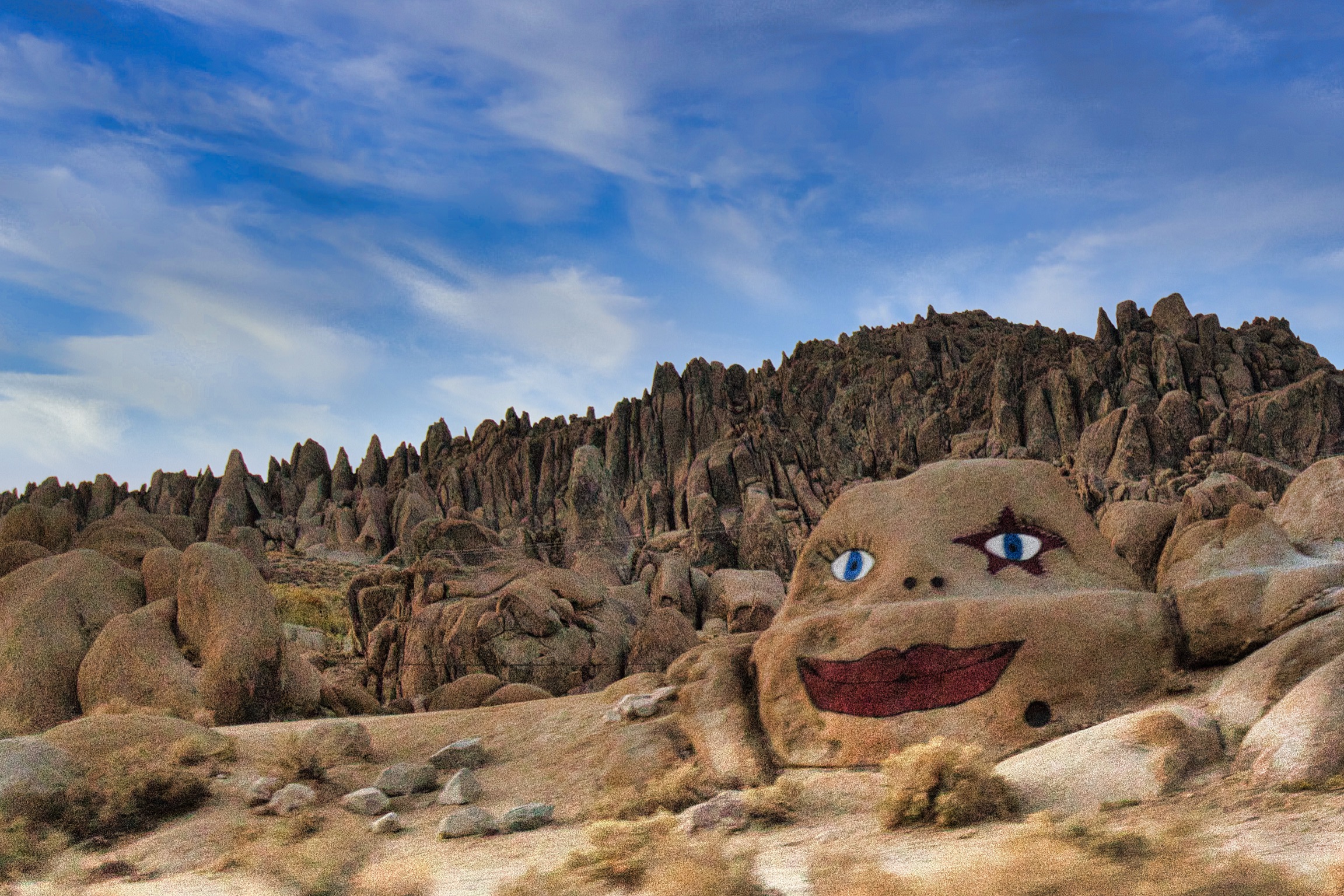
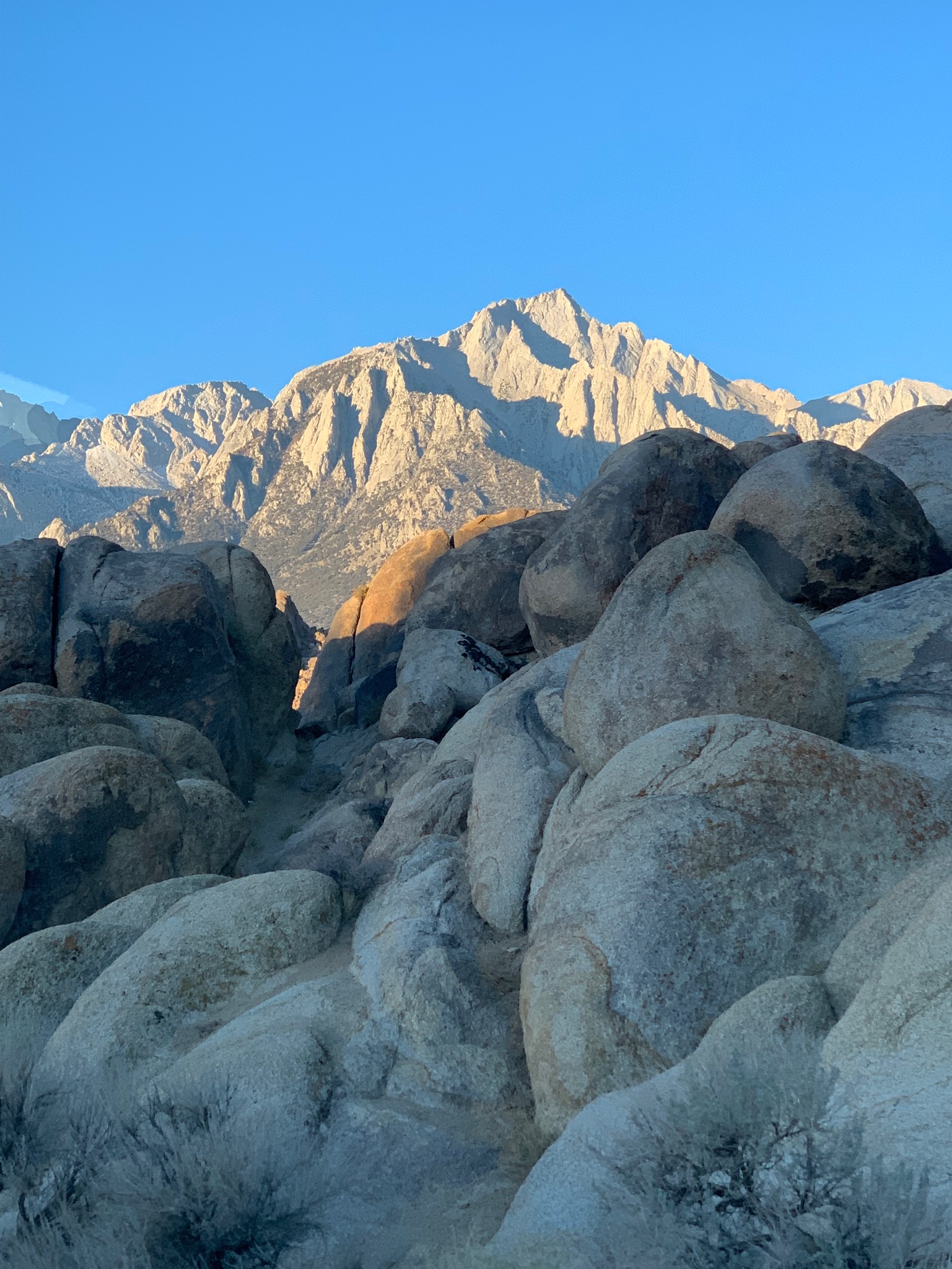
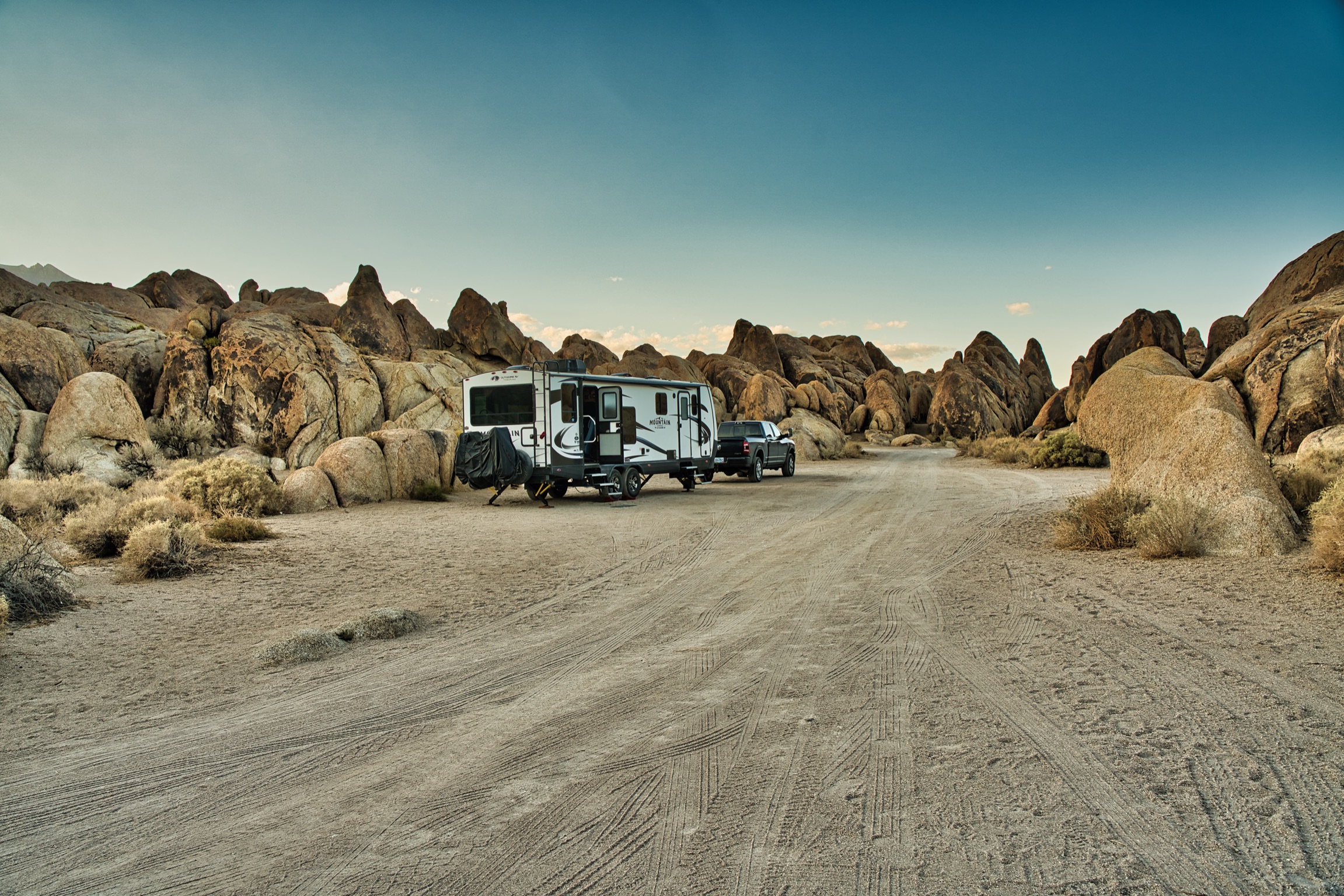
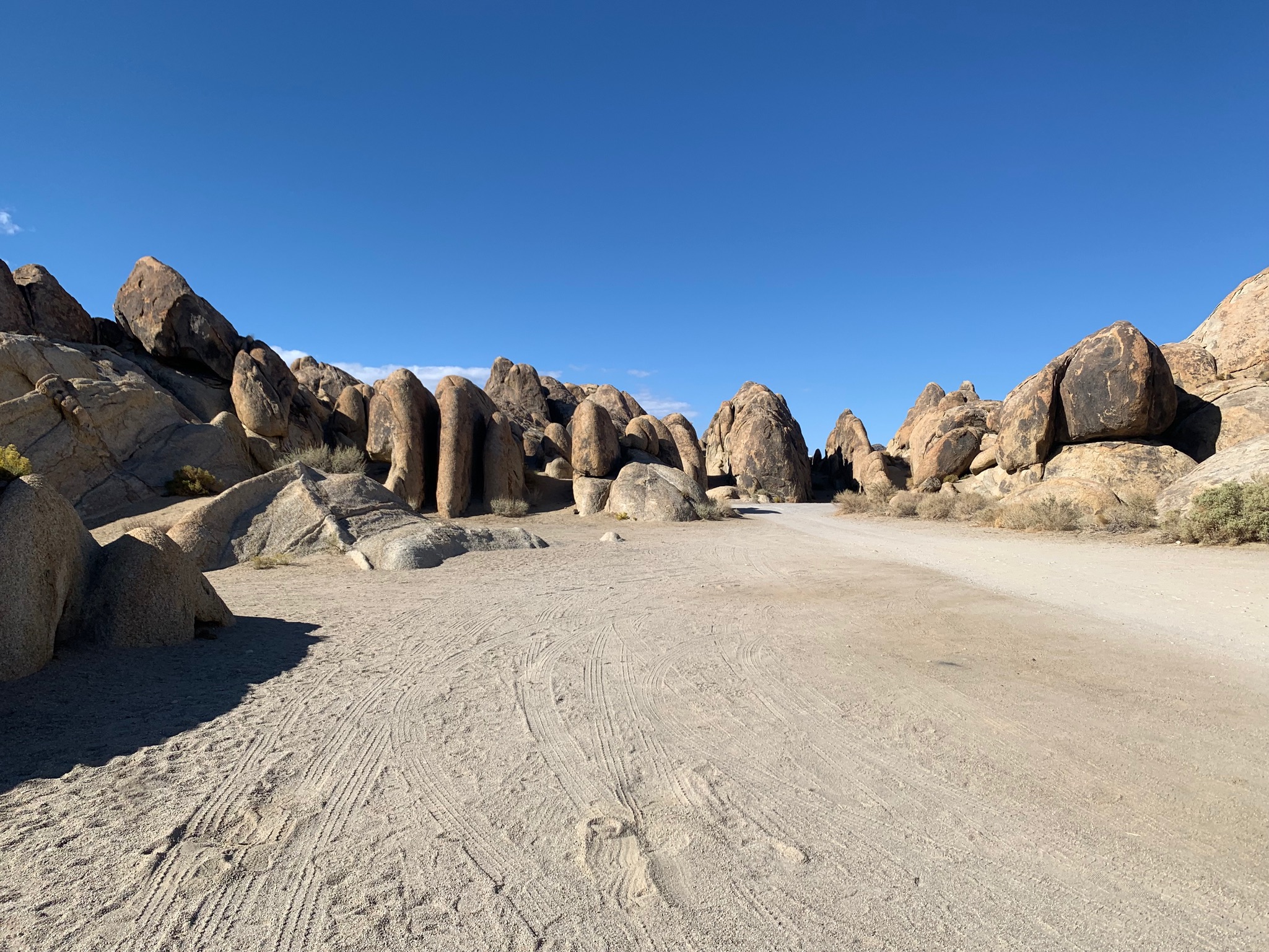
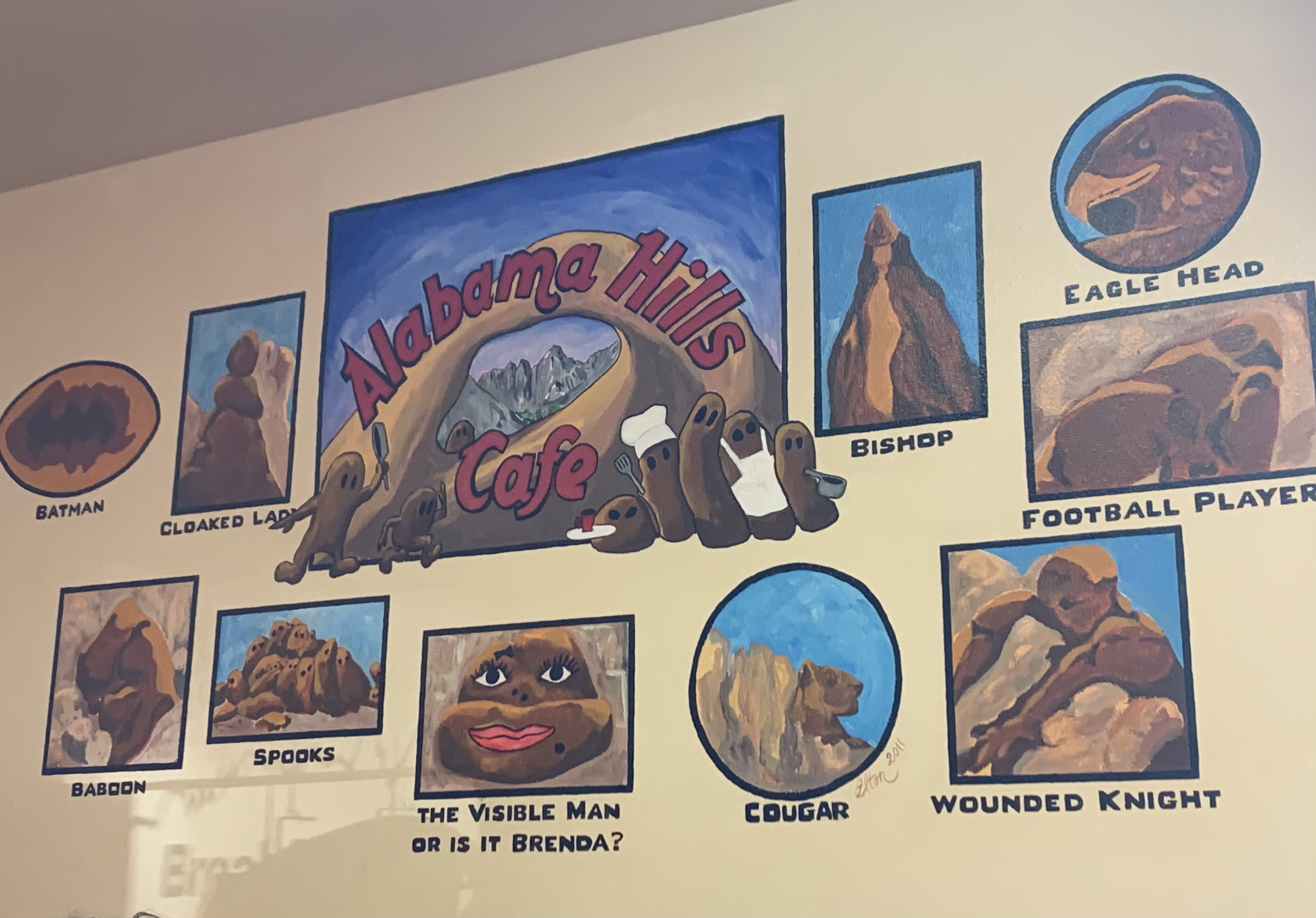
About 120 miles farther south of Lee Vining is the town of Lone Pine, which is known for its proximity to the Alabama Hills. The Alabama Hills are located on the eastern side of Mount Whitney, the tallest mountain in the lower 48 states…yet again, Alaska has the lower 48 beat with taller mountains as well. Everything is bigger in Alaska! Wait, I thought that was what Texas was known for…I digress. 🤠 The Alabama Hills are a popular dispersed camping destination, with interesting geological features, and opportunities to hike, climb, and stargaze with its plethora of trails, rocks, and low light pollution.
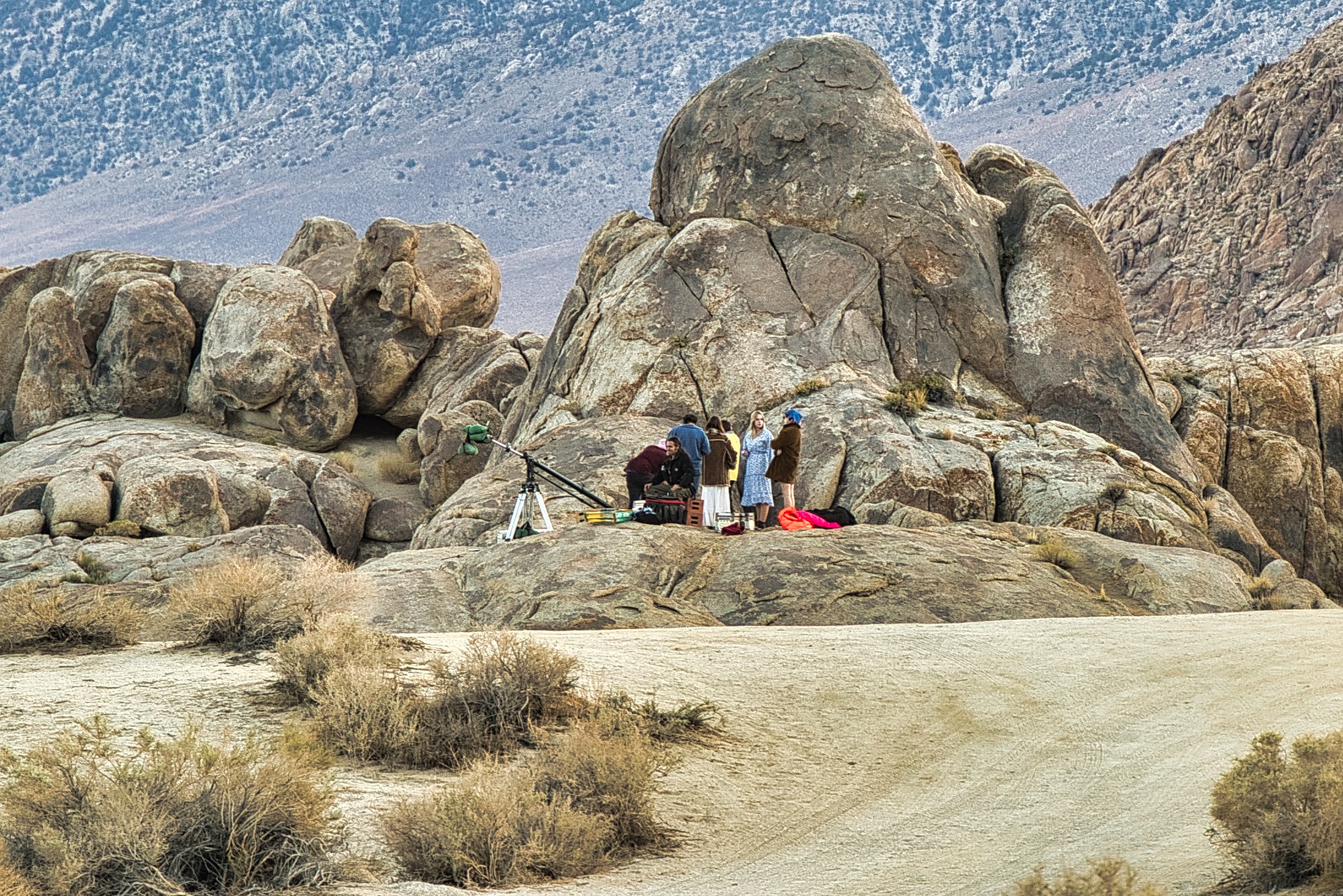
In addition to outdoor activities, its “claim to fame” is that the Alabama Hills have also been a popular filming location, especially Western films, and is still used in movies, music videos, commercials and more today. In fact, while we were camped out near the Lone Ranger Ambush Site, we saw filming taking place! We didn’t inquire, but saw a group of about seven people with camera equipment, acting out scenes across the way, and thought it was pretty neat to be witness to creativity in action.
In Lone Pine, there is a Museum of Western Film History, which also hosts an annual film festival that we just missed by a few days. We didn’t spend a lot of time in town, but did go to the Alabama Hills Cafe and Bakery for breakfast. This place was really hopping, our food was delicious and the service was outstanding! It’s a really cute place, and I highly recommend stopping by if you are in the area for breakfast or lunch or want a tasty pie or other baked goods to take with you on the road.
Death Valley National Park:
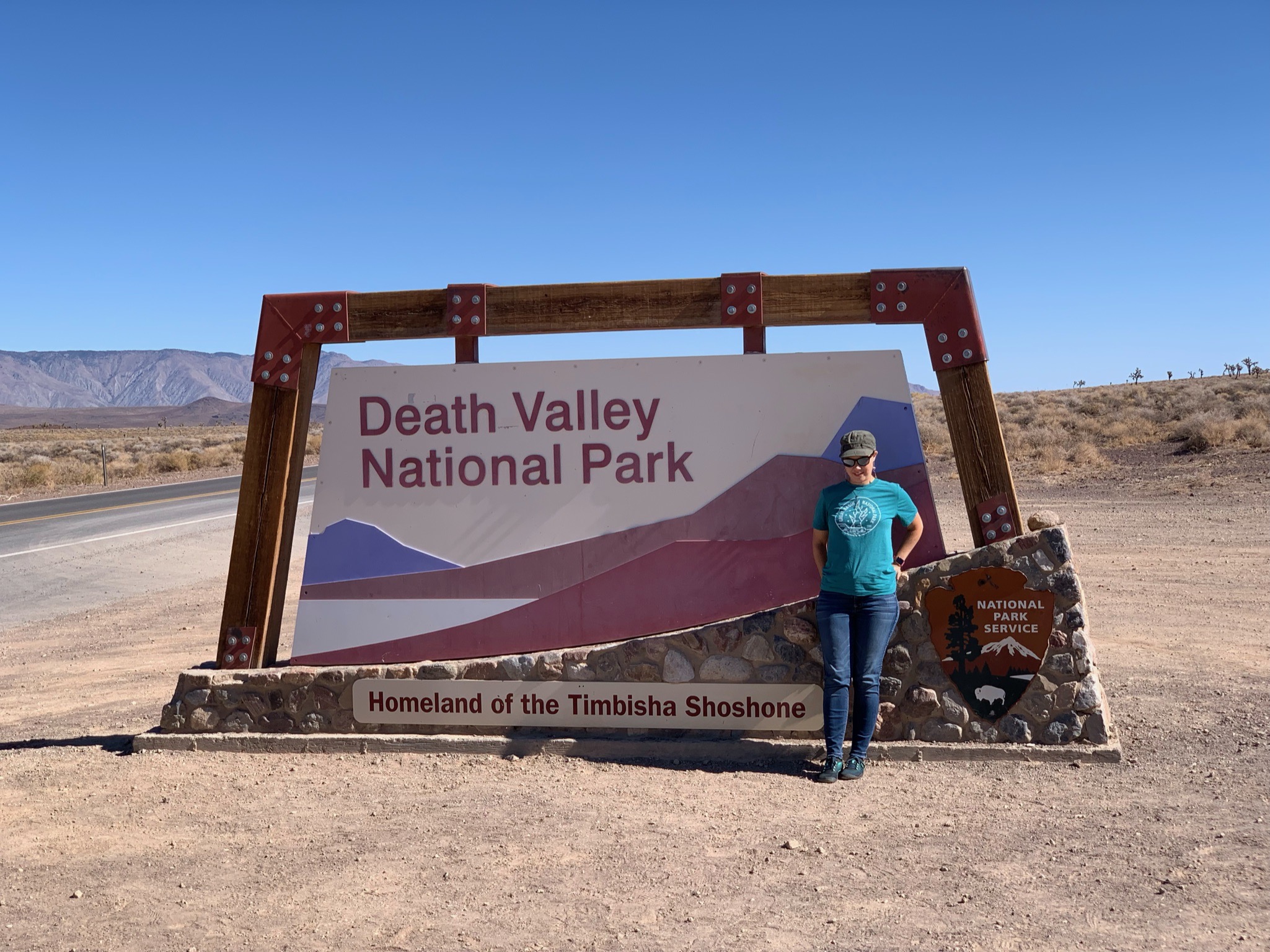
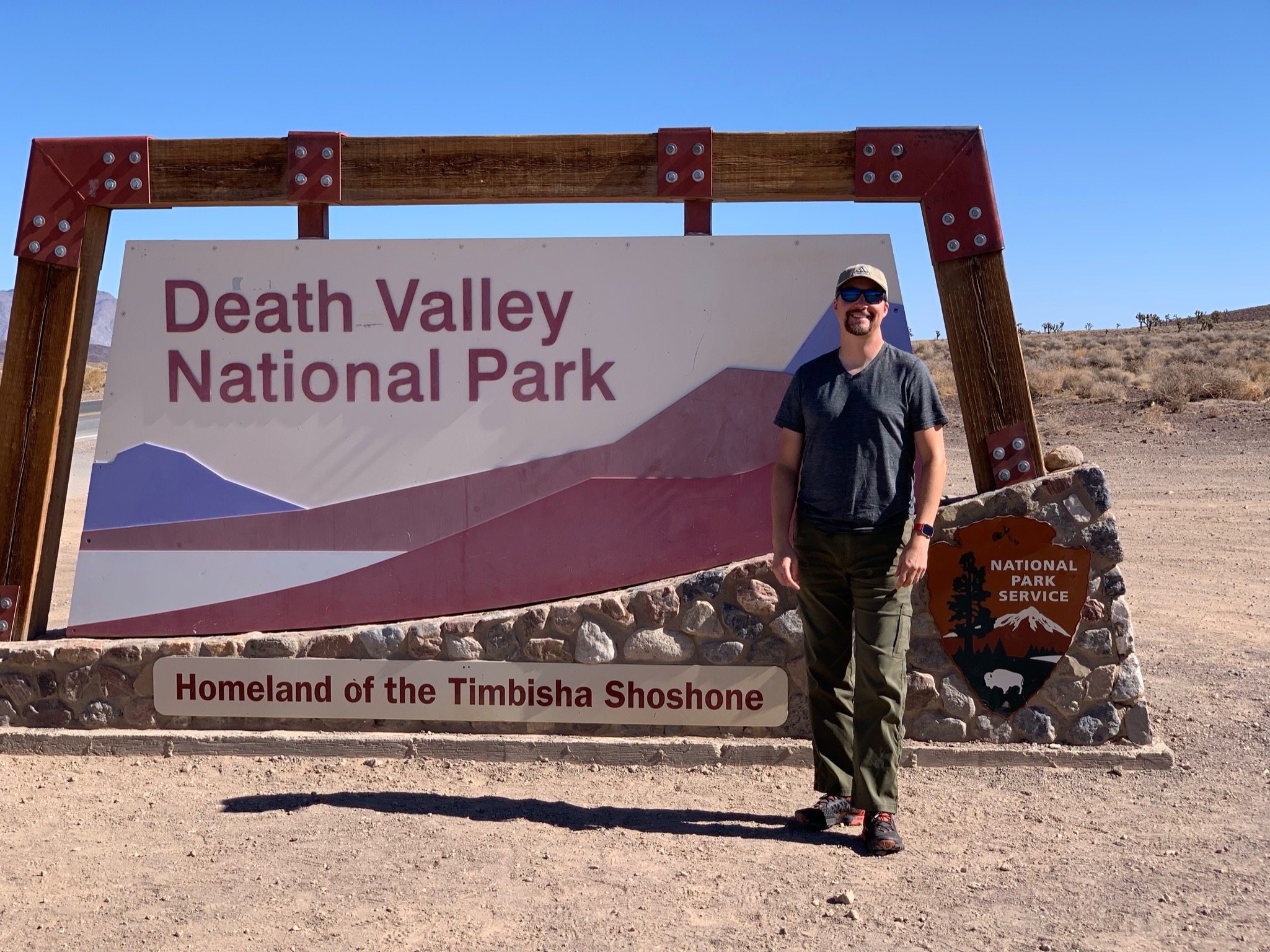
Because we were so close to Death Valley, we took a day to go into the park. As mentioned before, Death Valley National Park is the largest in land area in the lower 48 states at nearly 8500 square miles, and also contains the second-lowest point in elevation in the Western Hemisphere called Badwater Basin, but it is the lowest point in elevation on land. Even seeing a small part of Death Valley took us all day, because you have to drive over 100 miles to get into the park from any major highway. The roads were in great condition, just FYI, but our round trip was over 300 miles!
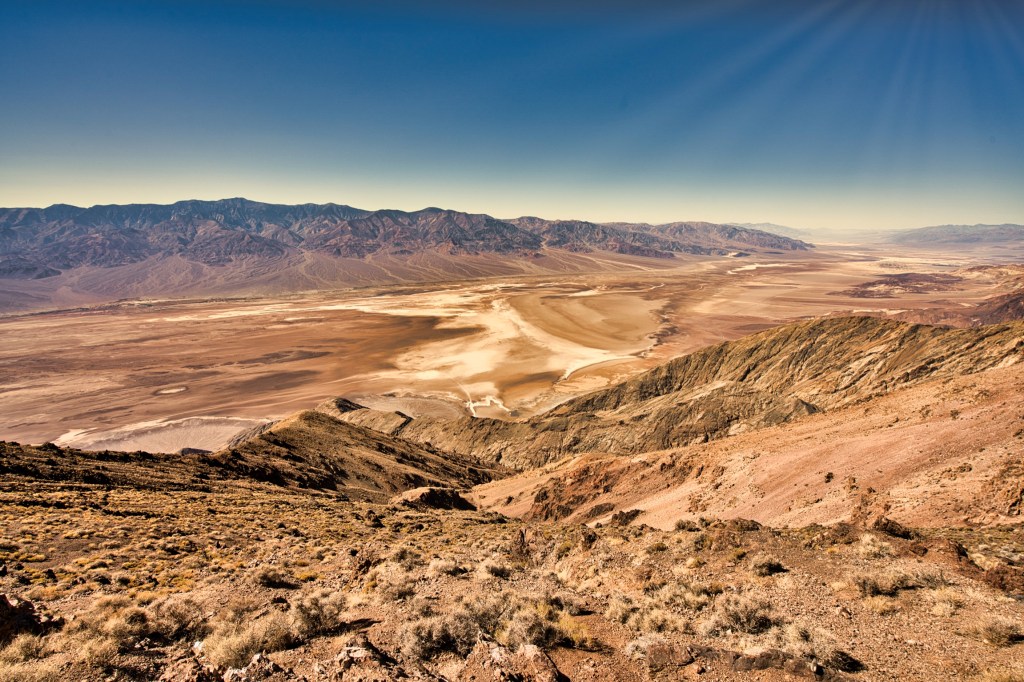
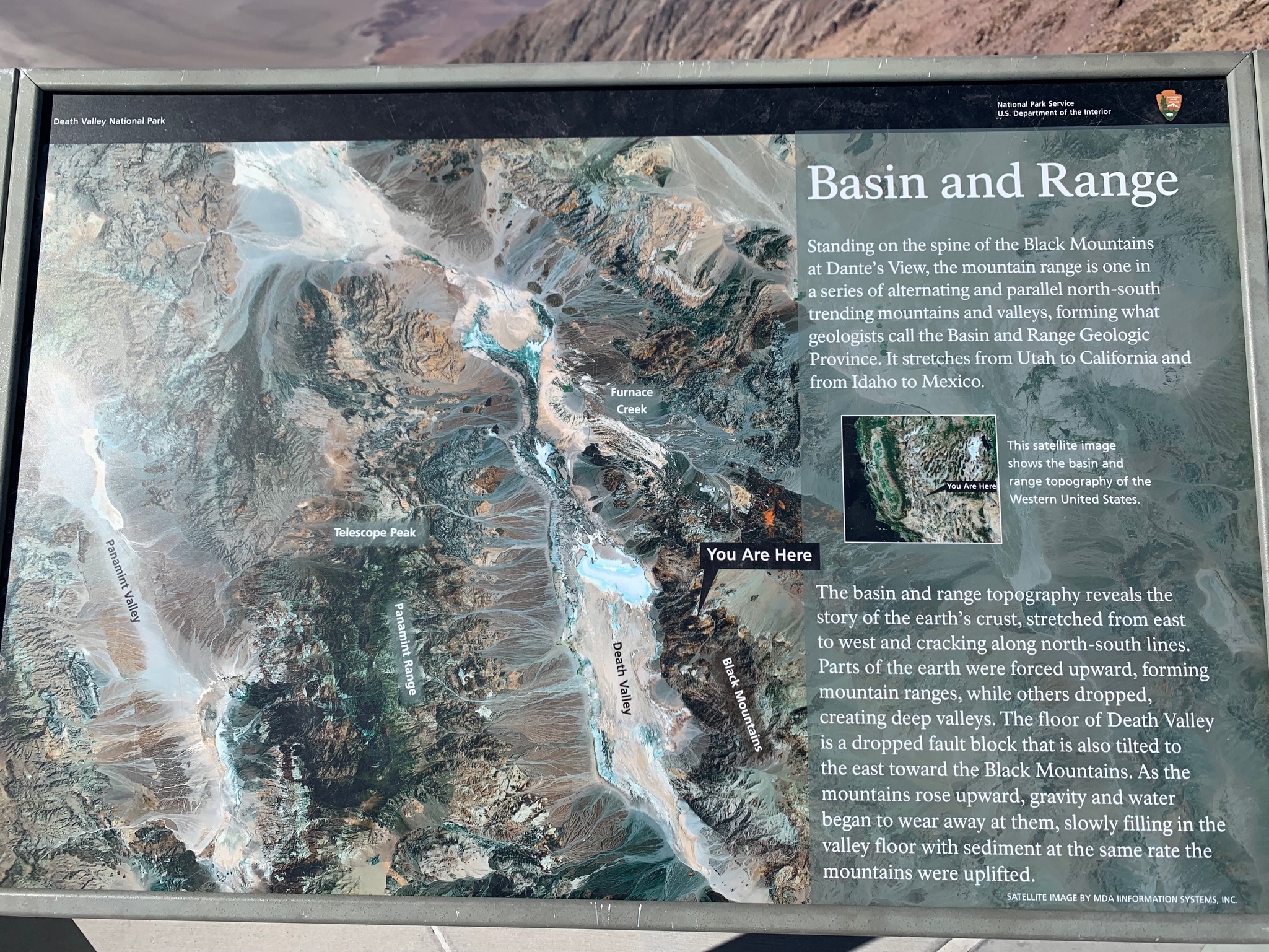
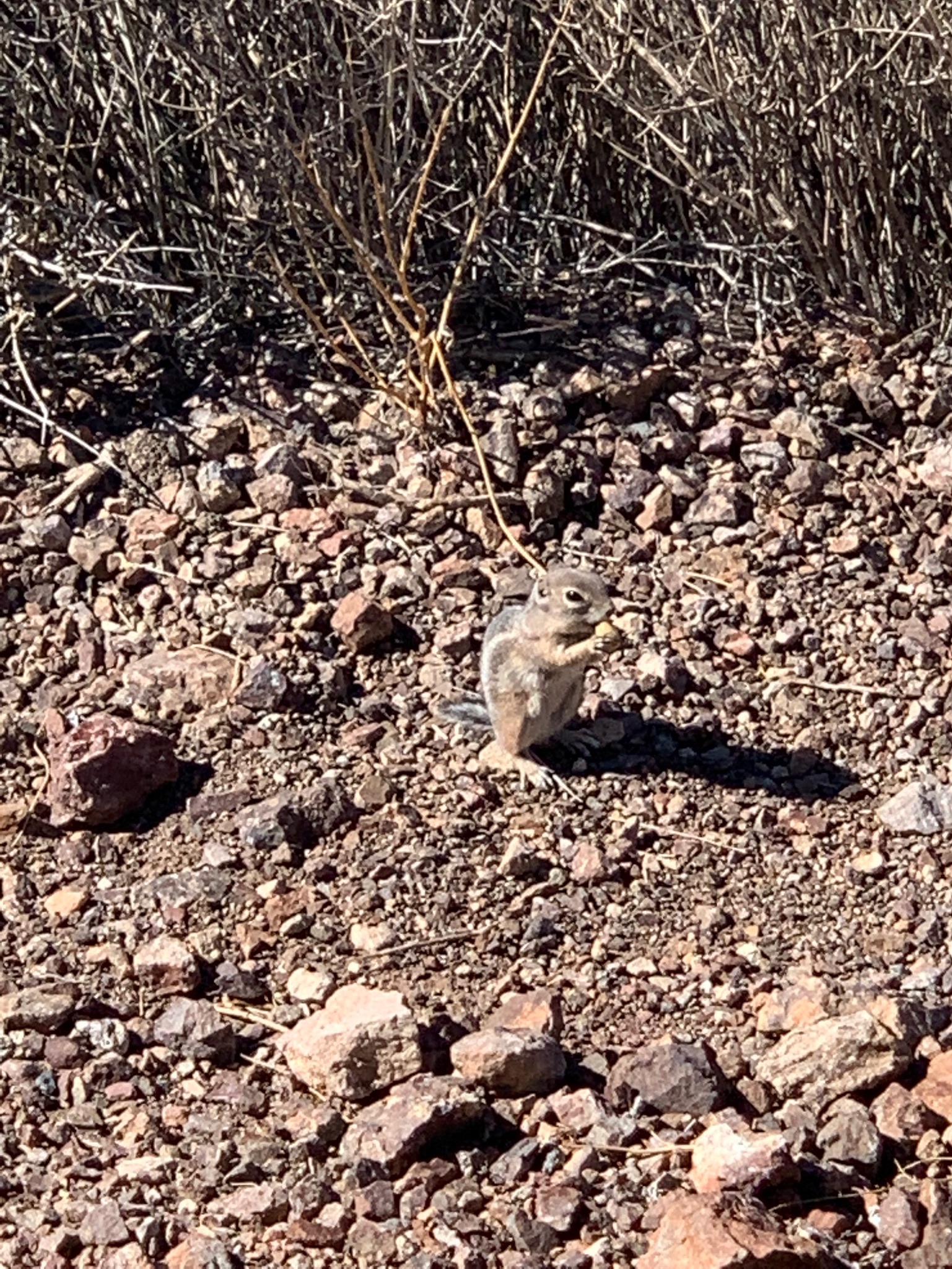
Considered one of the hottest places on earth, recording a temperature of 134 degrees Fahrenheit back in 1913, and also the driest US National Park, you would think the entire area was completely barren. Though parts of it are, between the colorfully layered rock formations and sporadic spring wildflower blooms, it is a beautiful place of natural wonder. After stopping by the Visitor Center, we drove up to Dante’s View to enjoy the expansive vantage point from which on a clear day you can see both the lowest and highest points (Badwater Basin and Mount Whitney) in the lower 48 states. It was a bit hazy that day, so I couldn’t see Mount Whitney, but the view was awe-inspiring nevertheless, and we even observed a cute little ground squirrel waiting for tourists to drop tasty snacks. 😊
Badwater Basin from Dante’s View, photo by Matt Walker
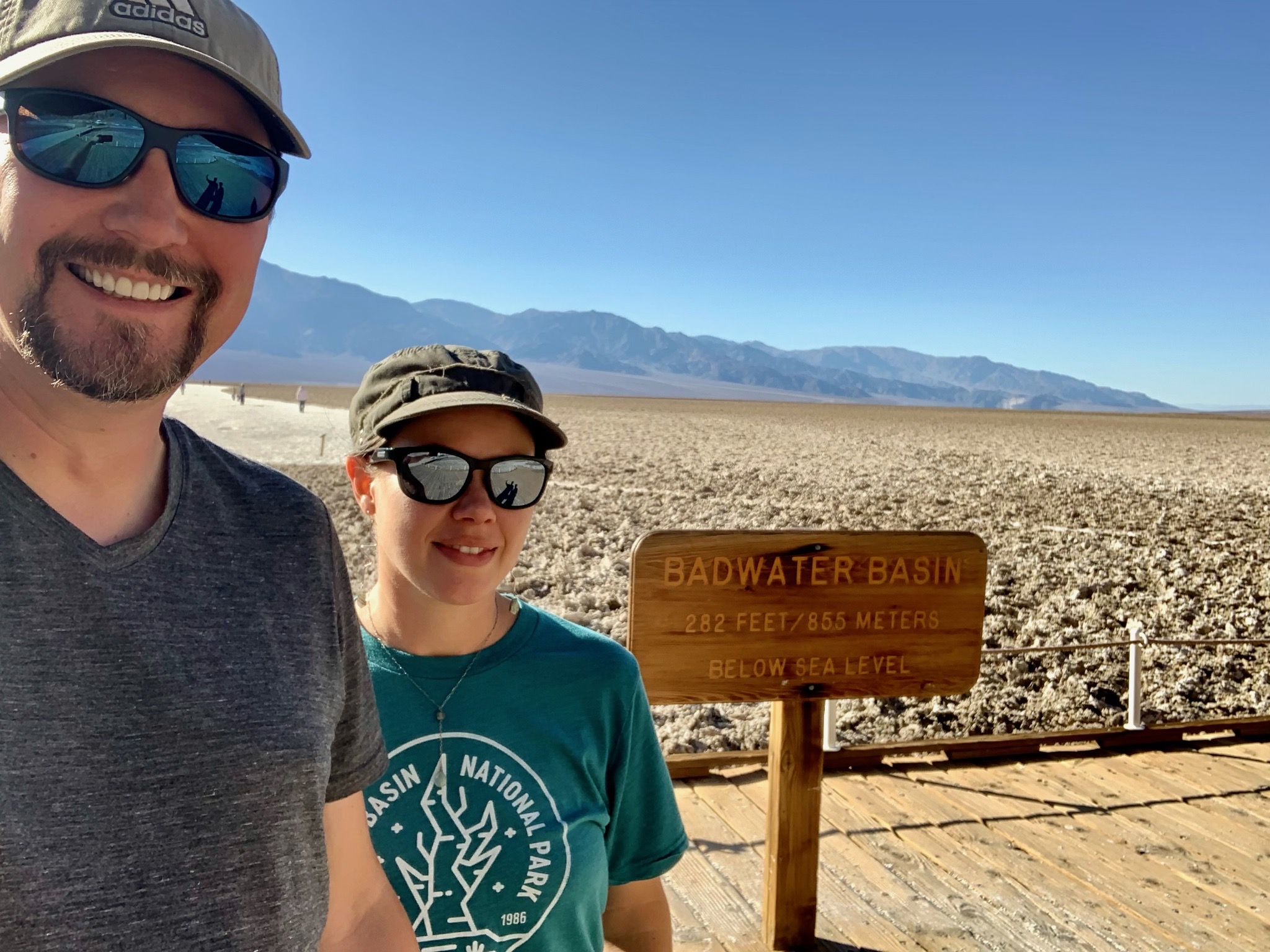
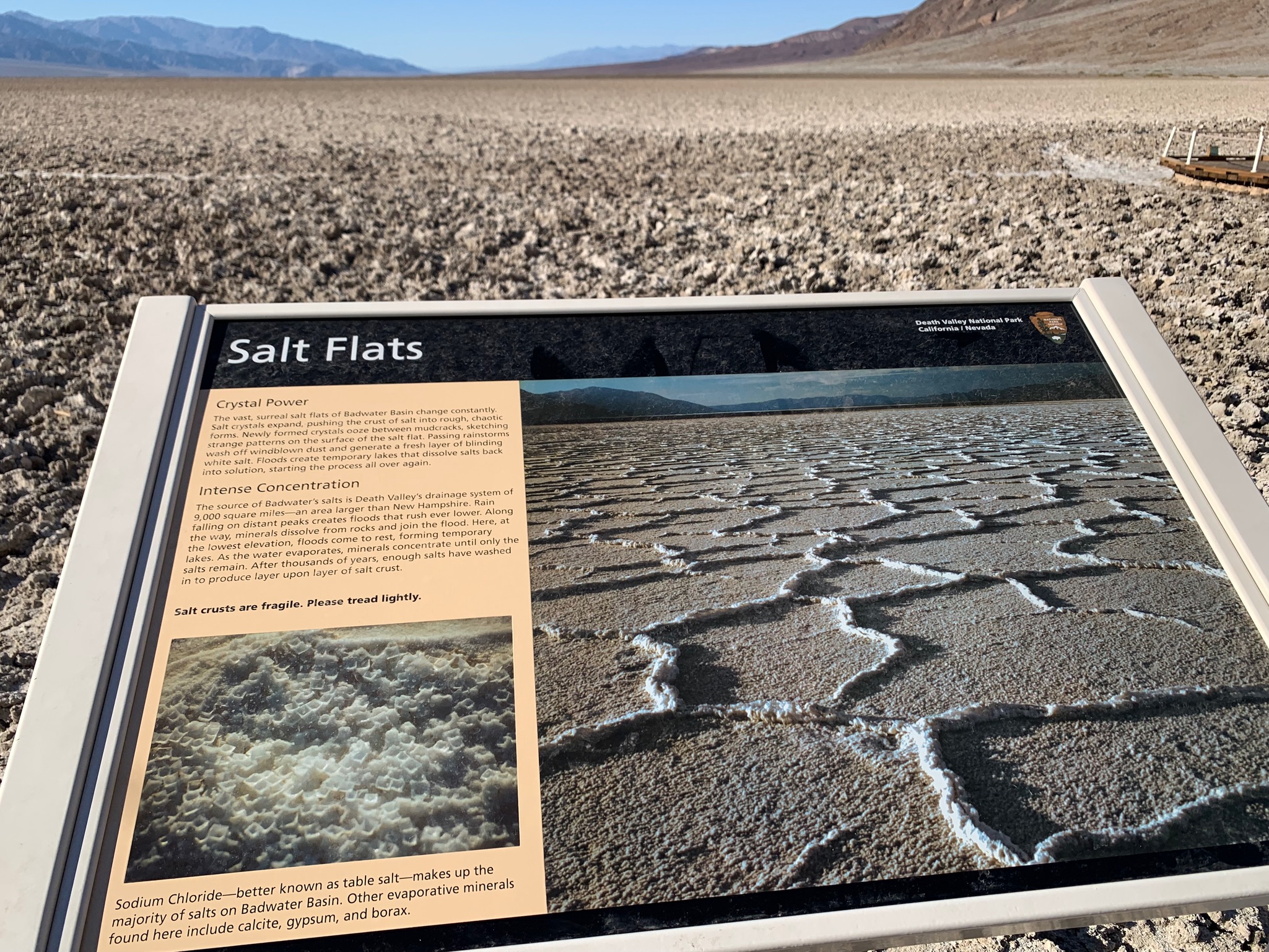
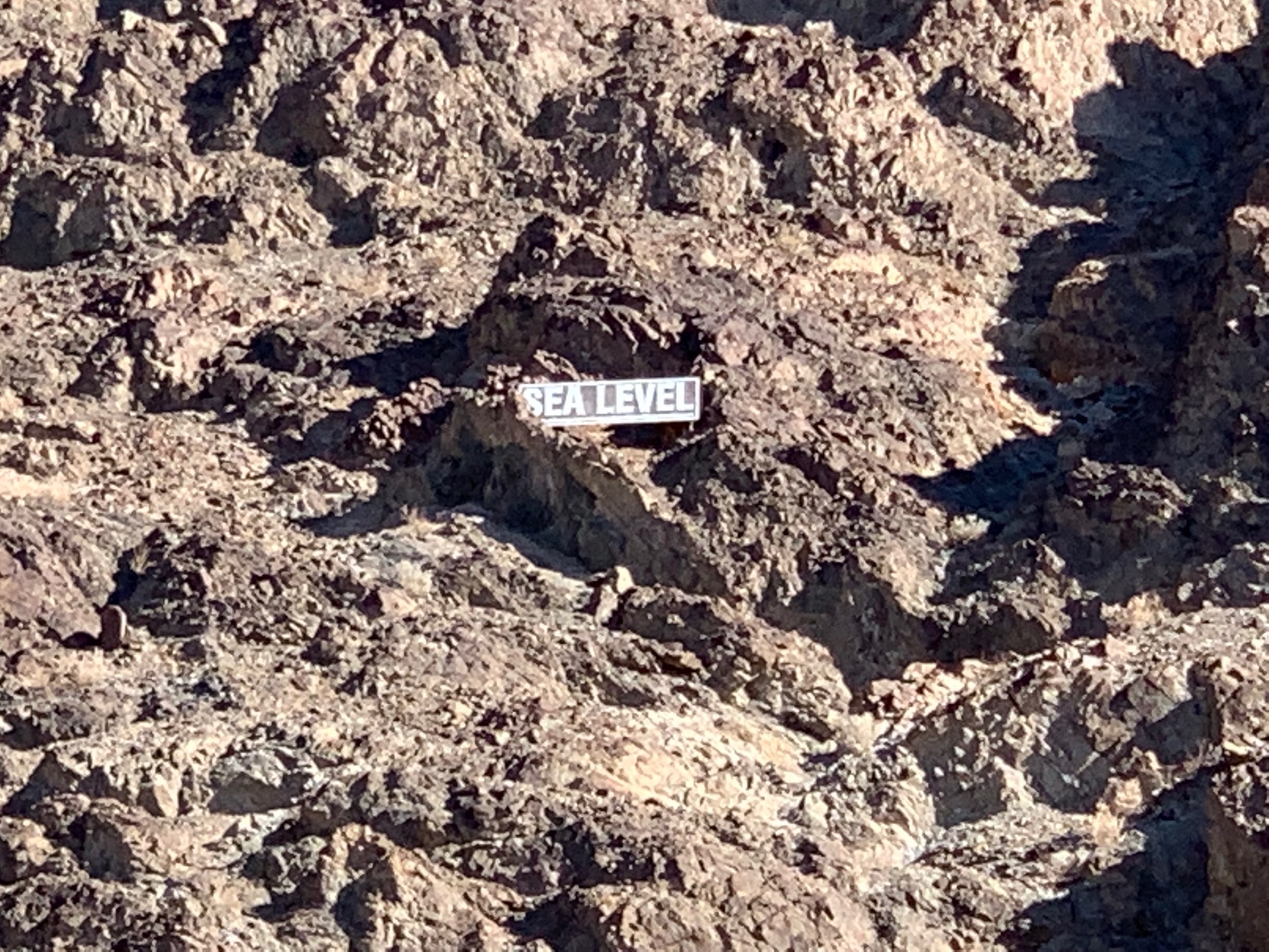
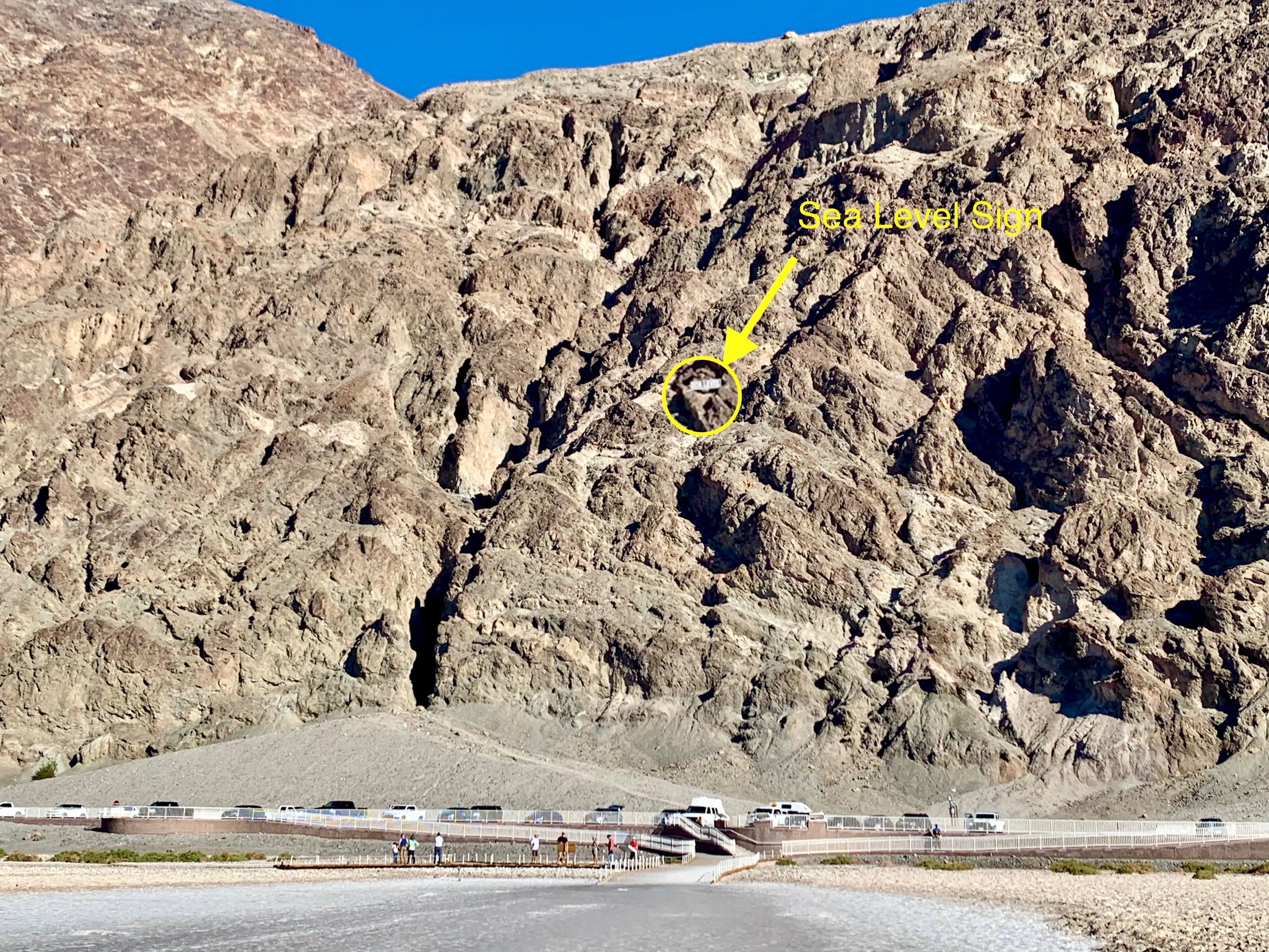
On our way back, we decided to visit Badwater Basin and see what land below sea level was like. The salt flats that make up this area were mostly dry, and it looked more like a plowed field than a dried up, salty basin. We were fortunate to be visiting during a more temperate time of year. Even so, at 85 degrees Fahrenheit, the sun was more intense in the basin than I anticipated, so I can’t imagine visiting during the summer. 🥵 It was also interesting to look up above us and see a small placard in the rocks showing us just how far below sea level we were standing. 😲
After exploring the salt flats for a little while, it was already time to start heading back before the sun went down. Our drive took us over two mountain passes with windy roads, so I went slowly, battling the western setting sun threatening to blind me around every other corner. That makes for exhausting driving conditions, but it was still a beautiful drive back. We wish we could have seen more, including the sailing stones, but it was time to pack up and head farther south.
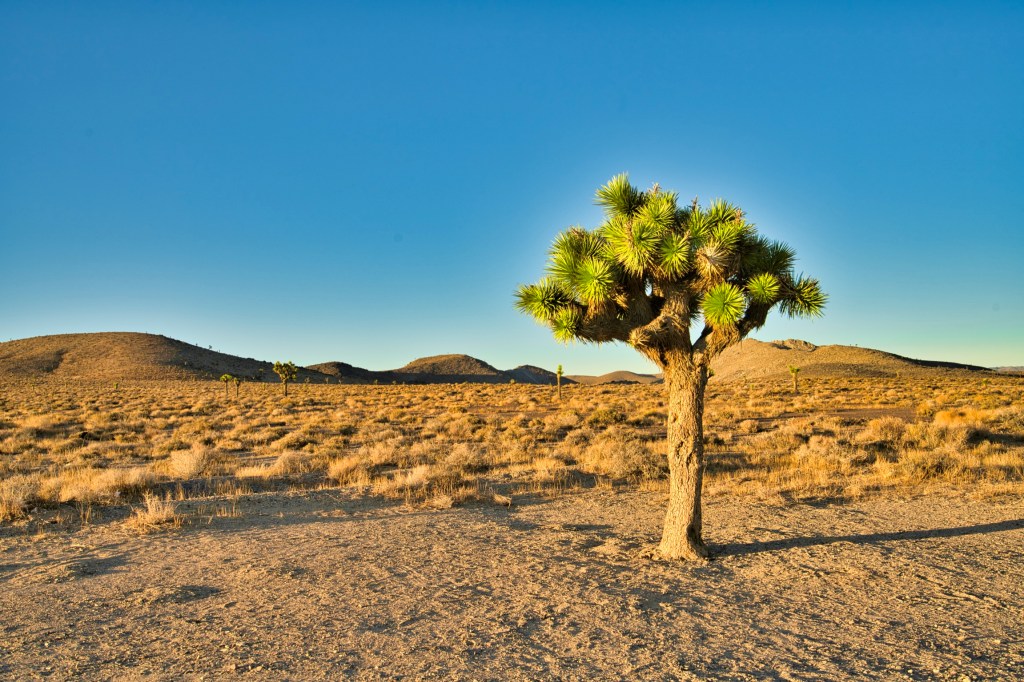
Sun setting on a Joshua tree on our way back from Death Valley National Park, photo by Matt Walker
Overall, I am so glad we drove down Highway 395 instead of Highway 5, and if you have the time to take this more scenic route, I highly recommend it. The roads are in great condition, the sites much more interesting, and the traffic is way lighter, which all make for travel days that are a lot less stressful and instead more delightful. Where are we off to next? We are visiting more friends in SoCal before heading eastward. Talk to you all soon!
One of the things we were trying to avoid as we planned our trip to southern California (SoCal), was Highway 5. Heading from the Bay Area to Los Angeles on the 5 is hell, in my opinion. It’s a super busy, beat up road, main truck route, and all of the other vehicles fly through there at 100+ mph, no joke! It is unpleasant at best and terrifying at worst, so I was opposed to the idea of taking our travel trailer down this road.
My former boss from GU Energy Labs and dear friend Michael had offered for us to visit in Kirkwood, where his wife Catherine and he frequent often. It is a ski resort in the winter situated at around 7800 feet in elevation, but also a beautiful place to enjoy year-round. It seemed like the perfect opportunity to go during the shoulder season before the snow and freezing temperatures set in, and then continue our journey to the other side of the Sierra Nevada mountains and head south on Highway 395.
We knew there was a slim chance we could run into inclement weather in early October, but mother nature had other plans! On Friday, the day we planned to head into Kirkwood, the area received 1-2 inches of snow, so we booked a last minute stay at a campground below 3000 feet in elevation and drove up to Kirkwood on Saturday instead when the snow had melted. Catherine and Michael’s house has a large driveway, so we parked our rig, said our hellos and got settled.
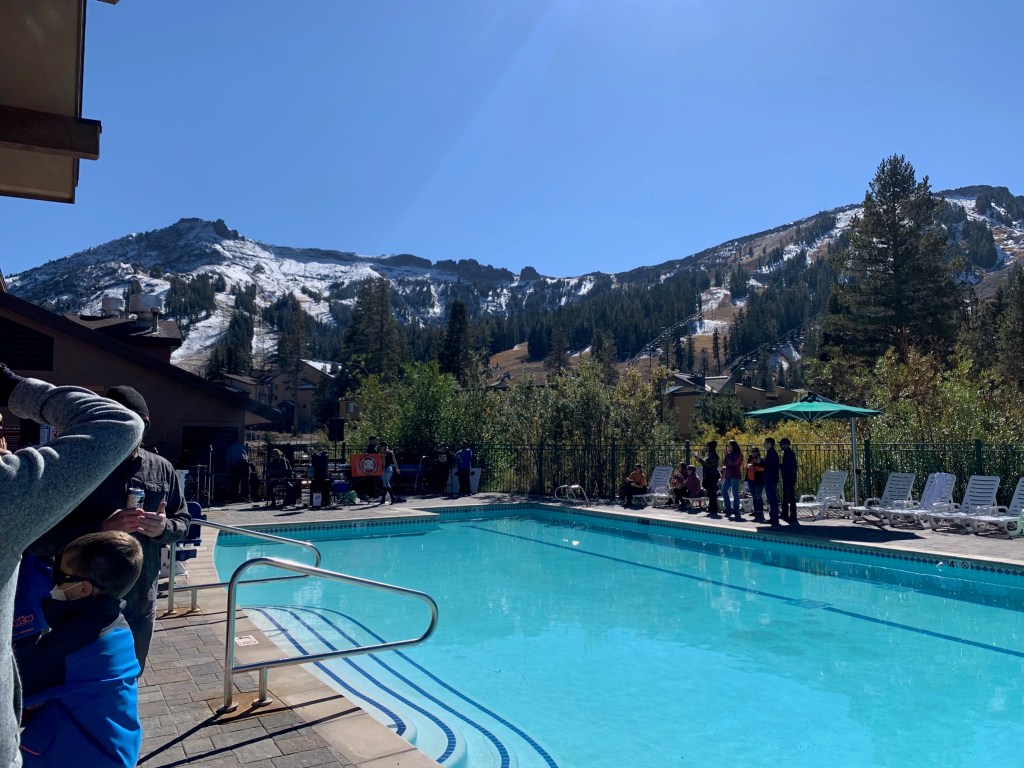
Later that day, we all walked into the center of town together to join a celebration at the local Kirkwood Community Association Center (KCA Club) for the local volunteer fire department, who collaborated with the wildfire fighters to prevent the Caldor Fire from breaching the northwestern ridge and dropping into the bowl in which Kirkwood is geographically situated. The KCA hosted a fundraiser earlier this summer, but this celebration not only raised more funds for the fire department, but also showed appreciation for their heroism.
View of the snow capped northwestern ridge of Kirkwood at the KCA Club firefighter celebration
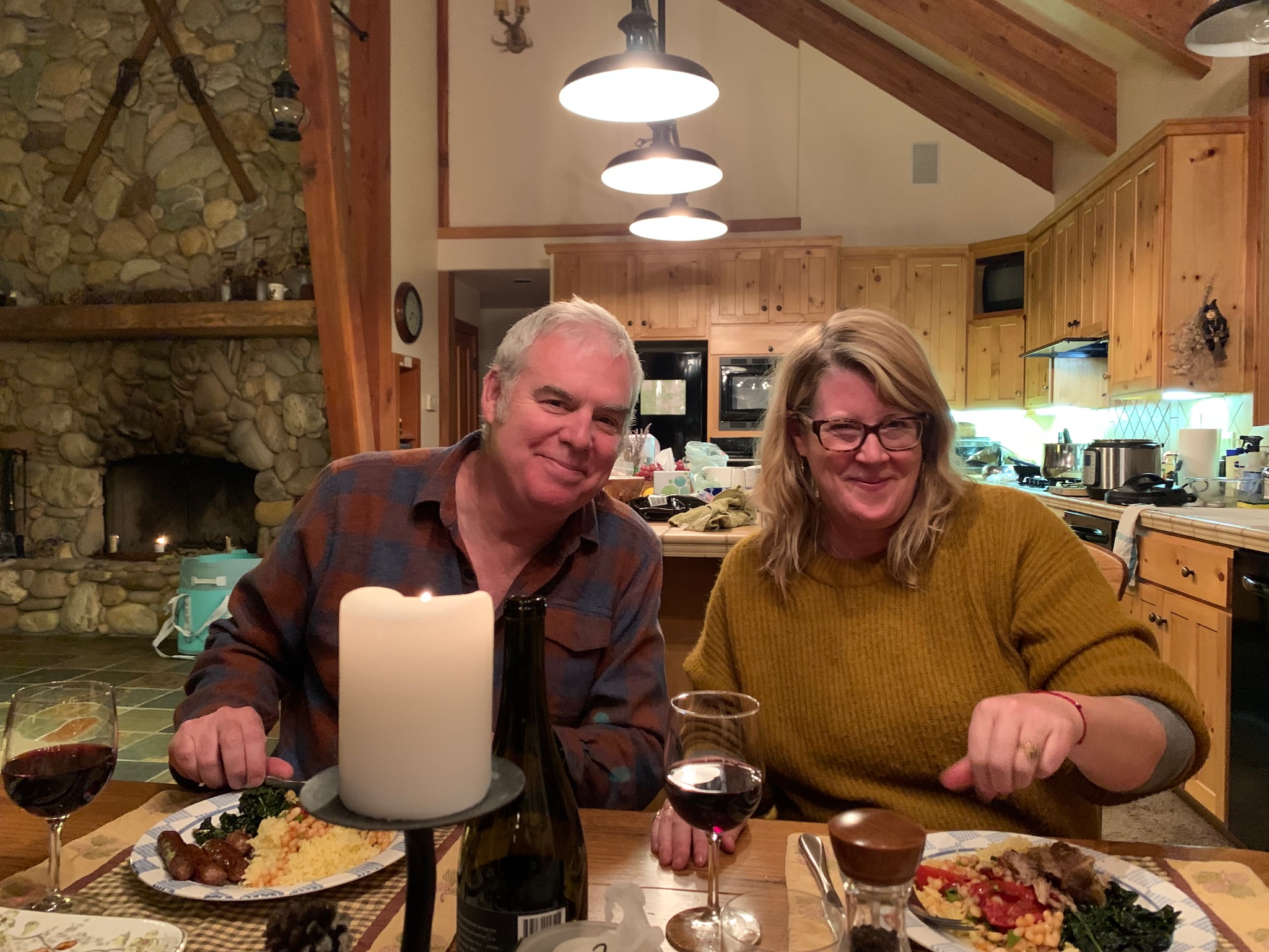
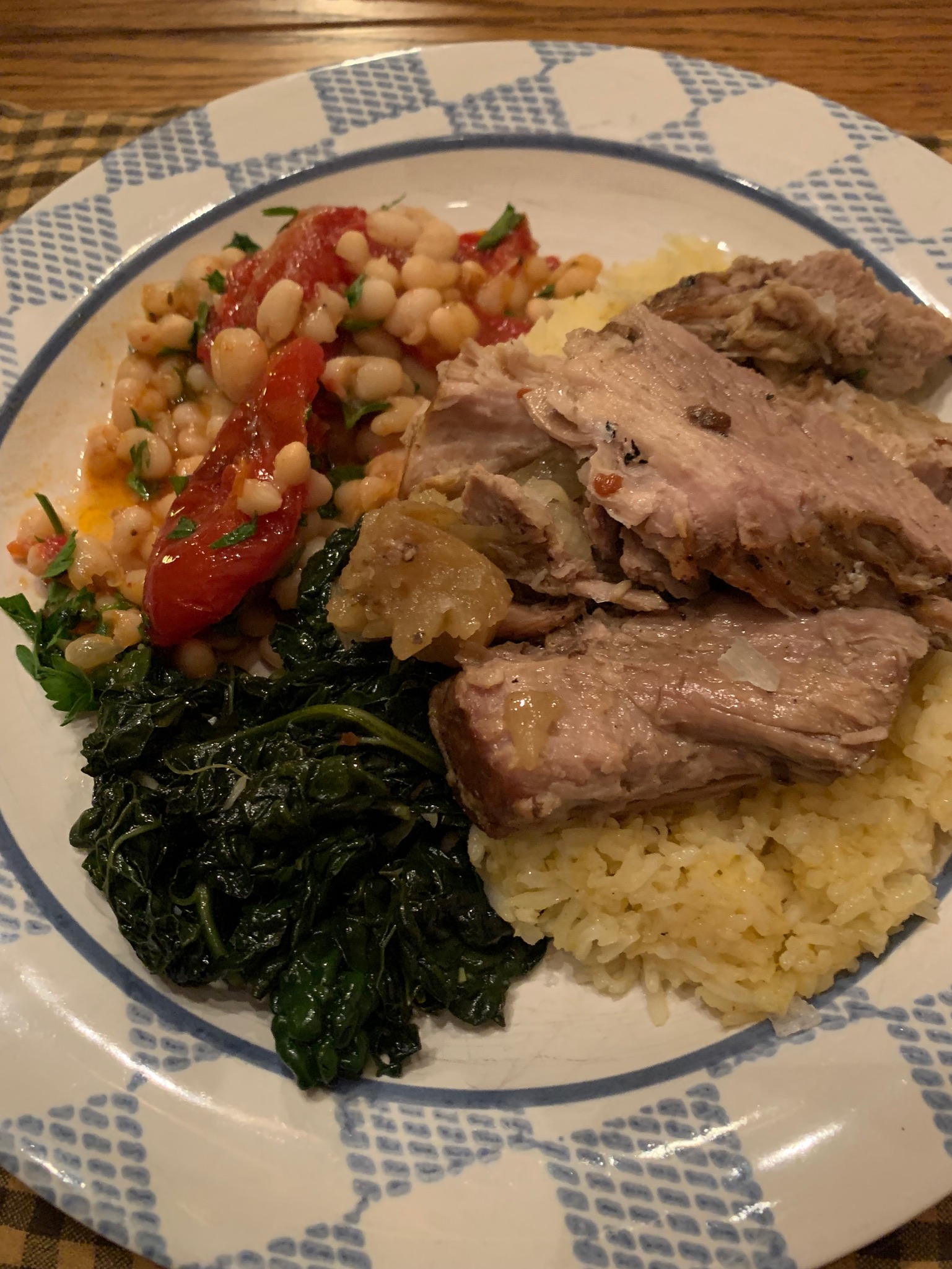
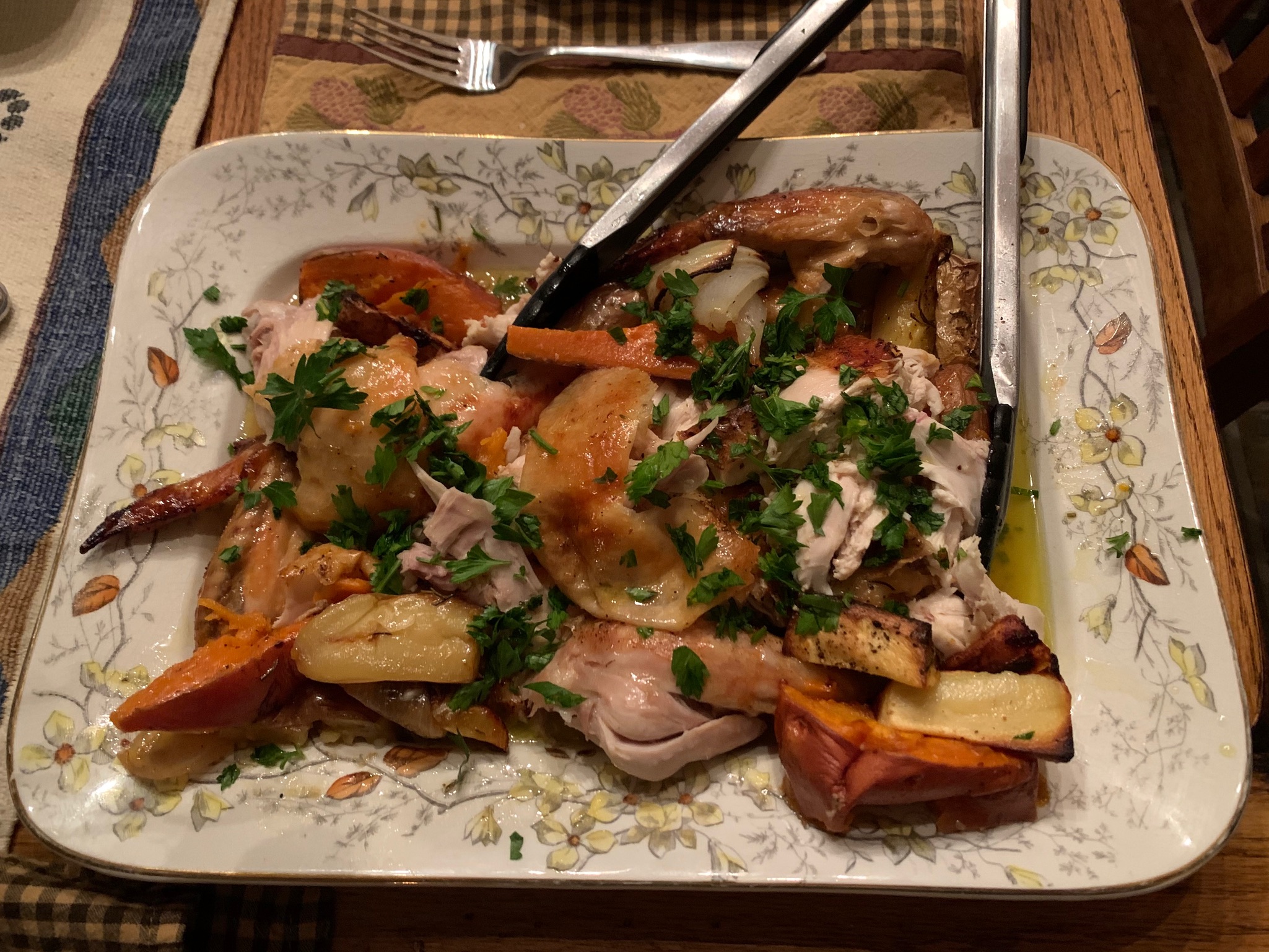
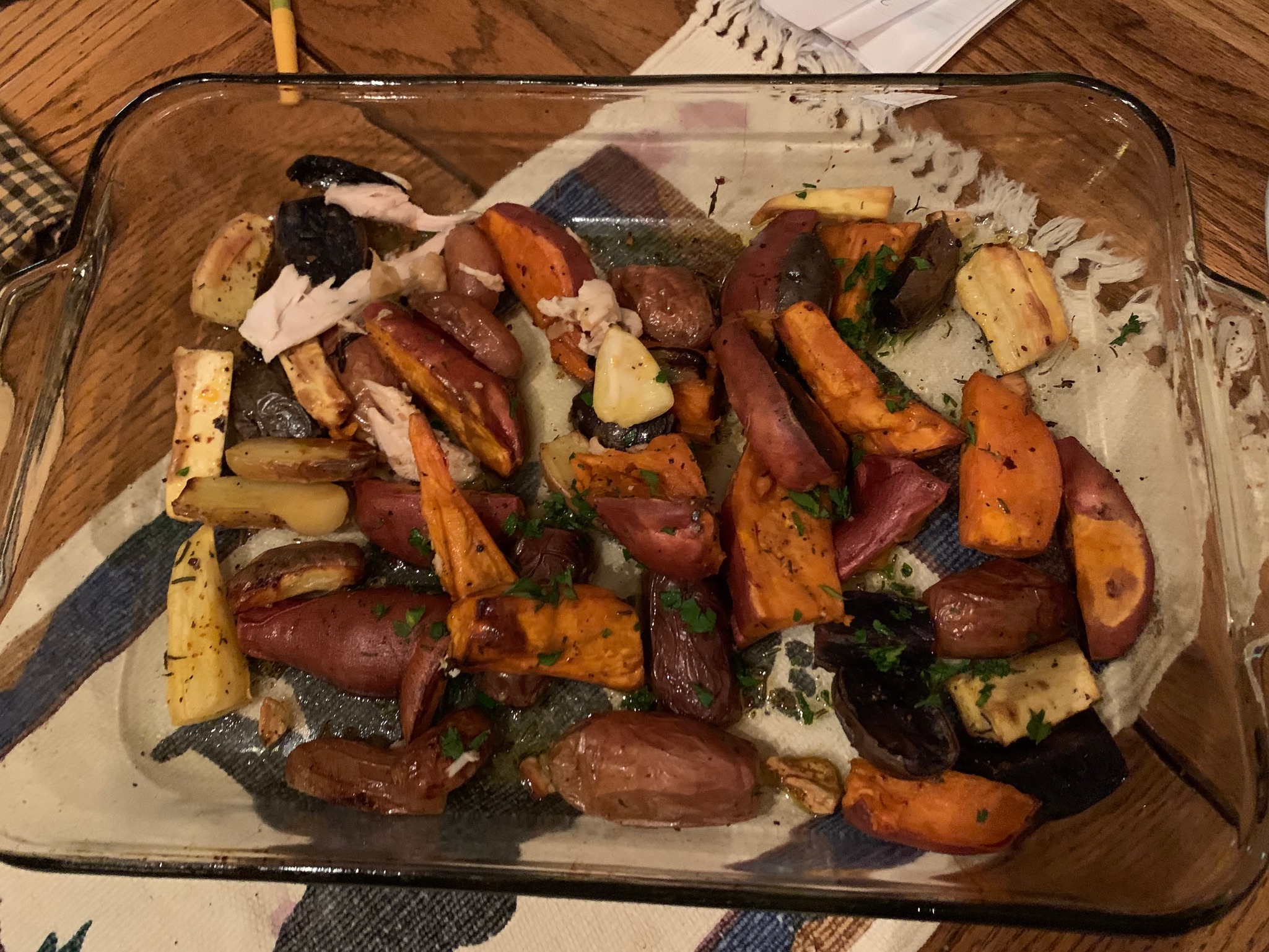
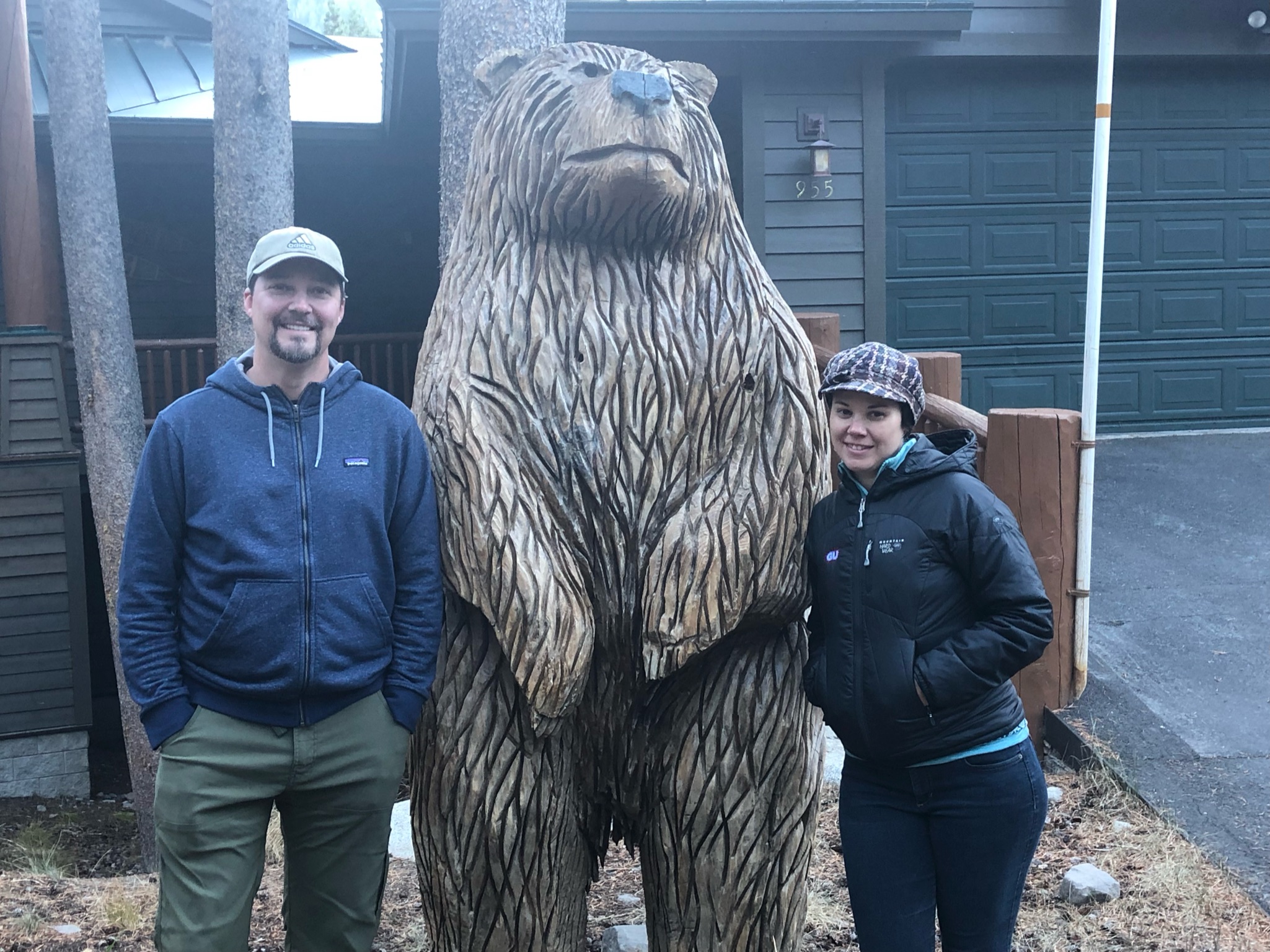
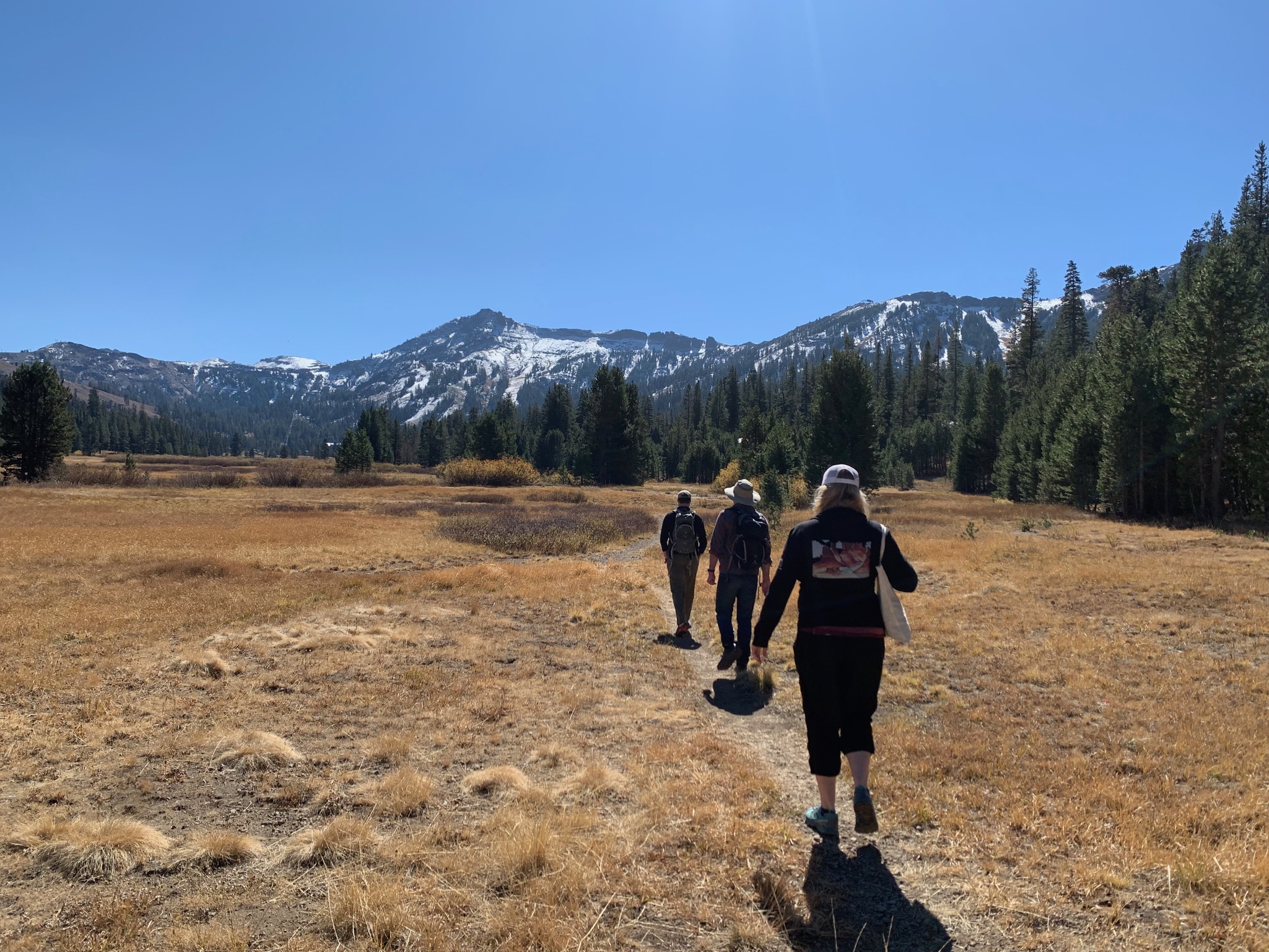
Catherine and Michael were amazing hosts as well! Catherine cooked two delicious meals for us. First, she made a pork shoulder with roasted tomatoes, white beans, and rice. The next night we had what she called “roasties”, which included roasted chicken, root vegetables, and cauliflower, and was also delectable. 😋 Michael made us his signature cocktails, including Manhattans and extra limey margaritas. Because of the continued fire danger, most of the other trails surrounding the area were closed, but they took us on a few walks through the Kirkwood meadow as well as in the their neighborhood to meet “Big Bear No Pants.” 😂
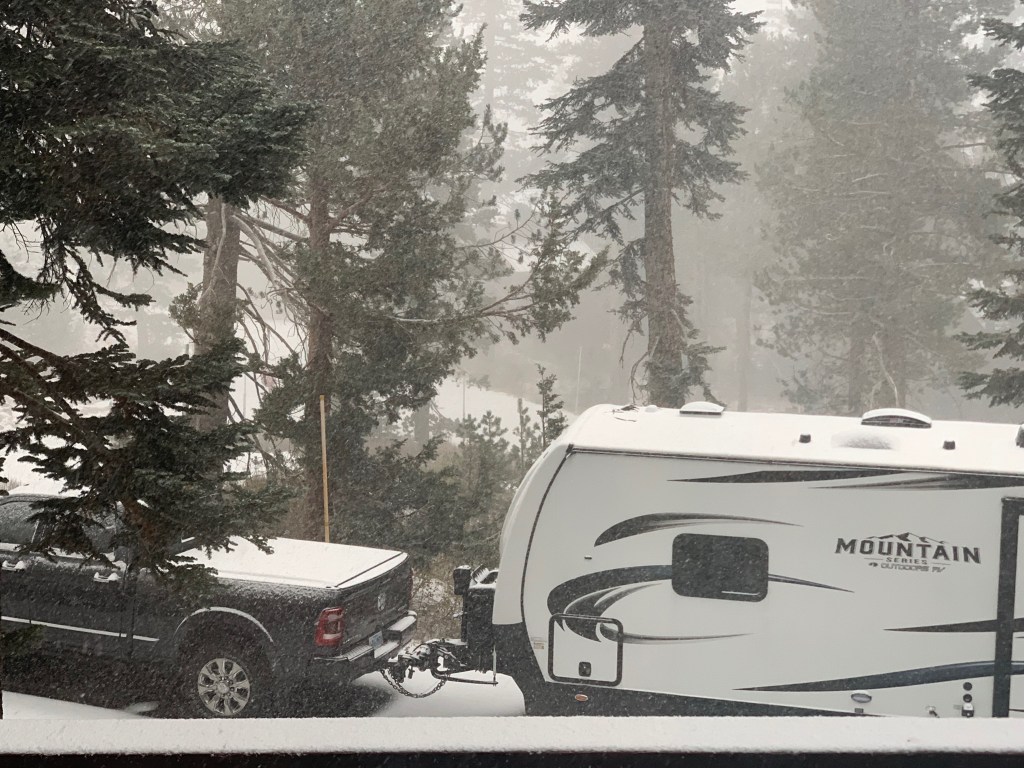
The Monday we had planned to leave there was a 40% chance of light snow…maybe an inch. Well, mother nature foiled us again! We received about 4-5 inches of snow and the area went from looking like this:
Southern ridge of Kirkwood before the snow
To this:
Southern ridge of Kirkwood after the snow
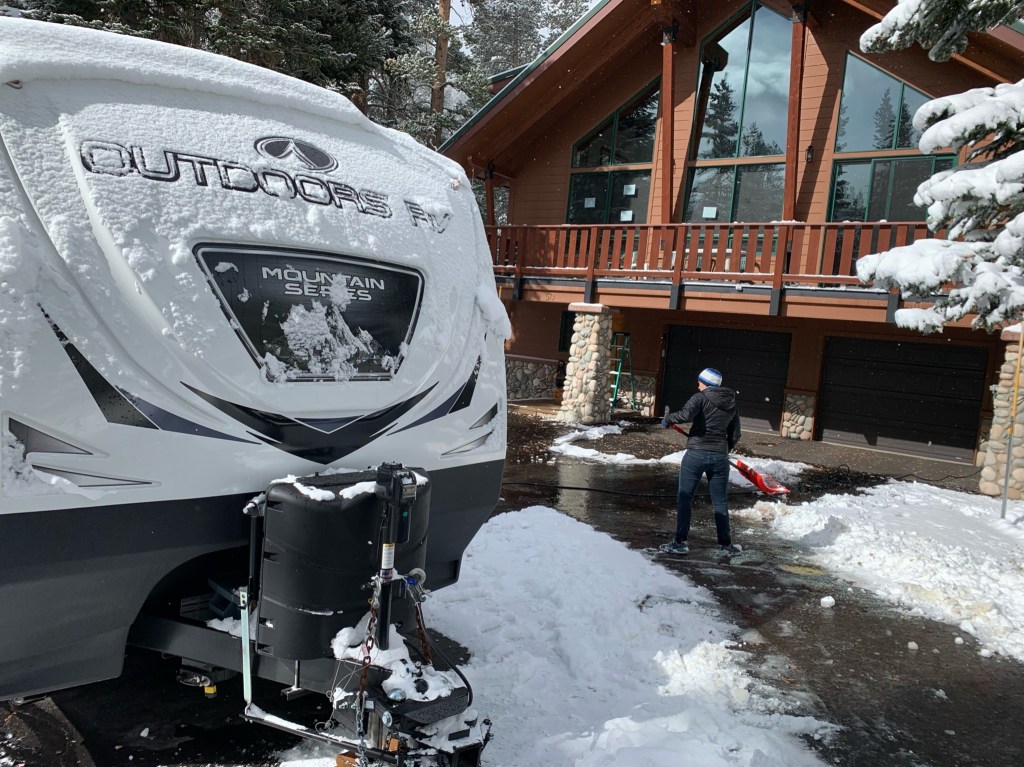
Fortunately, we had planned to boondock (dry camp) over the next four days on BLM land, AND Catherine and Michael were so flexible and generous as to leave us their keys so we could stay until the roads were safer for travel. There were a lot of accidents that day, so being able to stay another day took a load of stress off our plates. Instead, we shoveled the driveway to encourage the snow and ice to melt more quickly, and spent a cozy night in our trailer despite the temperatures dipping down to 12 degrees Fahrenheit. 🥶
The “light snow” we expected and us shoveling the 4-5 inches we actually received
On Tuesday the weather cooperated, and we were on our way to lower elevation. THANK YOU, Catherine and Michael, for a wonderful stay. We are so grateful and appreciative of the time we spent with you. 💗
As Matt and I spent time in our old stomping grounds, I reflected on our time since we moved away in 2015. The Bay Area is one of the largest metropolitan areas on the west coast and has so much to offer to just about anyone who moves out here. I lived in the Bay Area for 15 years and am grateful for my time spent here developing both personally and professionally, all of the friends I made during that time, and of course the fact that I met my husband here in 2012. ❤️ Without the Bay Area, I would not quite be who I am today. This is where I started bike racing, learned how to rock climb, earned my CPA license, and met people from all walks of life. It truly is a melting pot, which is part of what makes it an amazing place to live.
The weather is rather mild, the views are spectacular, access to nature is second to none, and there are a plethora of personal and professional avenues you can pursue here with a large number of educational institutions and wide array of industries supported. It is an area known for its arts and entertainment, world-renowned restaurants, and unique architecture. It has an extensive public transportation network, is pedestrian- and bike-friendly, having developed parklets, closing access to certain streets either permanently or temporarily, so people can move about safely without the threat of vehicles, and most cities in the Bay Area are top ranked for access to public parks, with four major Bay Area cities making the Top 50.
However, like many metropolitan areas, it doesn’t come without its issues. One of the primary reasons people, including myself, move away is the cost of living, which can range from 75% to 175% above the national average. Median housing costs are out of this world, ranging from $925,000 to $1,600,000, while median incomes range from a paltry $55,000 to $130,000, which means housing costs can range from 40% to 55% of your gross income or more! The high housing costs also contribute to the homeless crisis on the west coast, which is hard to ignore as you walk around.
With the pandemic, traffic has become lighter, but more aggressive. The other big reason I left The Bay was because the aggressive nature of drivers here made me feel unsafe. Nearly every day over the last two years of my time living in the Bay Area, I was threatened by someone in their vehicle. Whether I was walking, biking or driving made no difference as to how those drivers acted. It was incredibly stressful and unsustainable for me. And compared to the surrounding areas, the roads are pretty awful here…most of them are on a 100+ year repaving cycle, so make sure that if you have a vehicle, it has awesome shocks or struts. 😂.
The summers are indeed like Mark Twain wrote long ago: “The coldest winter I ever spent was a summer in San Francisco.” Thus, the autumn season is probably the best time to visit, when the fog is not ever-present and the temperatures are still warm. This area, like most of California, enjoys lots of sun, averaging around 255 days per year. With so much sun and not enough rain, drought conditions have been an issue for over a decade, leading to frequent wildfires and bad air quality from the smoke.
Like most locations, you have to weigh the pros and cons. It is a place of great opportunity, diversity, and leads the country in progressive measures to protect and support the people, the environment and make living here more sustainable. It is a very liberal place politically, so having an open mind certainly helps. What is important to you when looking for a place to live? You can always visit BestPlaces.net as a starting place on your journey to find out whether it’s right for you. Although I would not live here again, I do not regret my time spent here, and cherish the memories I have and the relationships I developed from this jewel by the Bay.
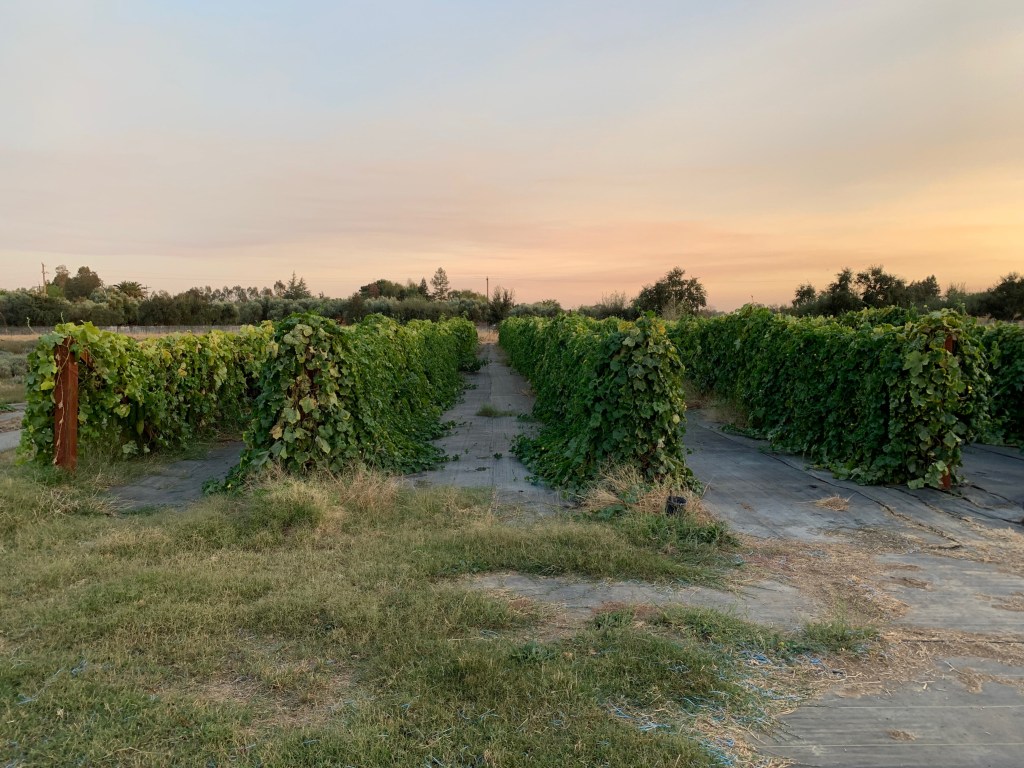
On our last day near Crater Lake, we knew it would be our last time in Oregon for quite some time. We set out on an idyllic day, heading south into California. Overall, the drive was fairly easy and we landed at a Harvest Host called Moonbeam Farm where the proprietors grow different varieties of organic lavender and loofah.
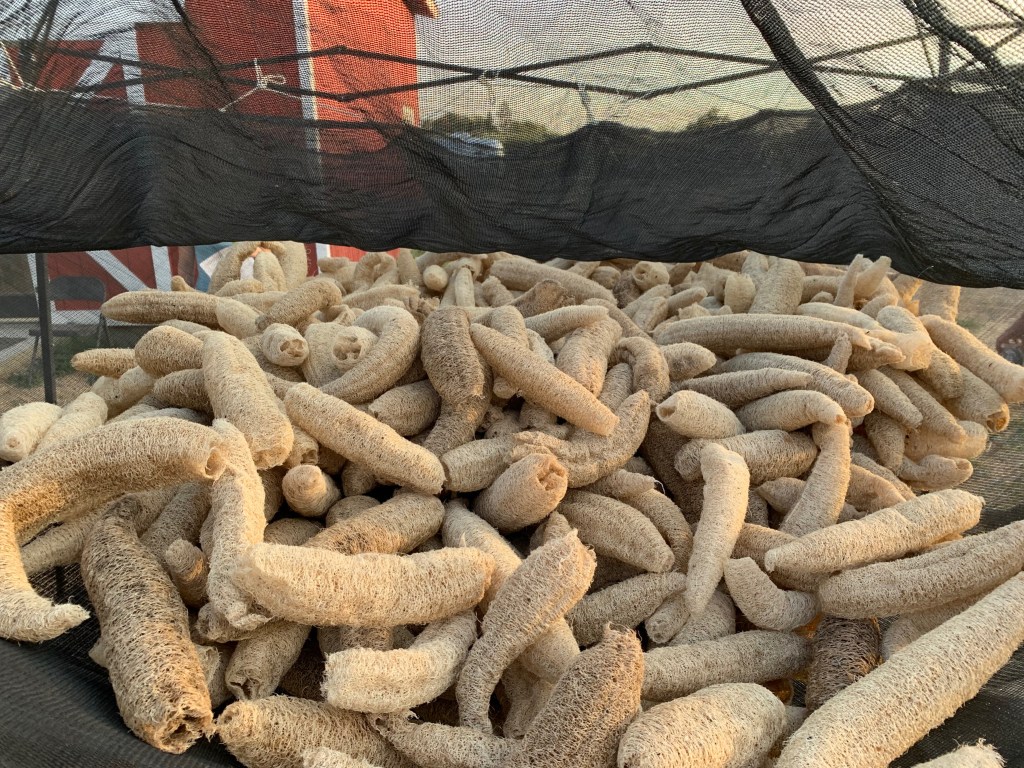
We learned quite a bit on the farm tour. Did you know that loofah comes from a gourd that is also known as Chinese okra or elephant okra and several other names? 😲 It grows on a vine, and once it reaches maturity, it dries out within in a week and turns brown. At that time, you can harvest them, shake out the seeds for replanting the following year, and peel off the outer shell. Inside, there is still a film on the fibrous spongelike material you know as loofah, which gets washed away in a large, rotating drum and the washed sponges are then dried in the sun for your use in the shower, the kitchen, as a chew toy for your dog’s dental health, and more.
It was a really neat experience learning all about the contrast between how they are processed at Moonbeam vs. other commercial operations. The reason why the loofah sponges you find in the store are so different is because they are harvested earlier than they should be, chemicals such as lye or bleach are used to remove the outer layers and coloring, and they are cut to a specific shape and compressed, leaving them as the tough loofah you have come to expect. Moonbeam Farm is one of the only heirloom loofah farmers west of the Mississippi, so pop by if you are heading up Highway 5 to see the process and feel the results for yourself.
Chicese okra vines
Chinese okra
Dried and harvested
Peeling the outer shell
Washed and dried loofah
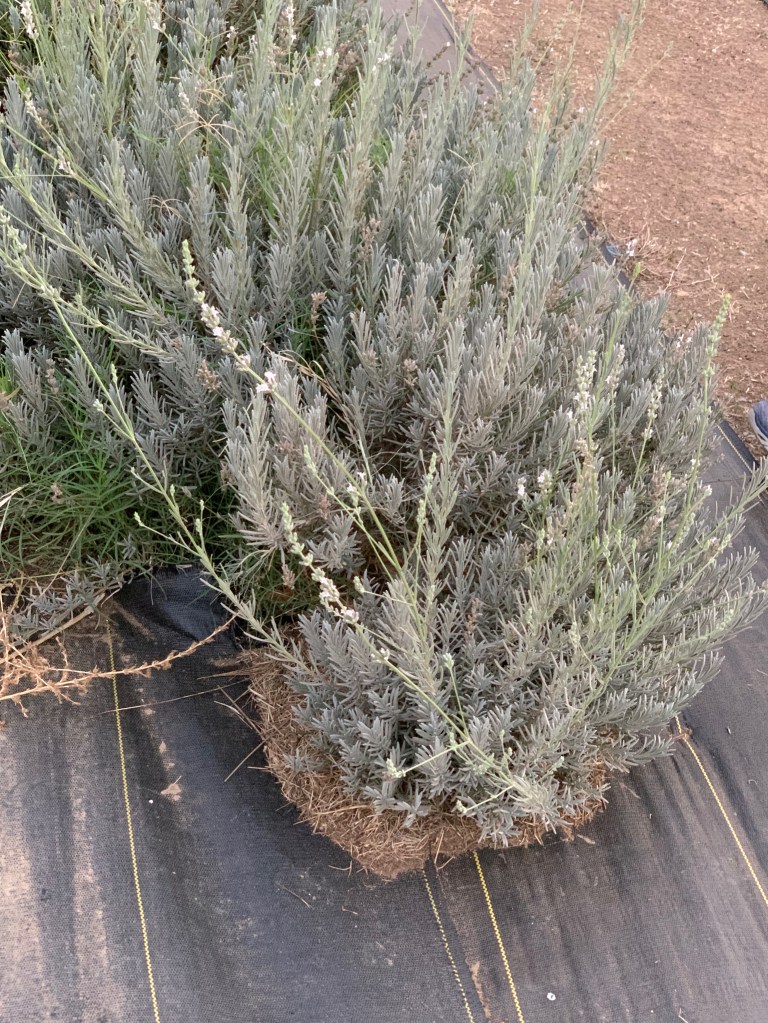
After learning all about their loofah operation, we received bouquets of lavender during the lavender fields tour, and learned even more about the varieties of lavender, why some are used for culinary purposes while others are used for perfume, the difference between lavender and lavendin, and why some naturally contain camphor chemical components and others don’t. There are over 400 different varieties of lavender! So, if you think it’s not for you, perhaps another variety might strike your fancy. Much to my delight, I discovered there is a culinary variety of English Lavender used in savory dishes called Melissa, which is my namesake. 🥰
Lavendar at Moonbeam Farm
I purchased some lip balm infused with lavender, Herbs de Provence for my spice collection, a loofah for the shower, and a few more for the kitchen from their country store on site. Overall, I think you’d like this stay. The only things you may want to be aware of are that they close their gates in the evening, and it looks like they are locked, but they are not. Also, if you are running a generator, you will be asked to put it on a surface such as a plastic lid, likely because of their organic farming practices and the need to avoid unwanted chemicals being leached into the soil.
And onward we went south to the Bay Area for a very quick visit. Here are the highlights.
Anthony Chabot Regional Park:
I used to live in Oakland for nearly 15 years and it was our home together for 4 years, so we were familiar with the area and curious about what had changed and what had not. By the time we got onto Highway 80, we were reminded of just how terrible the roads are in the Bay Area. 😬 And traveling around in Oakland and the surrounding areas, we saw very few places where they had made ANY improvements to the roads since we left back in 2015. Sheesh.
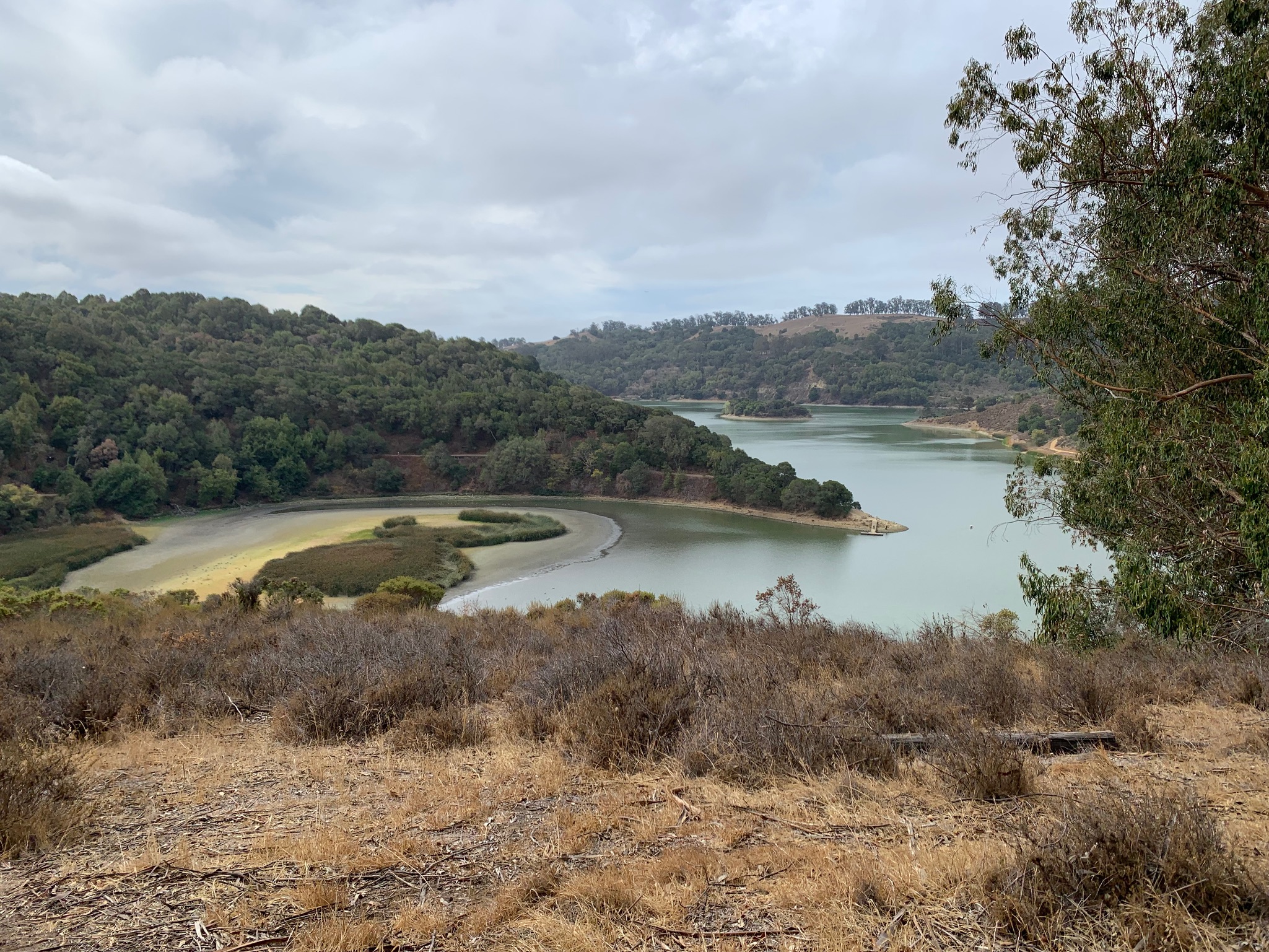
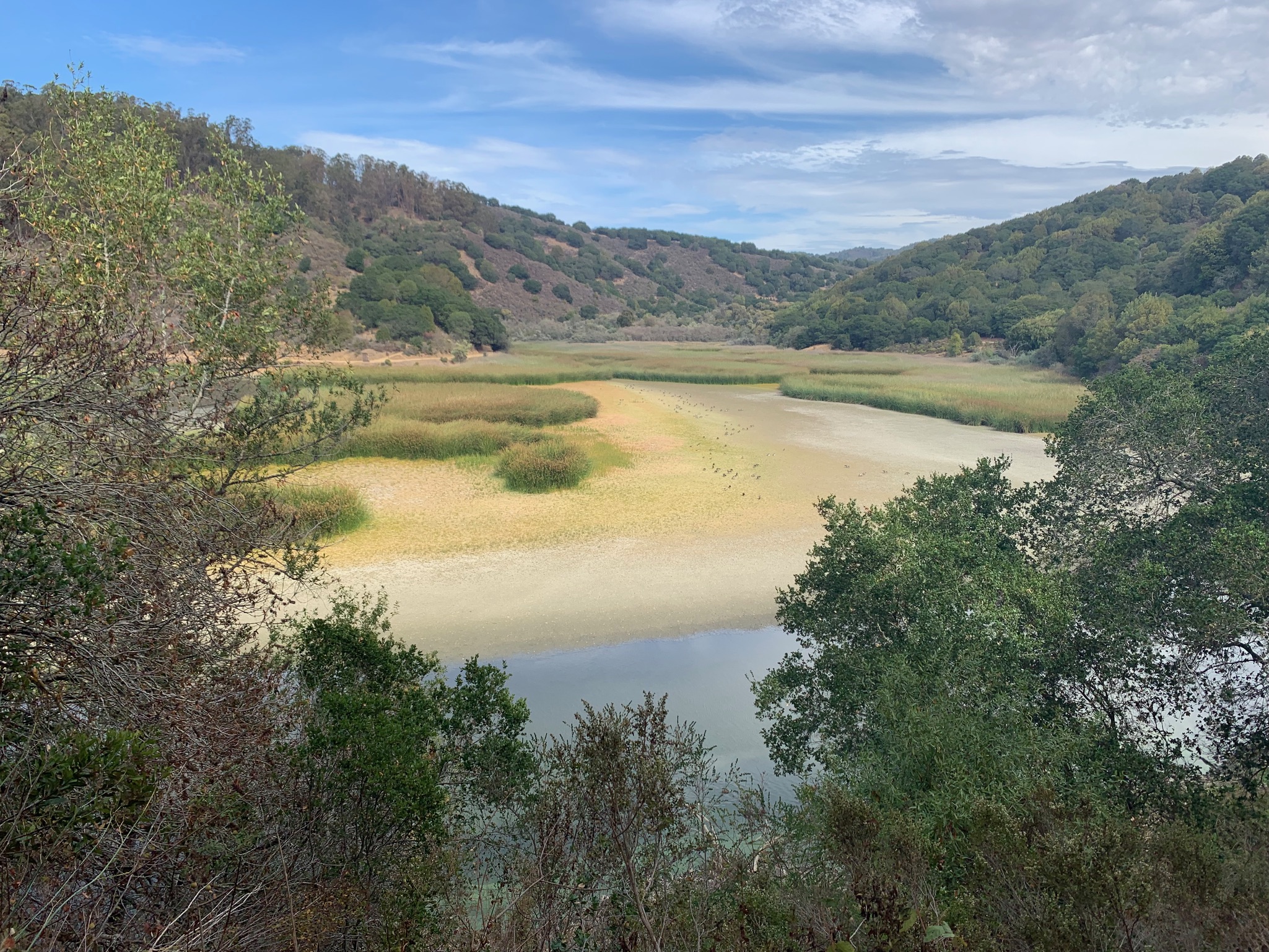
I have biked all over the Bay Area, so I knew of a campground tucked away off of Redwood Road called Anthony Chabot Regional Park, near Castro Valley on a ridge between Lake Chabot and the San Leandro Reservoir. After looking at our options, we decided to stay here because it was more conveniently located than our other options, much less expensive, and not a glorified parking lot.
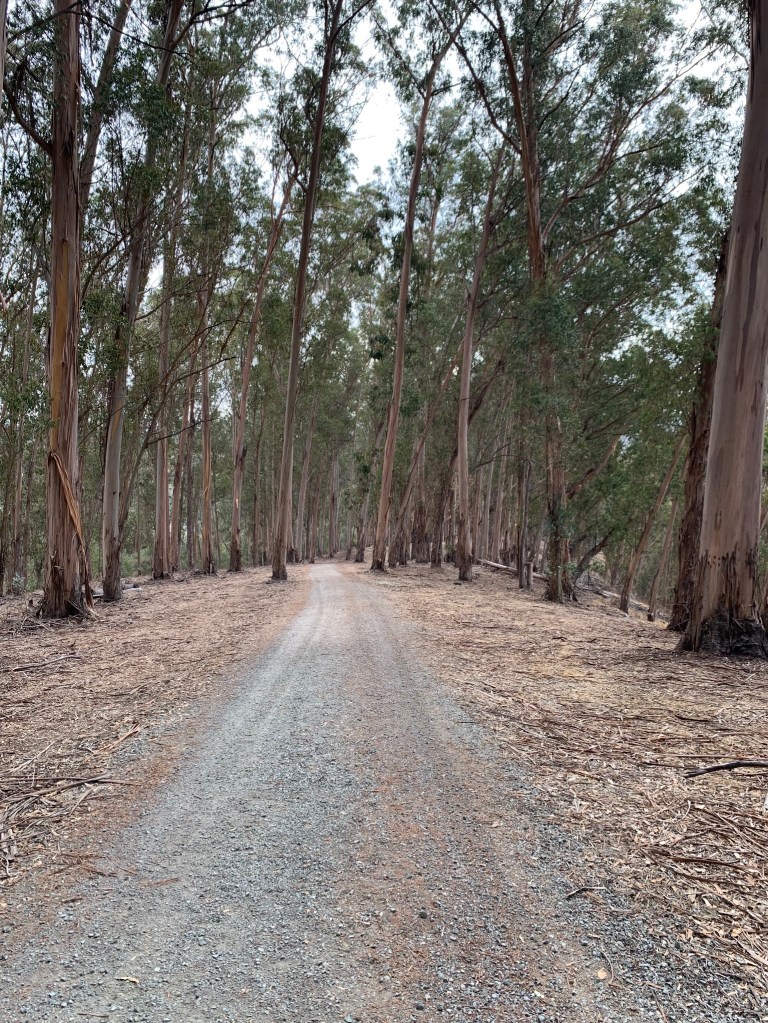
Overall, we had a nice stay. There is more space between camping spots, it’s really quiet, well maintained, and you have access to many hiking and biking trails. The park is only 20 minutes from Castro valley, 30 minutes from downtown Oakland, and 40 minutes from San Ramon. I took advantage of the convenient location by hiking around Lake Chabot and doing one of my favorite bike rides. 😍
Anthony Chabot Regional Park
There are, however, quite a few restrictions when you stay at Anthony Chabot. The biggest pain for us was the park’s 10pm curfew…they lock the gate going into the campground at 10pm (really, not just pretending to like at Moonbeam Farm), so we were always stressed to get back in time when out visiting with friends. The park doesn’t allow generators, E-bikes, or water balloons. 🤷🏻♀️ I can understand the generators being a possible fire hazard, but the other two seem more like a “someone ruined it for everyone else” sort of situation. The other bummer is that their sewer systems are not up to par…our site’s tank dump site was blocked up as was the shared dump site, so we could not dump our gray or black tanks while we were there even though we paid for it. 😖. It’s a good thing we have gotten better at conserving water!
Visiting with old friends:
If you are one of our Bay Area friends and we did not visit with you, we are sorry. 🙁 We had four days and simply did not have enough time or money to stay long enough to see everyone. I don’t even think we would be allowed to stay at the campground long enough to make that happen as length of stay is another one of the park’s restrictions. 😂
One our first night, Matt and I went to Zachary’s Pizza to meet up with our friend Alec for dinner. This place is a staple in Oakland. If you like Chicago-style pizza, swing by one of their locations if you are in the area. Alec is a long time friend and was also our wedding officiant, so it was great to catch up with him and have a low-key evening out upon our arrival.
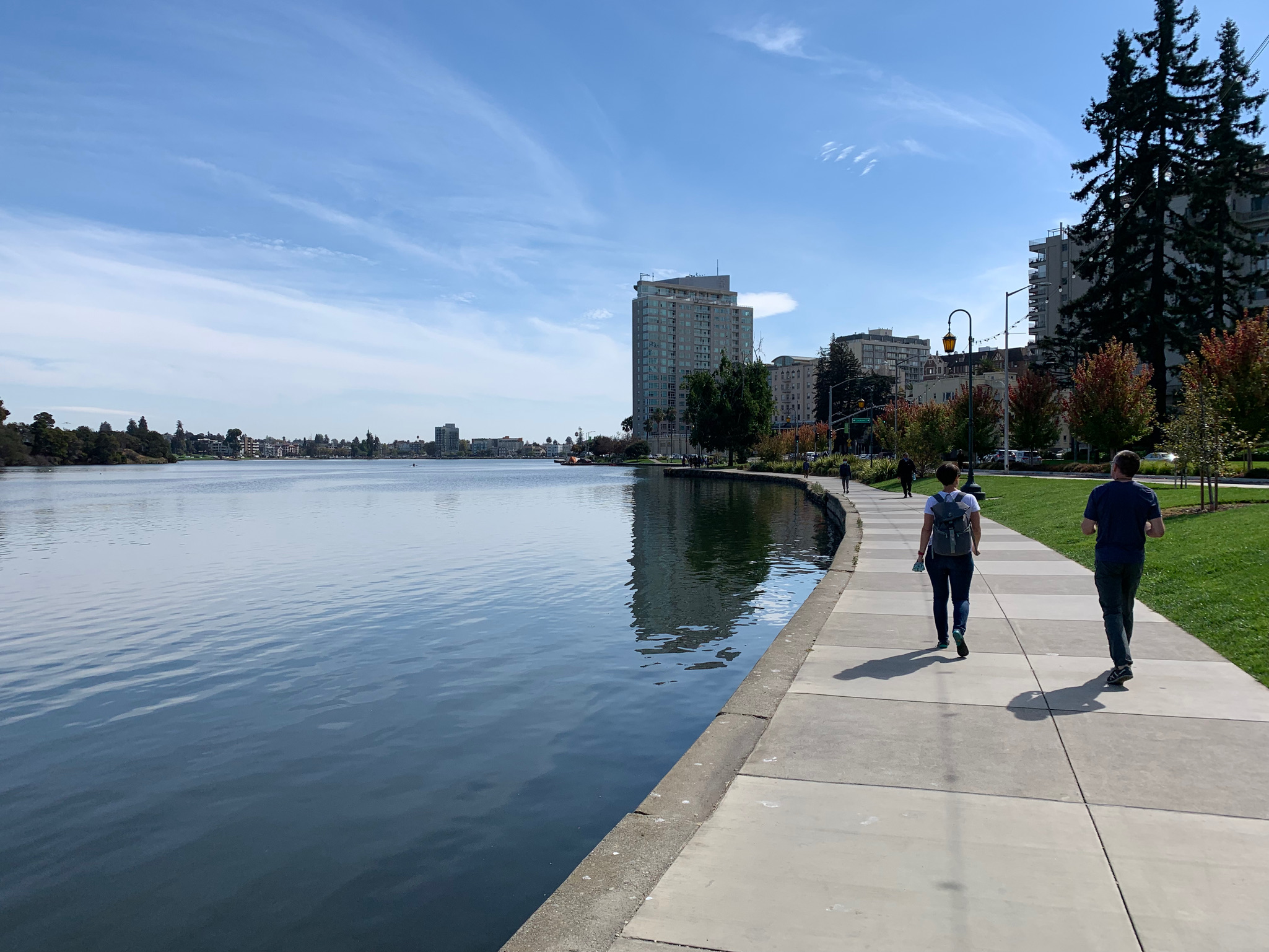
The next day we met up with my former climbing partner and friend Craig for lunch at Xolo Taqueria and we all went for a stroll around Lake Merritt afterward. Although they haven’t made many improvements to the roads, there have been several improvements to the areas around the lake, which have really uplifted the area, making it more bike- and pedestrian-friendly, and the health of the lake is better with their renewed connection to the estuary on the west side of the lake. Afterward, we drove over to one of my favorite places called Market Hall Foods to peruse their delicious food offerings, and had a drink at what used to be called Barclays and is now the Golden Squirrel. Thank you, Craig for a wonderfully relaxing day! We had a lot of fun and were really glad to see you. 🤗
That night we headed to Telegraph Avenue for dinner with our old neighbor Peter and his partner Arpita. Near Alcatraz and Telegraph you will find a handful of Eritrean restaurants to choose from. Although the service was great and the food was delicious, we all had a bit of indigestion afterward… 😳. Nevertheless, we were happy to connect, albeit for a very short while due to that darn curfew at the park.
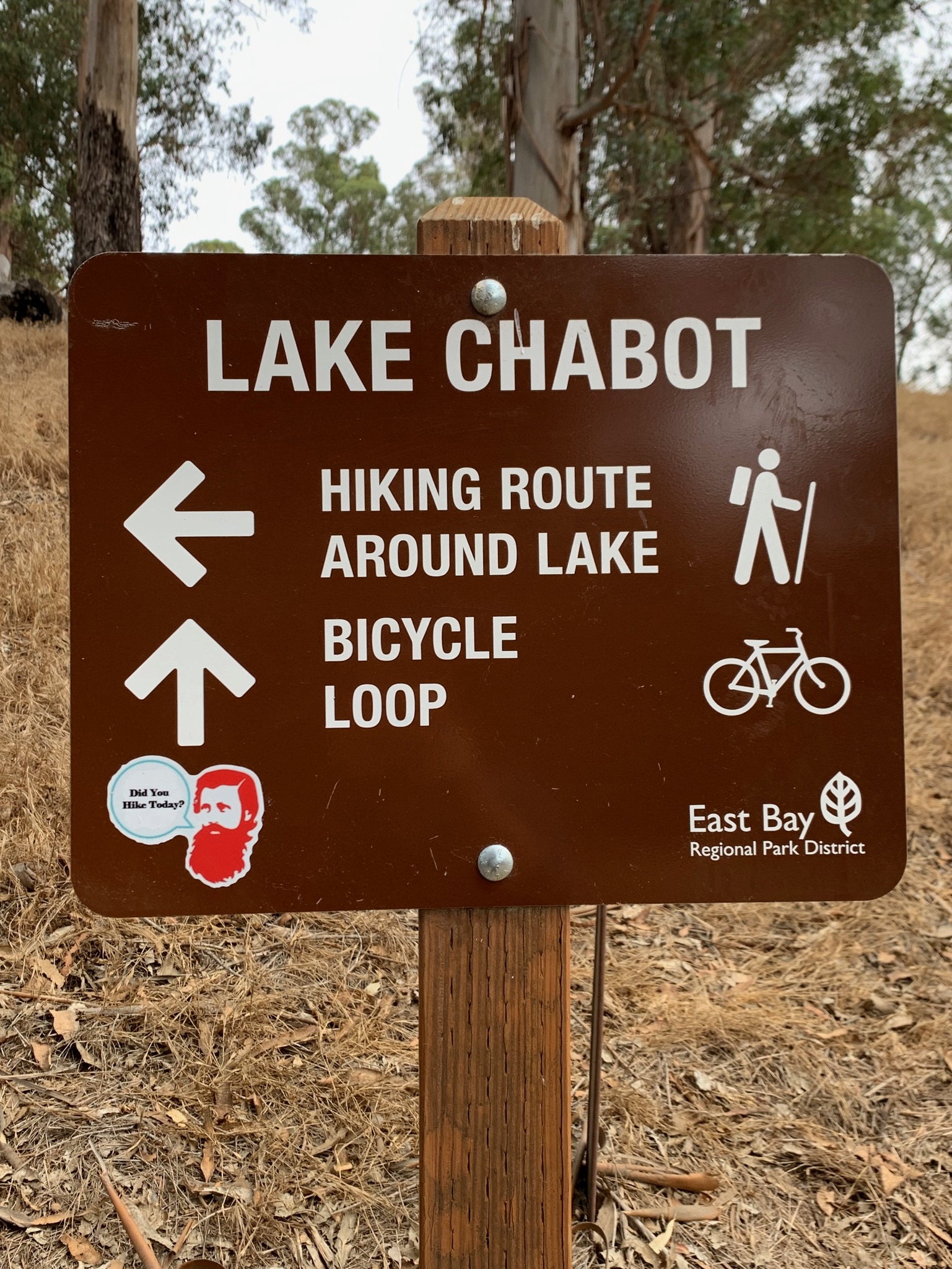
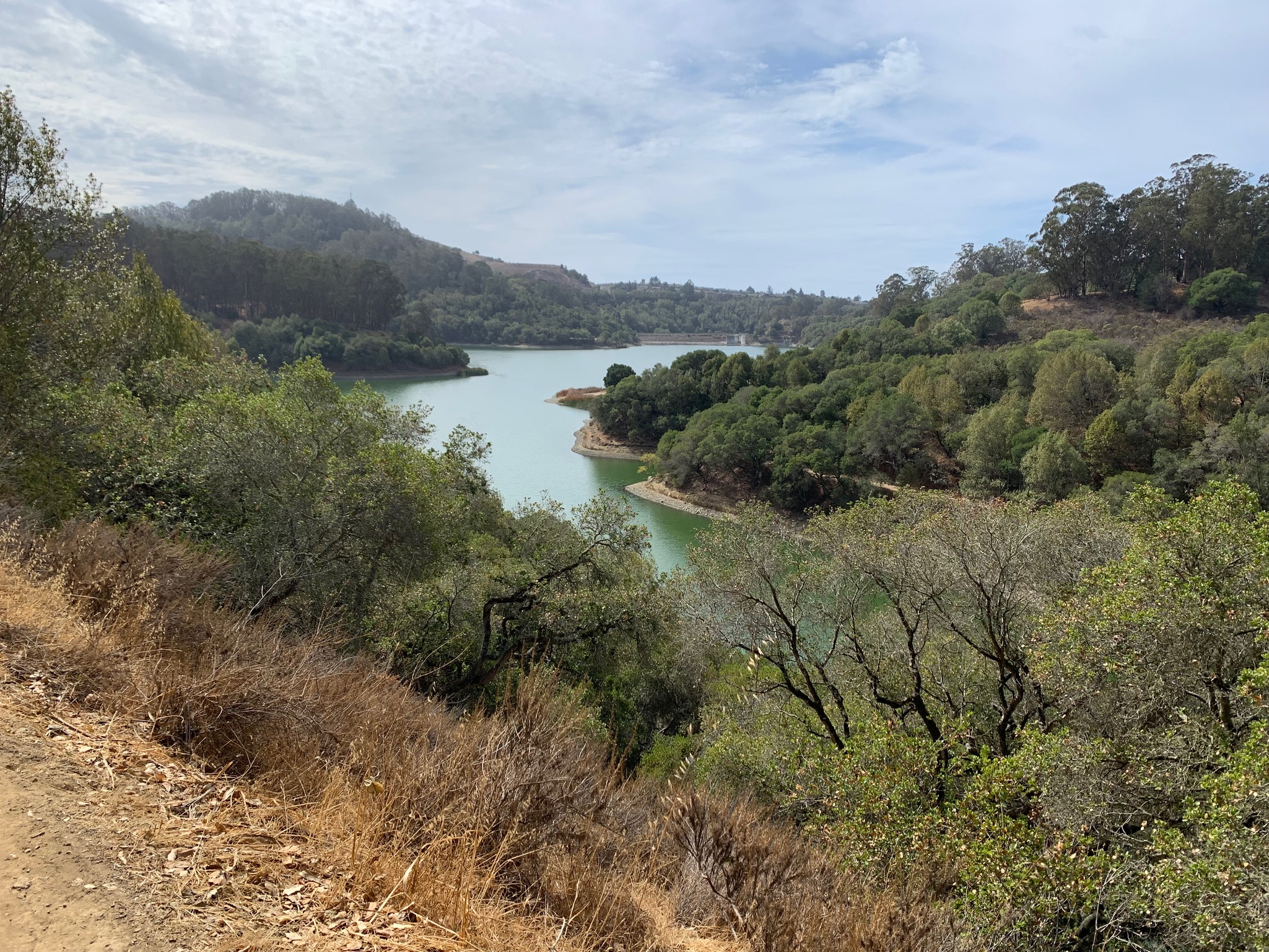
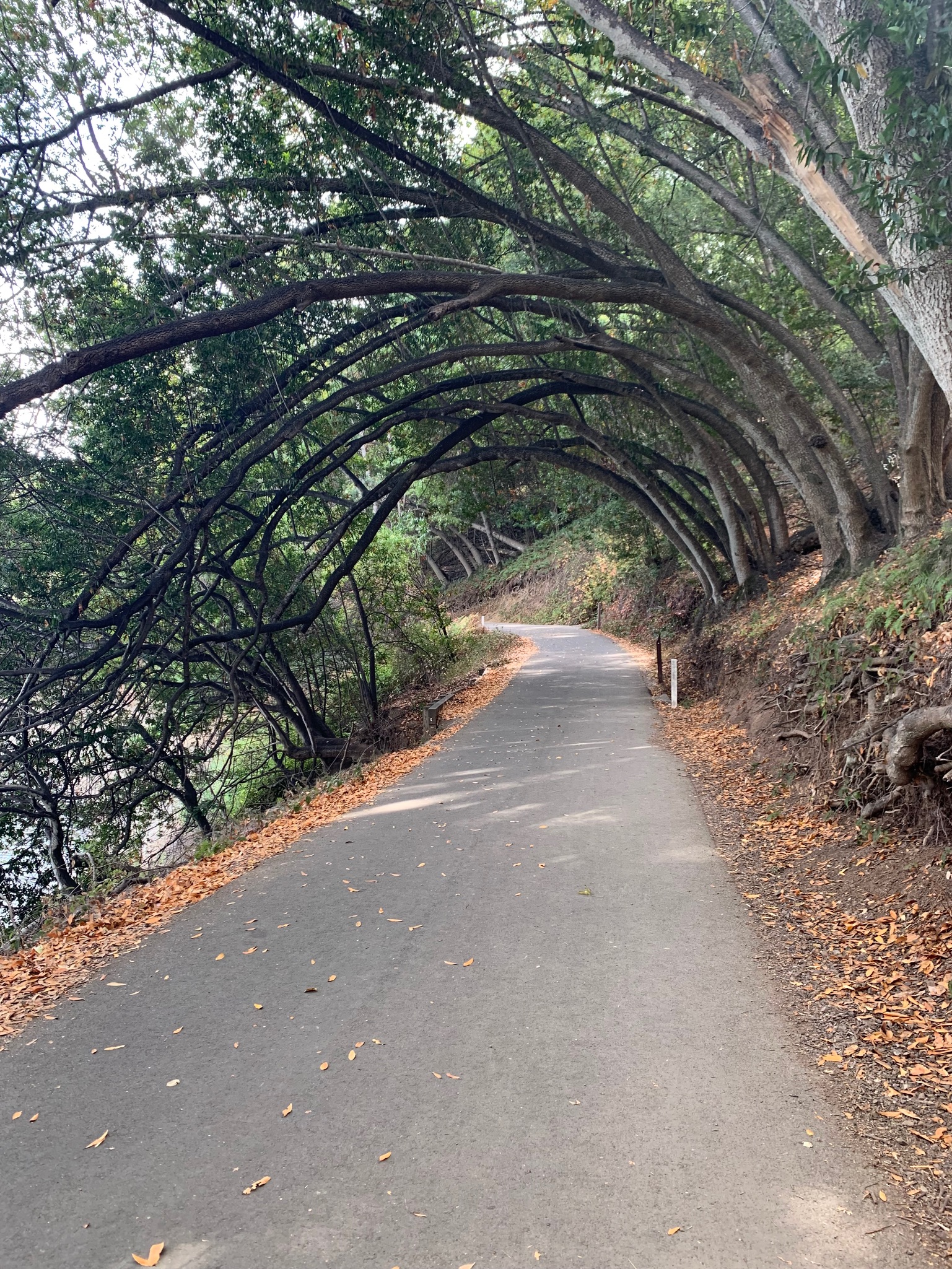
The next day was our free day, so I chose to walk around Lake Chabot, which was about 10.5 miles round trip from our camp site. Most of it is fairly flat, half of it is paved, and a small portion in the northeast section of the lake is for hikers only, so it was really quiet. I enjoyed just how daring the birds are, which is unlike most places we have visited. If you are a birder, you would love traveling around this lake. They have geese, ducks, egrets, herons, perching birds and more.
Later that evening, we met up with one of Matt’s co-workers Rico for dinner in San Ramon at Bamboo Sushi, which ironically is one of our favorite sushi joints in Portland! On the drive out we traveled over Crow Canyon and Norris Canyon Roads, both of which I used to bike on when living in the Bay. It brought back happy memories from my bike racing days. And Matt’s co-worker Rico is a sweetheart, whom I really enjoyed getting to know better as we closed down the restaurant. 😋
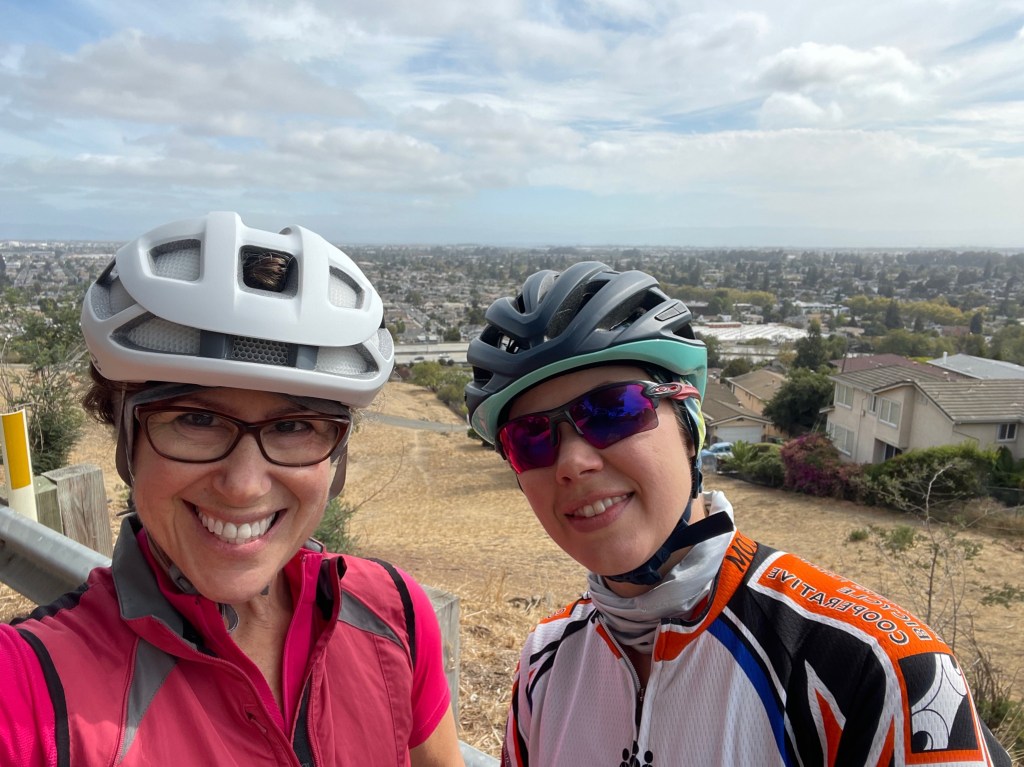
The next day I met up with my friend Laura to do a bike ride called Zoo Loop that passed right by our campground. The majority of the ride is on Skyline Blvd and Redwood Rd, which parallel each other in the East Bay hills, and you do in fact get to bike through the Oakland zoo entrance. The weather was mild, the roads have aged and the climbs are just as hard as I remember, but the conversations with Laura were also just as lively as I remember. I’m so glad I got to see her and go on a bike ride for old time’s sake. 💗
Laura and I at the Oakland Zoo
The view from Crestmont and Skyline
Photos by Laura Walpert
That night we stayed local in Castro Valley and visited my former co-workers and dear friends from GU Energy Labs. Emily and her husband Luther live there, made us dinner and invited Eric and Richard, who I hired way back in the day when I was in GU’s accounting and finance department. It was so great to catch up with everyone, share stories, a meal, many hugs and loads of laughs. I could not have asked for a better close to our time in the Bay Area. ❤️
Off we go to the Sierra mountains to stay for a brief respite with friends in Kirkwood. Fingers crossed, the weather cooperates as we head through the mountain passes. 🤞
Matt has always wanted to visit Crater Lake, so jumped at the opportunity to incorporate this destination into our travels. We had a very rainy, long day of driving into the campground where we were staying: Farewell Bend Campground. It’s just north of Union Creek and Prospect, OR and about a 30 minute drive from the West Rim of Crater Lake. Setting up in the rain is no fun, but thankfully the rain let up the following day around noon.
There are no hookups, and no WiFi or cell signals for many miles, so this truly was a boondock (dry) camping situation for us! Matt took advantage of the solar panels he put on our trailer roof and the supplemental panels we keep in the back of the truck to help power our rig so we could minimize the need for our generator. The temperatures were getting down there at night, so we were thankful to have both energy sources to keep the rig warm at night.
Downloaded items didn’t exactly work out the way we had planned, so we took advantage of a scant signal at Crater Lake to get Internet access, but overall we did pretty well with our “off the grid” stay. It definitely helped that we DID get a signal for a classic rock radio station, which kept us sane, connected to the outside world and lightened the mood when back at the trailer.
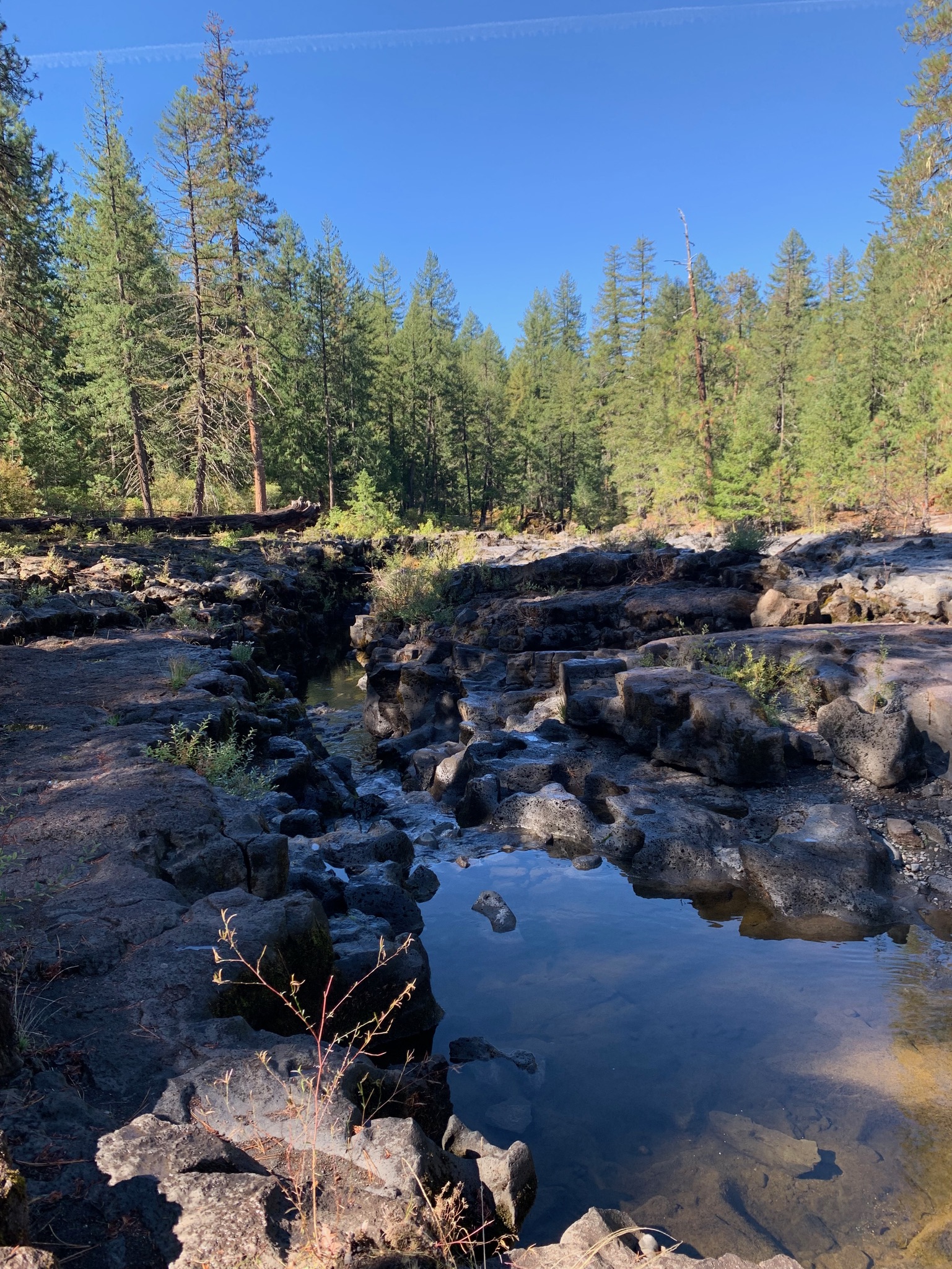
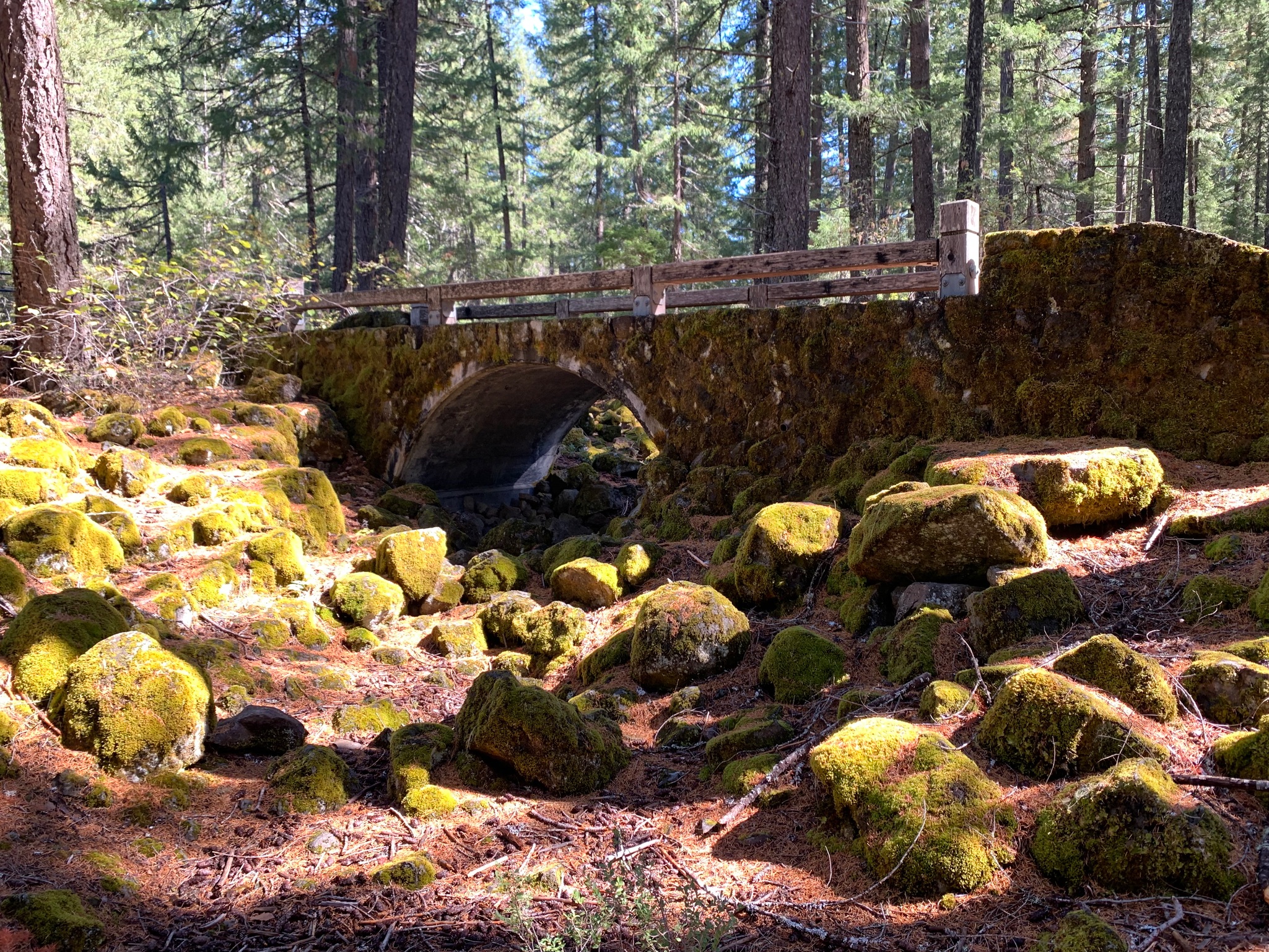
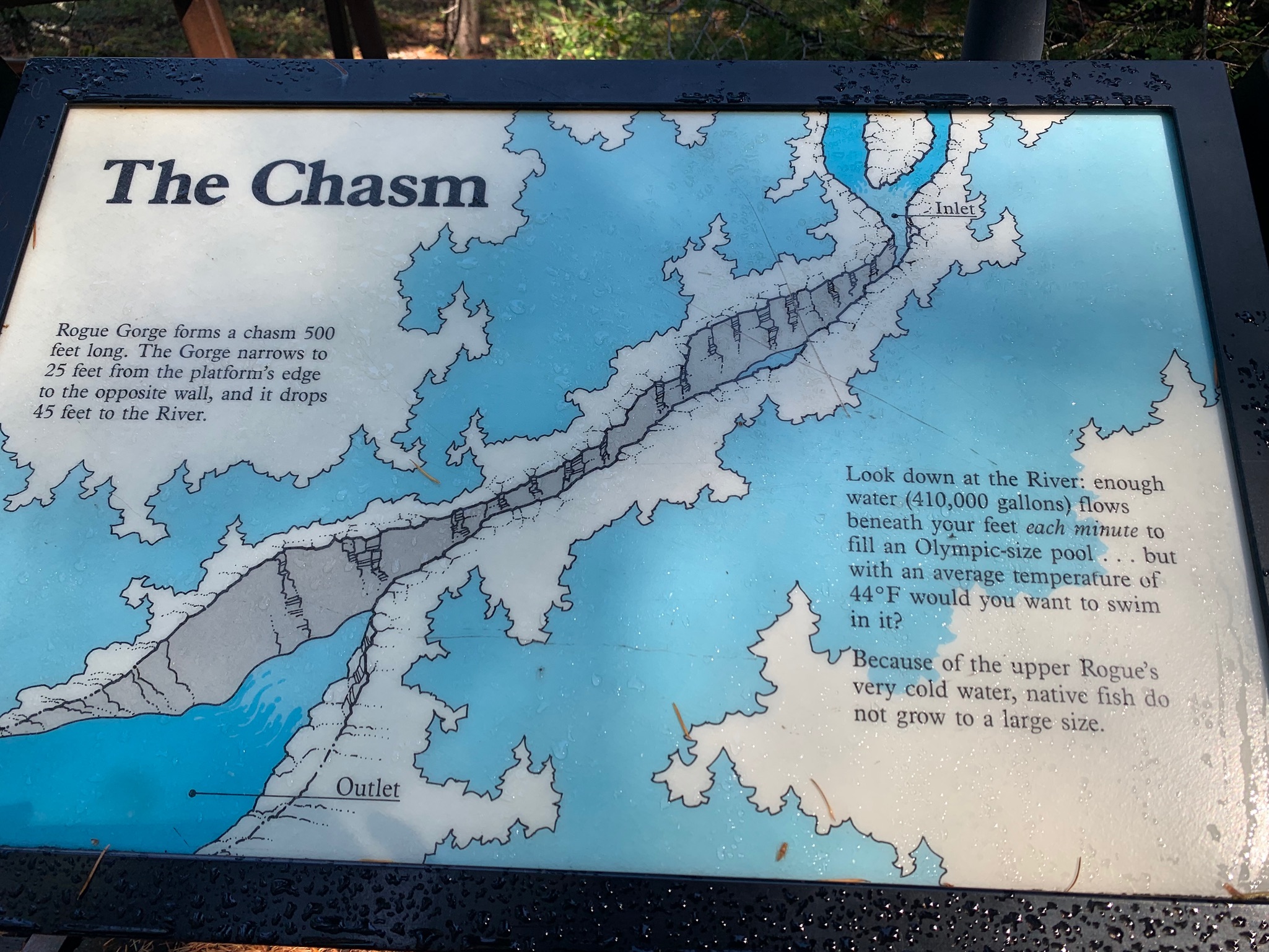
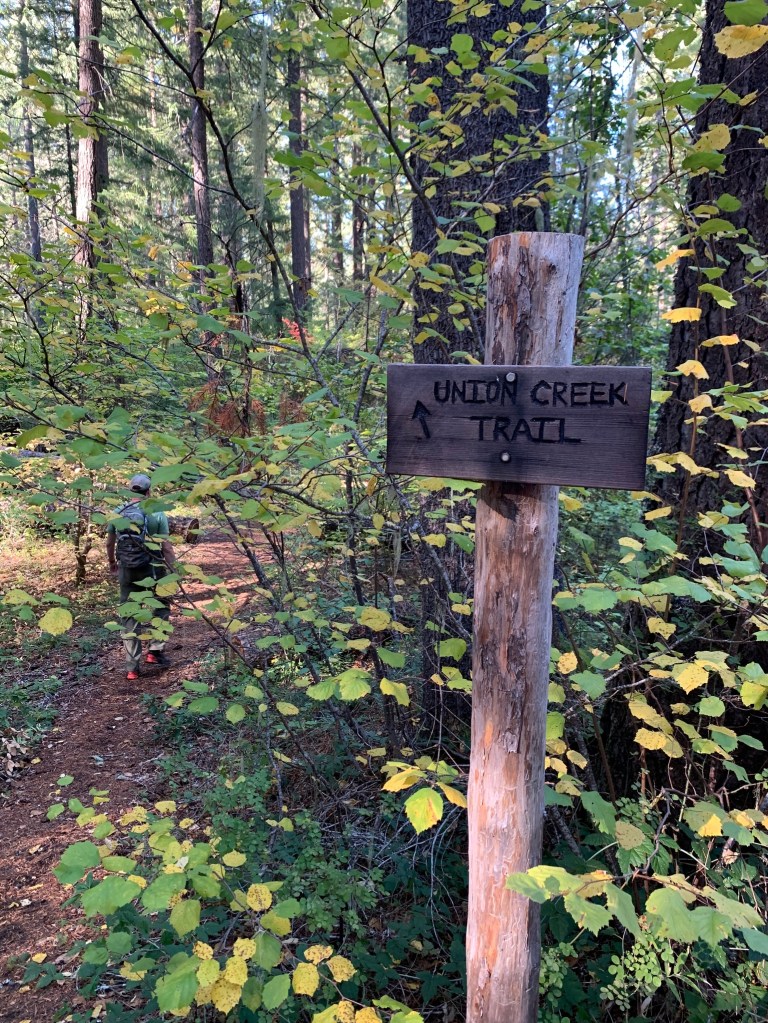
Just south of the campground is the Rogue River Gorge, where the river joins contributory creeks and drops precipitously though a large chasm in the rocks. The area is riddled with lava tubes as well, which make natural land bridges across the water, including a notable one about 2 miles south of our campground. There are trails all along the Rogue River and the adjoining Union Creek. It was lovely to enjoy the warm weather during the day, and the fall colors setting in on the vine maples, beaked hazelnut and dogwood trees along the river’s edge.
If you can’t get a site here, there are several campgrounds along highway 230/62 that you can choose from. I was astonished at just how many there were, to be honest. In the Union Creek area there are also cabins to rent, a general store, Becky’s Cafe for breakfast, lunch and dinner, and the town of Prospect is about 15 minutes further south. Even if you don’t go to Crater Lake, the Rogue River Siskyou National Forest is a great area for hiking, mountain biking, fishing and just plain relaxing. If you haven’t been, I don’t think you can go wrong with any of the campgrounds nearby, and they appear to be open from spring through fall, during which time I’m confident the area remains just as gorgeous as ever.
Crater Lake National Park:
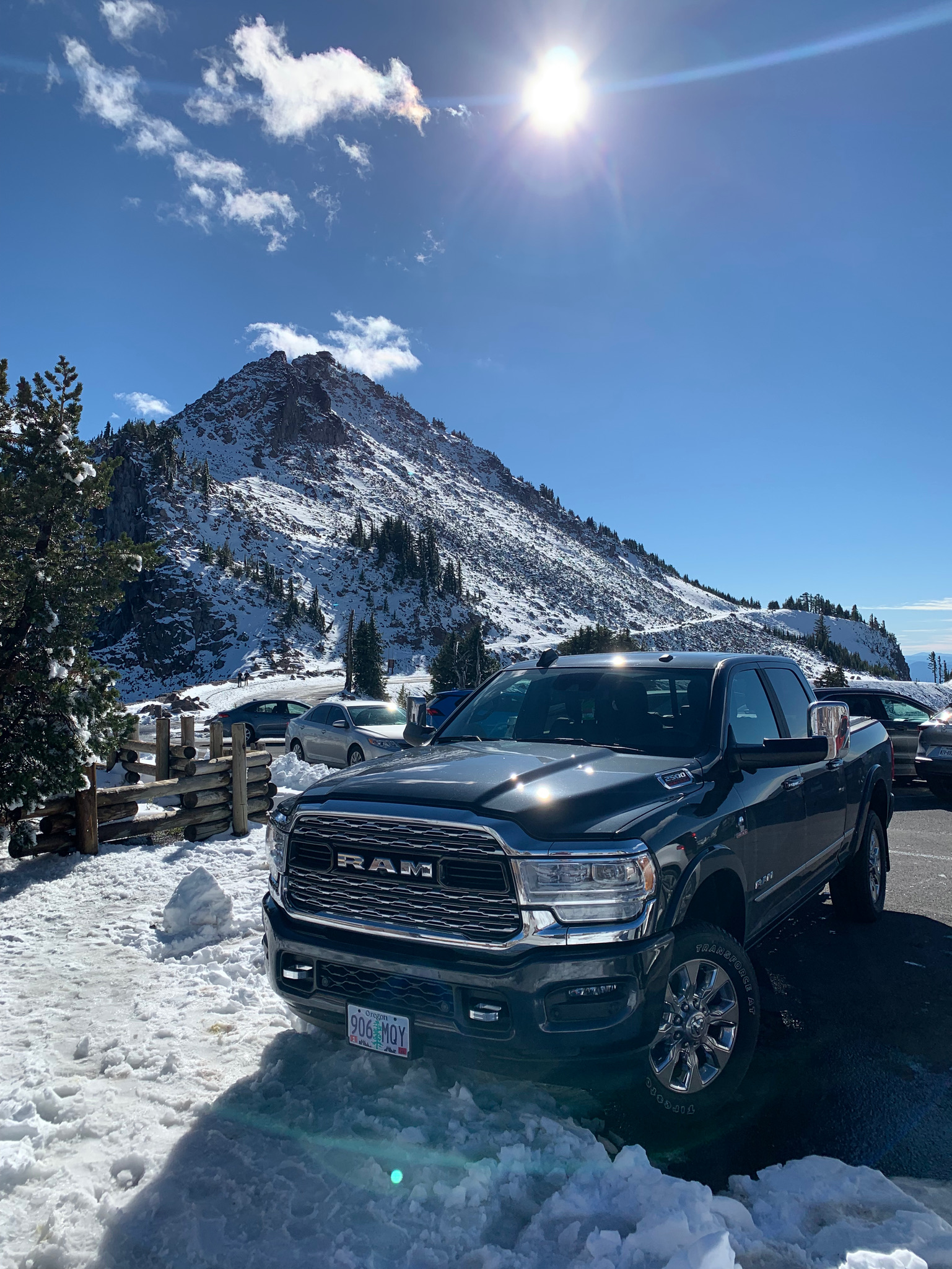
We were a little concerned that we might not be able to get up to the rim of Crater Lake, because we knew it had recently snowed on the day we drove in as well as part of the following day. But, we waited two days until the weather had turned nice and decided to drive up in the afternoon when we knew the temperatures were warm enough to start melting most of the snow that had fallen.
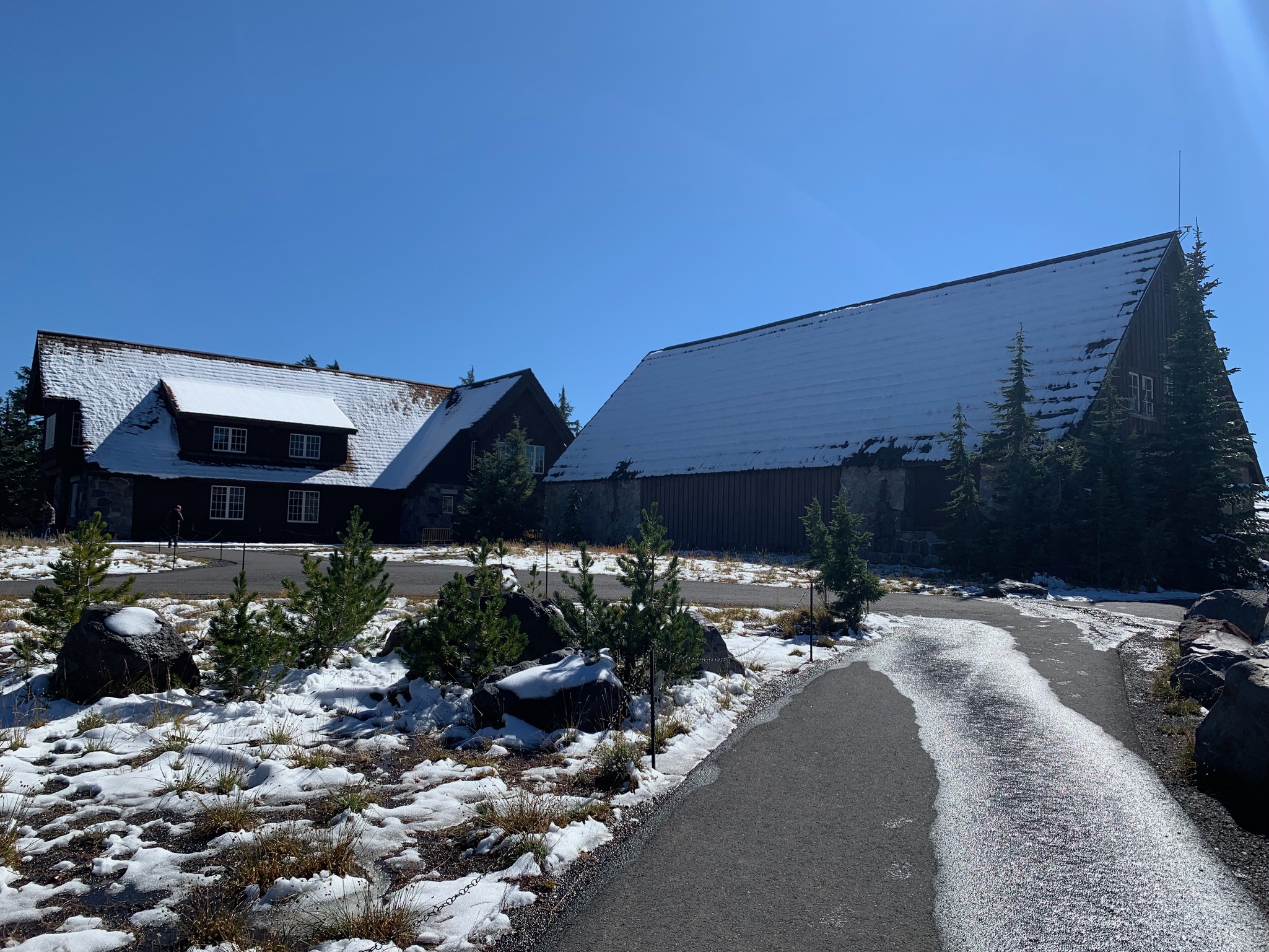
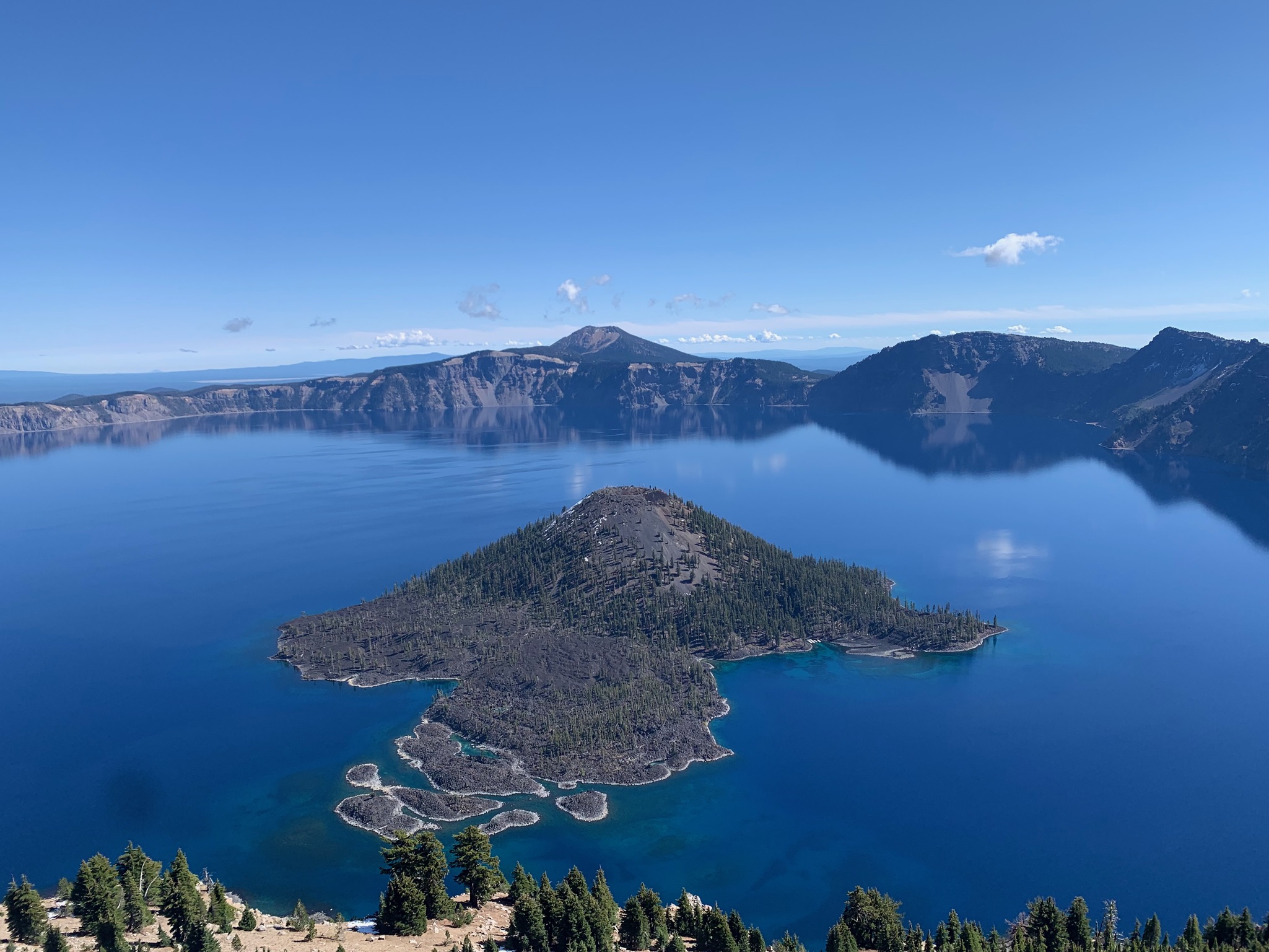
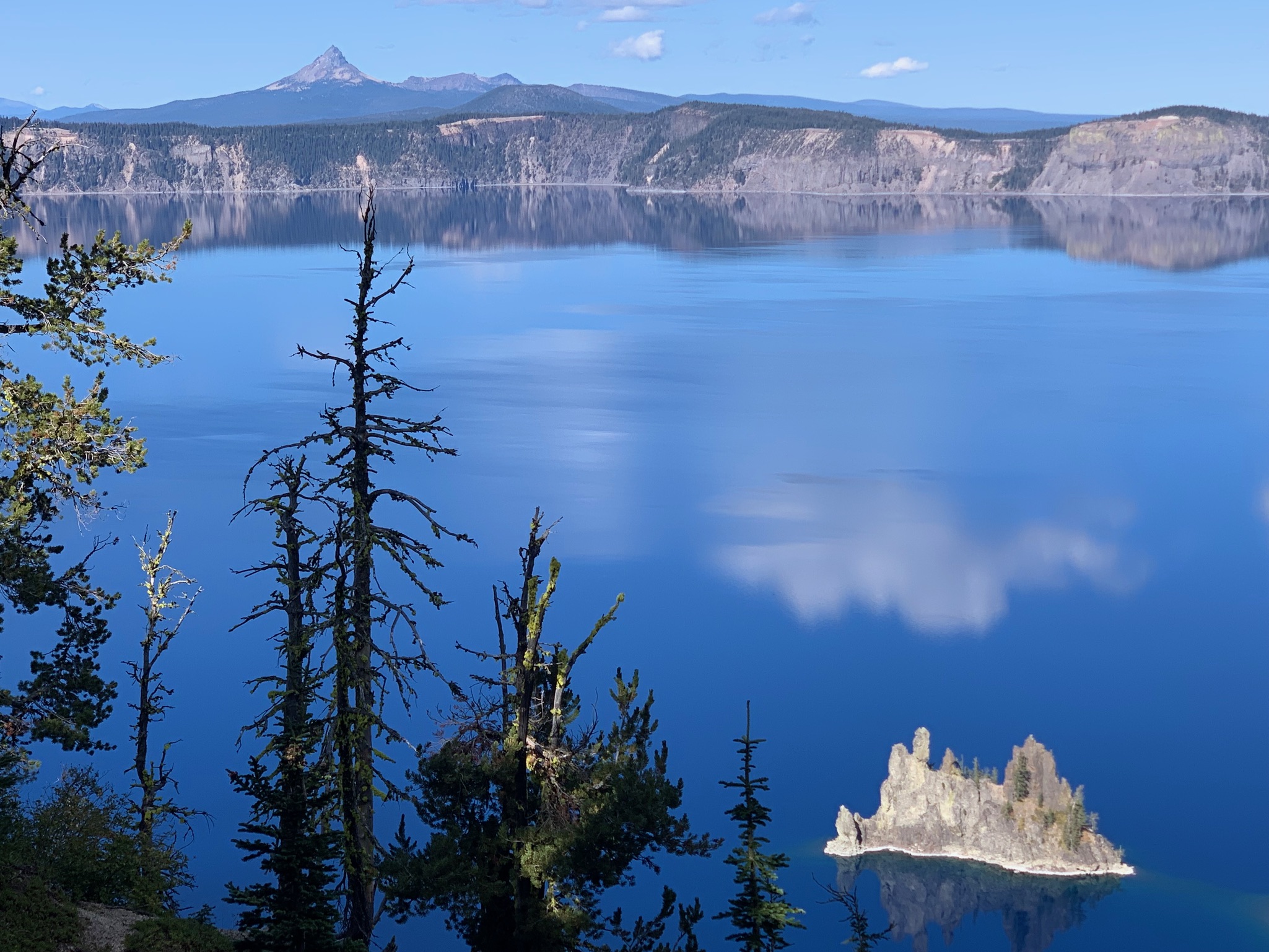
The drive up was quite relaxing and to our surprise and delight, we had indeed come late enough in the season that the park wasn’t a zoo…at least not during the middle of the week. 😊 The rim still had a few inches of snow on the ground, but was melting fast. However, the trails were a little too slick for our liking, so we wandered along the Discovery Point Trail that runs from the Rim Village along the west rim for a few miles. The lake truly is breathtaking. I have never seen a lake so vividly blue and clear, and with a backdrop of mountaintops covered in snow, it was a sight to behold.
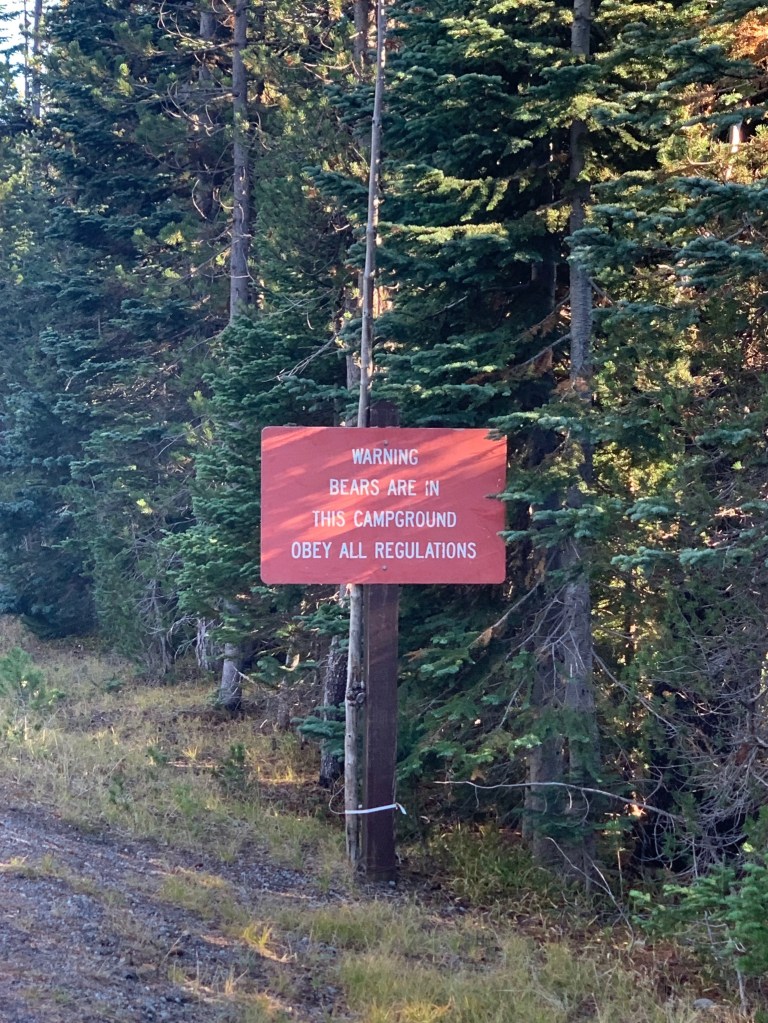
The only downside to coming this time of year is that they shut down the Mazama Village and campgrounds further down near the park entrance, and eventually will close the north and east entrances toward Crater Lake, making your options more limited during the wintertime to enjoy the area. I did, however, get a laugh out of the sign as you approach the Mazama Village and campgrounds. I felt like you could interpret the sign to mean “Obey all rules, or the bears will enforce them for you.” 😂
Obey the rules, or else! 🙂
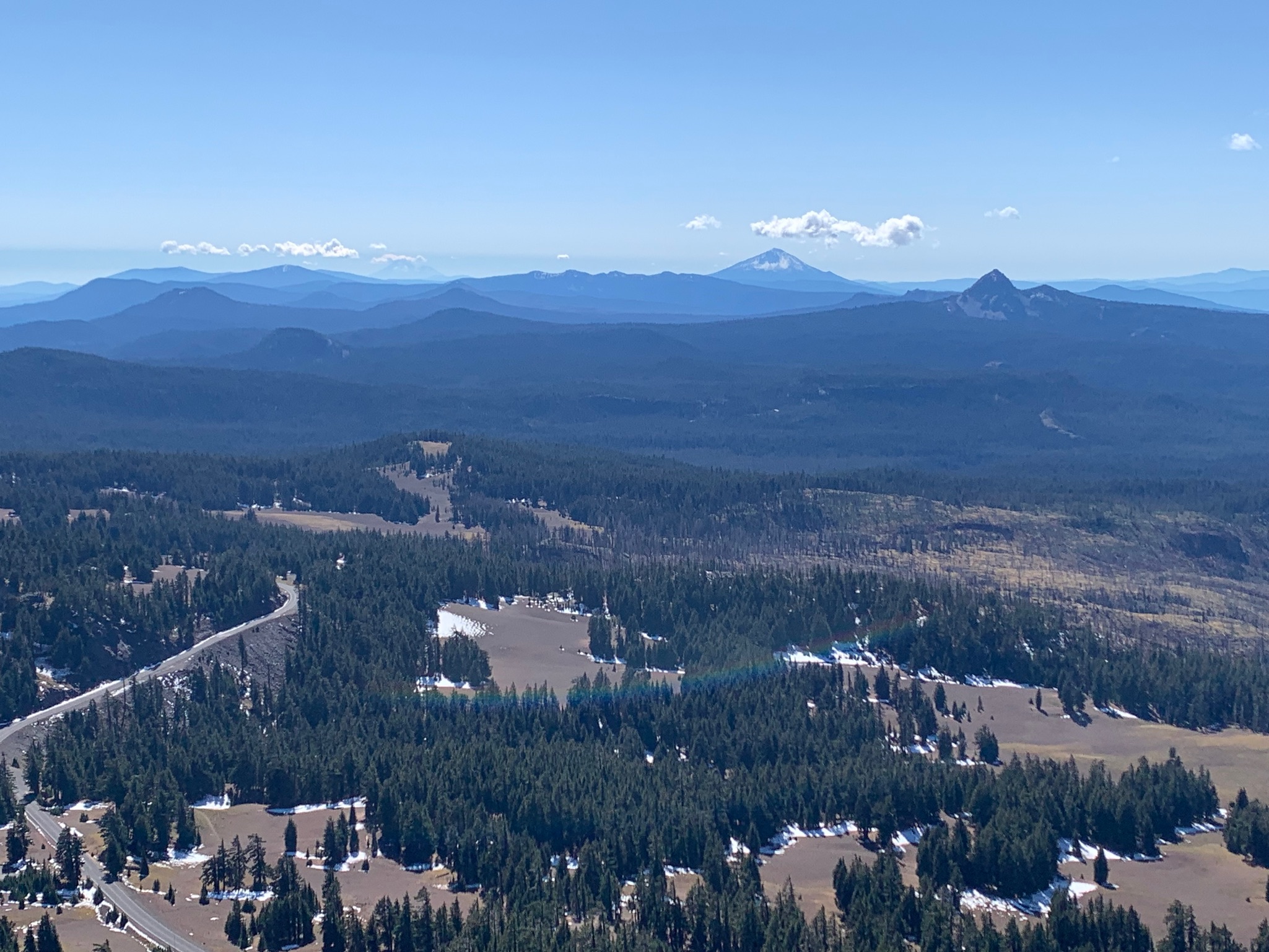
We resolved to come back in a few days since we knew the weather was going to get even warmer, allowing for time to melt the snow before attempting any hiking. We came back on Friday, and even then the line to get in was quick to move and there weren’t that many people at the top. We easily found space in the parking lots and did a brief hike up The Watchman Peak Trail, which gives you an even more spectacular view of the lake and surrounding mountains, including Mt McLoughlin and Union Peak to the south and the emerald green inlets of water surrounding Wizard Island in the northwest part of Crater Lake. We also took a jaunt over to Sun Notch heading toward the East Rim for a short loop and great view of the Phantom Ship island on the south side of Crater Lake. 🏔
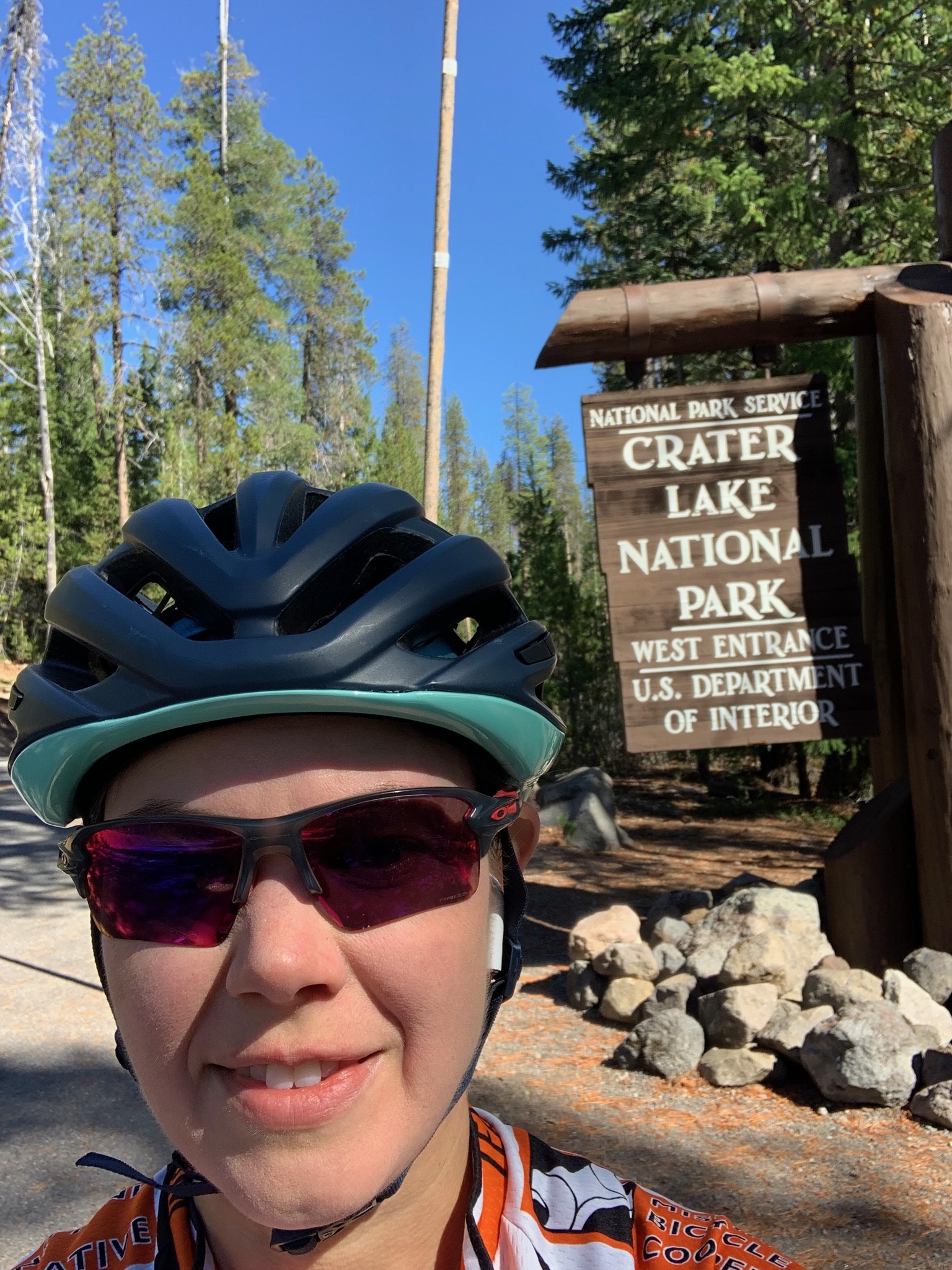
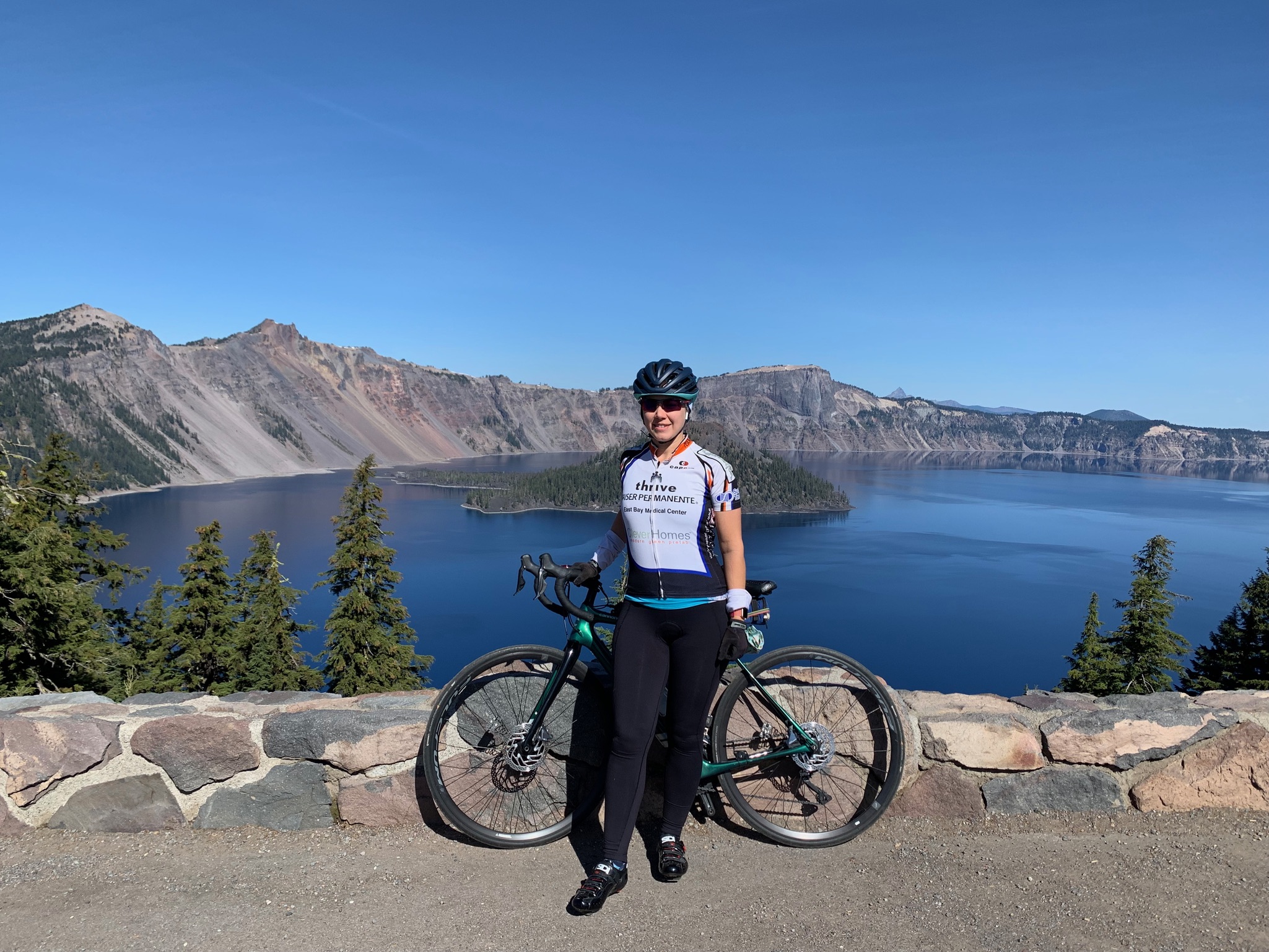
Overall, I recommend checking out this volcanic, subalpine region of Oregon, especially during the shoulder season, like we did. In fact, I was motivated to do a little road biking while here after seeing how sparsely traveled Highway 62 was heading to the park. I did a test ride part of the way up on Thursday, then scouted out the remaining distance and elevation gain on Friday, and surmised that if I left early, I could do the entire 46-mile round trip to the West Rim and back. 23 miles and 3800 feet of elevation gain later, I bought a postcard at the Rim Village gift shop to deliver to a friend at the national park post office a few miles down and bombed down the remaining descent back to the campground. Seeing the longer line coming into the park that Saturday, I was thankful we were able to do our visiting during the week. I felt very safe the whole time, and the temperatures were perfect for a ride that climbs, climbs, climbs, then descends, descends, descends. 🚴♂️
Normally I would do my BestPlaces rundown, but we didn’t spend enough time in the nearby towns to provide any color on the area. It was a quick stop for us, but well worth the effort and time. I will make up for my lack of info when we hit the Bay Area, as I spent over 15 years of my life there and can certainly provide the many pros and cons to this popular metropolitan west coast paradise.
We are heading to California now to visit with dear friends, and I recently realized we will be spending almost the entire month of October in this lovely state! 😯 I look forward to sharing more of our adventures as we head south toward the sun and warmth. It will be very interesting to spend most of our winter in warmer climes, and I’m curious to see how it will affect our inclination to hibernate. 😴 Adios for now. 👋
My first few posts on cooking have been popular, so I’m sharing more of my culinary projects. When cooking, my quest is always to use up items we already have so that I’m not wasting any food. With autumn setting in and colder weather to contend with, I was pretty giddy about these delectable offerings. Autumn is one of my favorite seasons. The rains begin, the air turns crisp, the leaves change color and most everyone and everything starts prepping to hunker down for winter. Soups are one of my favorite foods, so within this selection of recipes are some of my go-to dishes. Enjoy! 😍
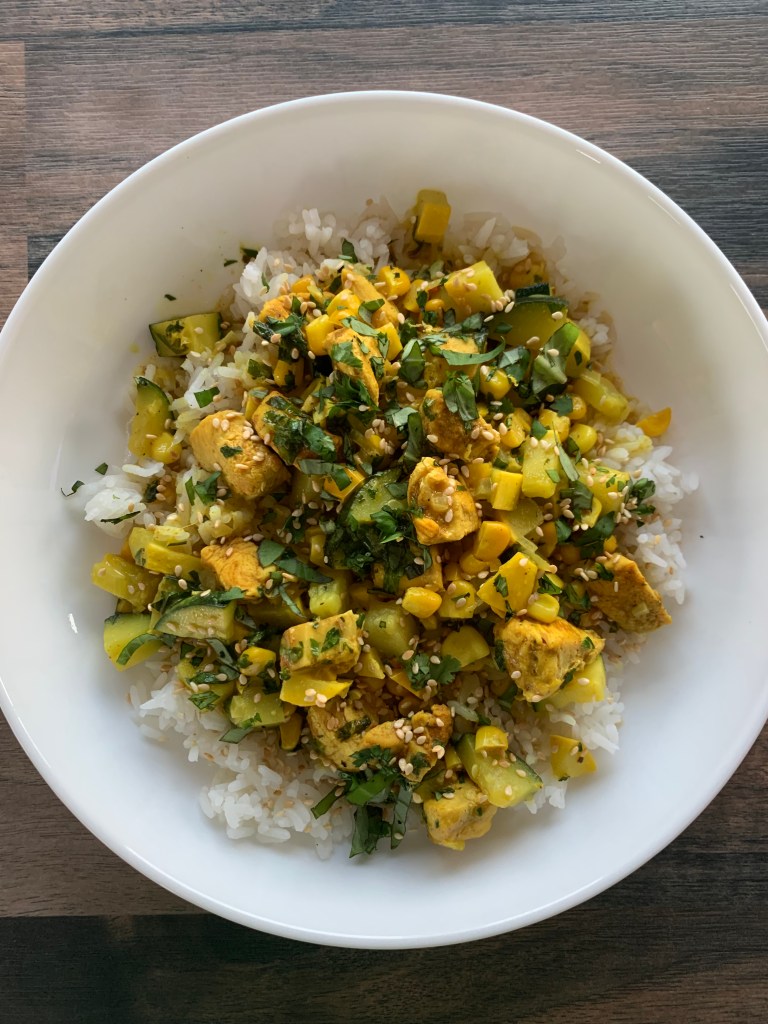
Chicken curry with rice:
After discovering there were more recipes related to the Half Baked Harvest cookbook by Tieghan Gerard online, I decided to try out another one of her recipes: Spicy Coconut Basil Chicken Curry with Garden Vegetables. I was craving curry, but wanted something with a nice balance of vegetables and protein that I could serve over rice. Matt doesn’t like that much heat, so I backed off the amount of cayenne the recipe called for, opting for 1/8-1/4 teaspoon. Otherwise, I left the recipe as is, think it had balanced flavor, and I would make it again.
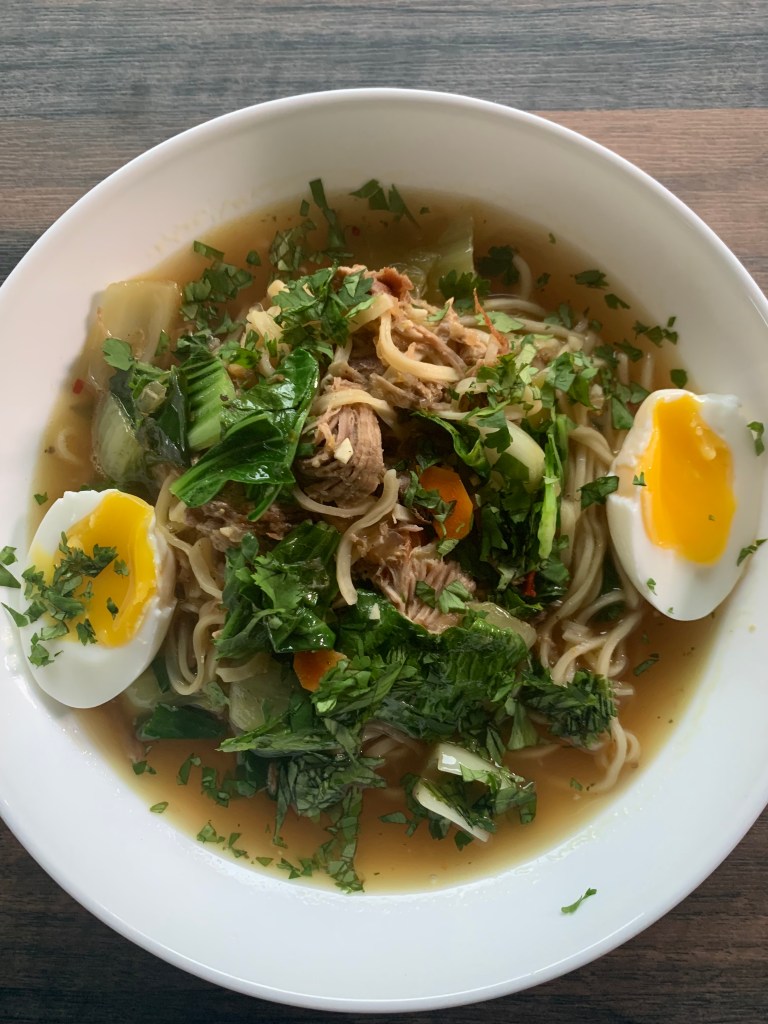
Pork ramen:
This combination of recipes was the culmination of needing something for hot weather and then using the leftovers to make ramen during the colder, rainy days. It turns out that this plan spanned three states! We bought pork shoulder while we were still in Dubois, WY in preparation for making carnitas during our stay at Bruneau Dunes, ID, where it was going to be hot, and then made ramen while in Wallowa, OR. I found this instant pot recipe for carnitas, and it turned out to be a great option for making tacos and burritos. Just add in whatever veg or starch you desire to supplement your meal. We had pickled radishes, cilantro, Monterey Jack cheese, sour cream, and Pico de Gallo (salsa) and those all worked well with the carnitas.
I saved 3/4 pound of carnitas and the broth from the instant pot, skimming the hardened fat off the top before mixing it with chicken stock. I started with this base recipe for pork ramen, and added 2 baby bok choy, 1 large carrot, 1 tablespoon ginger paste, 2 tablespoons soy sauce, 2 pinches of crushed red pepper in lieu of sriracha, and substituted chives for green onion since I already had chives that needed to be used. I had noodles left over from another recipe and added them until I reached our preferred level of starch. You can also use instant ramen and toss the spice packet. Finally, I garnished the ramen with soft boiled eggs and cilantro. The stock base from the instant pot added that umami taste you search for when eating a delicious ramen, so the broth required no additional seasoning. This recipe with my modifications was a success, so give it a try if you are going from taco Tuesday to a cold front and want something to to warm you from the inside out.
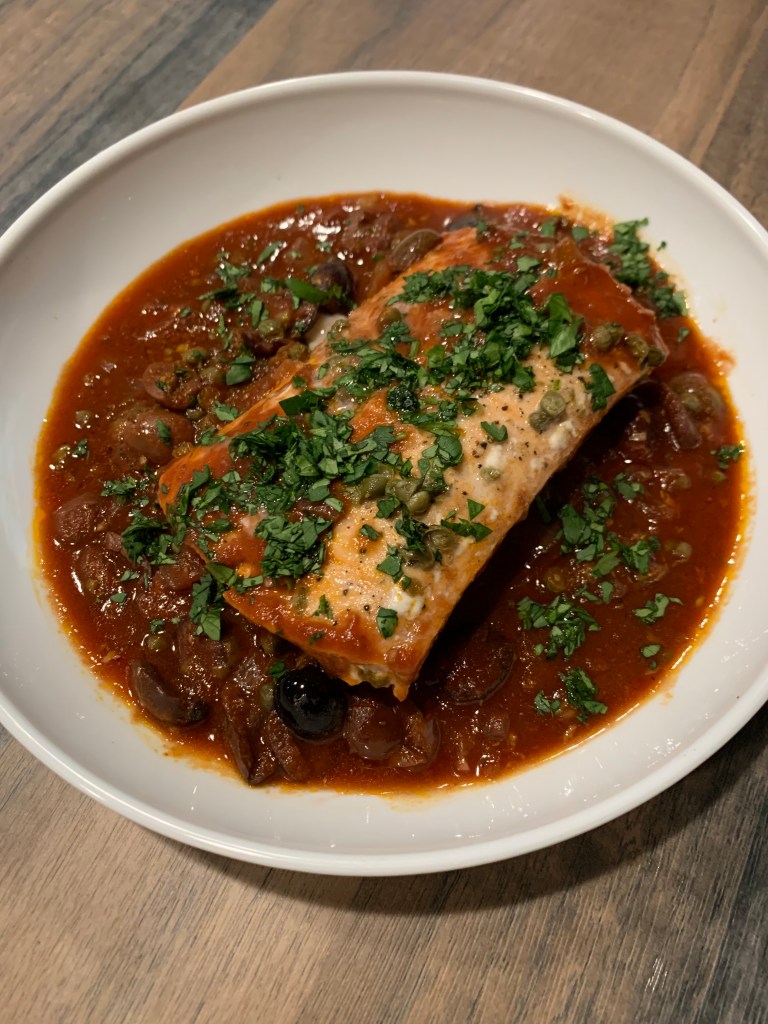
Salmon puttanesca:
Another cookbook Matt bought me for Christmas is The Weeknight Mediterranean Kitchen by Samantha Ferraro. My favorite part about this book are the one pot dishes, which are all delicious and easy to put together. The very first meal we made in our travel trailer back in April was salmon puttanesca from this publication. It is now one of Matt’s favorites, is quick and easy if you have the key ingredients, which I always keep on hand: tomato sauce, Kalamata olives, anchovies, and capers. The only modification I make is adding the entire can of tomato sauce instead of tossing 1/3 of it. Extra sauce never hurt anyone. We purchased the salmon in Columbia Falls at the Flathead Fish & Seafood market and this was a perfect use for it. It’s bursting with flavor, tangy and tart, and complements the salmon well.
Red Lentil Soup with North African Spices:
Pulling from the soup section of The Complete Mediterranean Cookbook by America’s Test Kitchen, I used the remaining red lentils in my pantry and supplemented with an autumn blend of lentils I found in the supermarket while in La Grande, OR. They didn’t have red lentils, so I gave this blend a chance and it worked out beautifully. The firmer lentils in the blend gave the soup a little more texture without being too dense. I garnished with cilantro, paprika and cumin. It’s a simple, yet flavorful soup that I highly recommend. I have made it several times and it is one of our go-to meals for cooler weather.
Spiced Fava Bean Soup:
Another one of our favorite soups from The Complete Mediterranean Cookbook by America’s Test Kitchen utilizes dried Fava beans. The recipe has you cook the beans for 1 1/2 to 2 hours, so I cut this time significantly by soaking the beans for a minimum of 8 hours, and using the instant pot to cook them for 8-12 minutes. Prior to pressure cooking, I sautéed the onion, salt, pepper, and added in the garlic and spices, soaked Fava beans. I cut the added liquid from 8 cups to 5 cups for a looser consistency of soup that still thickens nicely as it cools.
To garnish, I toasted some pine nuts with paprika and cumin, then added this on top with a little swig of olive oil and some cilantro…not altogether that different a garnish than the red lentil soup, which has a similar flavor profile but a different texture. You can’t go wrong with either one.
I hope you have enjoyed the second edition of cooking on the road. My cooking projects never cease, so I will be sure to share more as I gather recipes. Happy cooking everyone!






























 Highways and Honeybees